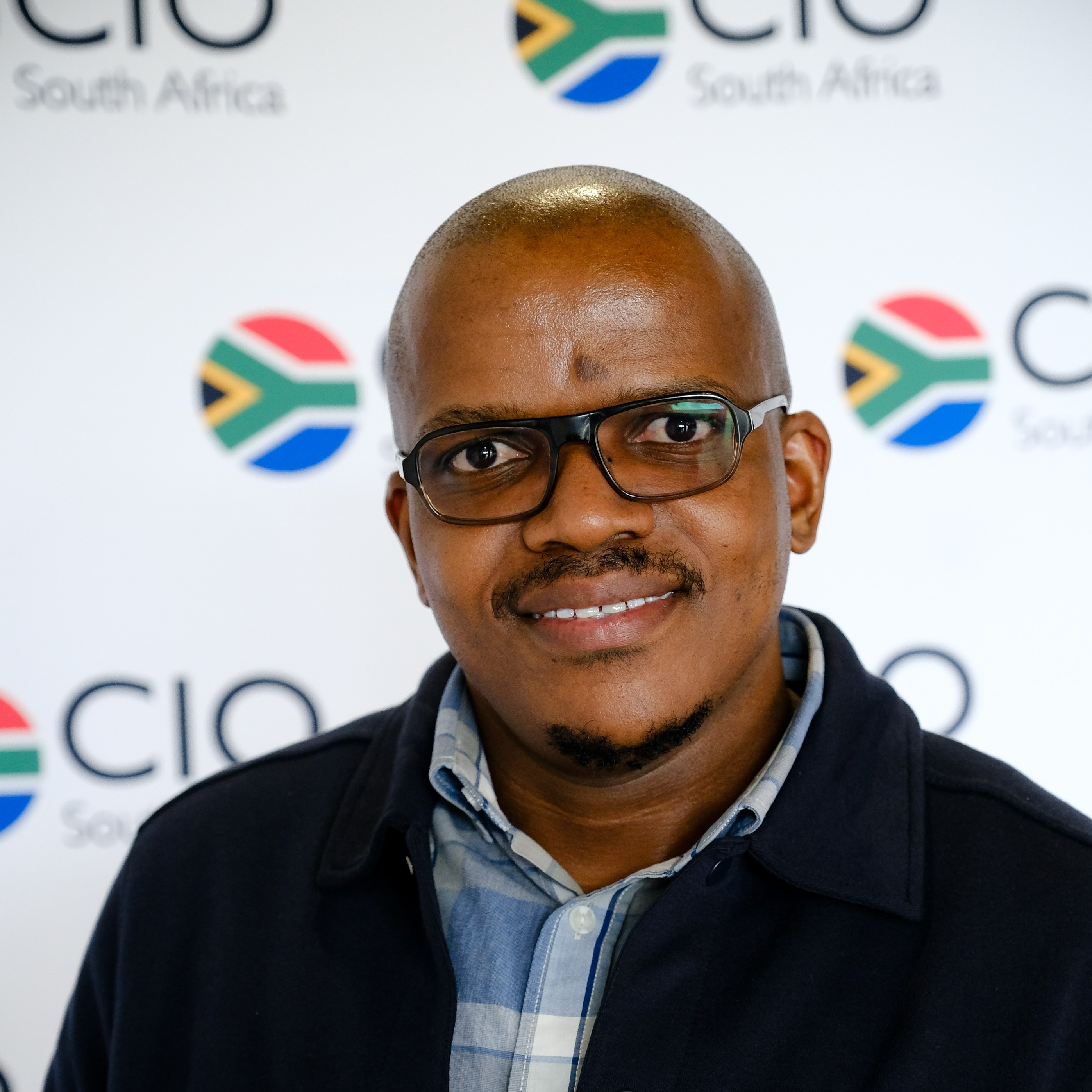
Forget the traditional first 100 days – Thabani has set his sights on achieving a clean audit finding and establishing a clear digital transformation roadmap in the first 90 days in his role.
Thabani Kunene hails from Ulundi, a small town in KwaZulu-Natal, and credits his grandmother for shaping his values and aspirations. Raised by his grandmother, he recalls her unwavering belief in the power of education:
“Education is something that can never be taken away from you. It provides independence, empowerment and the ability to change your life,” she would say.
Despite limited resources, her wise words stayed with him. “When you’re well educated, you will never experience poverty. Instead, you’ll have the power to alleviate it,” Thabani remembers. These lessons have been a cornerstone of his journey.
A transformational leader
The WRC’s newly-minted CIO describes himself as a transformational leader, someone who enters an organisation with the purpose of bringing positive change. He also leans into the theory of transcendent leadership – someone who is able to impart their personal vision to leaders in the rest of the organisation. These are skills Thabani believes he brings to the commission.
Thabani was once an avid reader, however, his busy schedule hasn’t allowed him to enjoy and finish some good reads. Lately, his reading tends to be more academic – he’s currently pursuing his PhD in information systems with a focus on digital transformation at Wits University.
For inspiration and motivation, Thabani tends to lean towards podcasts and audio books, especially on long drives. He is also a person who is driven by social responsibility: giving back to the needy is something very near to Thabani’s heart. “I’m a giver and not a receiver,” he says. Thabani often gives out food or money to people in need and even contributes to people online seeking donations.
“I come from a disadvantaged background, so I know how it feels to go without necessities,” he says. “Therefore, I prefer to use my current position in life to give back, and a sign of a great leader is someone who is able to give back.”
Especially during the festive season, Thabani enjoys going to a school shoe drive, handing out school shoes to children in disadvantaged areas. Time permitting, he even has plans to start a foundation one day. Another accomplishment Thabani plans to have under his belt in the future is that of an author, picking up where he left off in university.
“I started writing a book back in my university days,” he says. “It was intended to be titled We are all born equally, a reflection of my real and personal experiences at the time. The book was meant to inspire and encourage people to accept their circumstances, but always dare to dream for more.”
A paperless WRC
At the WRC, Thabani is spearheading a significant project to develop an electronic document management system.
“Currently, documents are stored in fragmented systems, not in a centralised repository. Integrating AI or other advanced technologies requires a unified data warehouse,” he explains. The new system aims to streamline research and development processes while ensuring efficient data management.
From an infrastructure perspective, an inhouse data centre would be very beneficial, according to Thabani. The critical systems and higher availability can always be taken into the cloud, but the rest can stay on premises, where applications that don’t carry sensitive data can be pushed onto the cloud and the mission-critical applications have to be housed on premises – a co-location set-up.” For him, a research organisation with its own data centre makes a lot of sense because taking everything into the cloud can be a very costly exercise.
In a data-driven environment, Thabani points out that the role of the CIO evolved into that of a chief digital officer (CDO). In a corporate and profit-driven environment, where business acumen is crucial, the CIO then slowly takes on the role of CEO. “I do plan on bringing in a chief data officer in my environment at a certain point,” Thabani explains, “from the collaborative perspective and the fact that the POPI Act calls for a CDO to ensure compliance where the protection of individual data is concerned.”
Thabani’s vision seamlessly blends digital innovation with a deep commitment to social impact, highlighting his belief in technology’s transformative power to drive both organisational success and meaningful societal change.