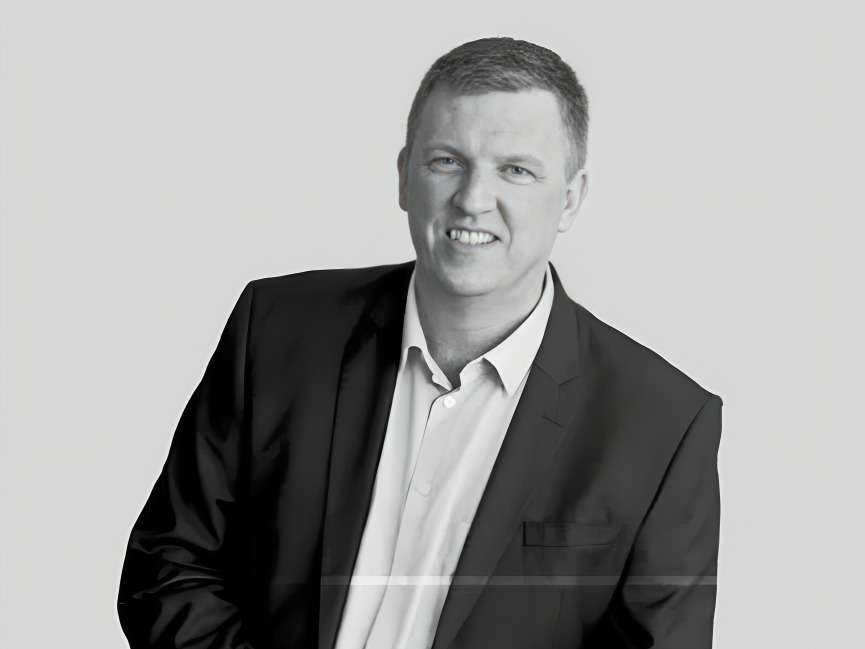
CIO South Africa recently caught up with Adrian van Eeden, chief information officer at Gordon Institute of Business Science (GIBS) and here is what he shared about his role.
In a sit-down on navigating technological disruption, GIBS chief information officer Adrian van Eeden explores how leading with heart and empathy helps organisations tackle shadow IT and the rapid evolution of AI. Refusing to treat AI as a hype-driven exercise fueled by a global fear of missing out, Adrian details how setting clear guardrails, fostering genuine team independence and focusing on business value enables the business school to maintain stability amid technological chaos.
What gets you excited to get up in the morning?
Professionally, I am energised by the people I work with. Our IT department is roughly forty people ranging in roles and seniority from junior support engineers through to senior managers, diversely represented, and including everyone from sharp young Gen-Z’s through to older X-ers like myself.
I’d like to think that our culture is very open, and that people feel safe enough to engage with each other at all levels, including with me. I certainly know that I have regularly been challenged by more junior people when required, which I respect and appreciate.
The amazing thing about this setup is the exposure everyone has to one another’s backgrounds, cultures, beliefs, and styles. I often find myself being coached on an African tradition, or an Islamic belief, or a Gen-Z trend, and maybe they are rolling their eyes at the old ballie, but for me it is an uplifting, privileged space to be in. I am reminded daily by my team, why, despite all our South African challenges, we live in the greatest nation in the world.
My wife died from cancer in August last year, and beyond my boys and my dogs, my team has been the thing that has kept me going. I don’t live close to the office; it’s a bit of a trek across the Boerewors Gordyn for many, but my crew dropping in or checking on me is even more so than my family and friends. I think I really got a sense of what Ubuntu means during the last year. So waking up and seeing them every day is what motivates me. I could be one of the few people who would far prefer working in the office than at home, despite the long trip.
Beyond the team, GIBS, as an organisation, has a purpose that transcends organisational boundaries. It is ingrained in our people that we want to make a positive impact on our nation, Africa, and beyond, through what we do, and we really do live this. Strangers coming to our campus have often spoken about this sense of magic when they’re here, to the point that we have spent a lot of time trying to understand what this “magic” is without ever really being able to put a finger on it. Personally, I think it’s just something we are, and that’s a cool thing to get up to every day.
What keeps you up at night?
My kids and my dogs.
I stress over my people. I am a firm believer in the concept that nobody is born bad, and nobody takes on a job with the intention of being bad (well, other than those crazies in the movies, right?). When people start doing bad stuff, it’s usually because of the things around them. They get desperate because of personal situations beyond their control, or the things that motivate their behaviour have been misdirected, or they work in places where people have themselves headed off in a dusty direction for similar reasons, and now there’s something reinforcing the wrong thing.
I am a very introspective person, so when things go wrong with the people around me, I will spend a lot of time pondering what drove them there, and looking at myself, and the leadership around the people to try and understand where the motivations, incentives, directives, protocols, etc. might have put our folks on the wrong path. It pains me terribly when someone deviates. I’ve had senior people in other lives tell me I’m too sensitive and if I can’t build a tough shell, I’m going to have a rough time being at the top. They weren’t wrong, but it’s who I am, I’ve accepted my fate, and while I’m in charge, that level of empathy is what we are going to have in the team.
On the technical side, the rapid evolution of AI keeps me awake. The pace of change feels chaotic, and I often get frustrated at this apparent FOMO that I’m seeing across the world – “We need to implement it because everyone else is”, rather than because we have a very clear business case to use it and understand the trajectory.
I myself have a personal baseline with which I have been able to measure the pace of change recently. Before my wife fell ill, I was comfortably on top of where AI was at that time, but after she passed, I slowed down and could only focus on the most important things properly, for quite some months. When I started digging back in properly this year, so much changed that I almost had to start again. It was insane and I was really anxious about how fast you lose your sense of control. And, it’s my job to advise GIBS on this stuff, to put the guardrails in place, and to deploy and create capabilities, which is quite daunting when you think about it, particularly as I’m not a bouncy 25-year-old with the energy to run the Comrades any more. But don’t get me wrong, it is exciting, and I am amazed by what I’m seeing. A little scared, but mostly amazed.
What is the biggest shift you have had to make in how you lead or think about your role in the last 12 to 18 months?
The biggest shift has been creating the structures to allow more independence within the team. I built the team from scratch, starting in 2010, when I was IT employee number one. Today we sit at around forty staff, plus we run our YES4Youth programme (which is another amazing “get up in the morning” thing for me, just by the way).
The approach to growth has predominantly been bottom-up. So, I have a lot of people on the team who have grown in experience, role, and authority as the IT department's impact has grown. We do not position IT at GIBS as a technology department either; I try to instil a focus on business value. Maybe this comes from my early career at Deloitte & Touche, because I push my folks to think of themselves as business consultants. “Does this solution create more revenue opportunities?”, “Does it impact profitability?”, “How does it mitigate risk?”, “What does this do to the customer experience, or the morale of the impacted people?”
This is great, but because it’s been a bottom-up growth strategy, it does mean that there is potentially a lot more dependence on top management by nature of the process.
I have found over the last couple of years that as technology becomes increasingly ingrained in strategy, the demand on my time and that of my senior management team for strategically oriented business effort has escalated rapidly. There is an expectation that innovation should, if not come from, then at least be supported and implemented by us, and that requires people like me to reserve headspace for thinking. Which is problematic when you have a lot of admin and decisions coming through to your desk because people do not have the confidence or even the mandates to work independently. The deal I’ve made with myself is that I have to equip other people to handle more risk and make independent decisions. This sounds easy in practice, but Higher Education is quite a conservative sector, with pretty steep hierarchies in place, in many cases, for good reason, and even though GIBS is quite a lot more progressive, as are many of the business schools, the reality is we don’t operate in this world on our own, and you do see the impact of more institutional mechanisms in many places. So, it’s about equipping the people in my team to be more independent, but also about convincing the other people that I’ve done what is required to permit independence without creating opportunities to put holes in the boat.
When you eventually step away from your role, what do you hope to have left behind?
Stability and independence. I think about it a lot because I’ve been at GIBS in this role for some time – more than 15 years.
The challenge with having the “Founding Director” in place for such a long time is that when you do step away, if there’s too much dependency on you, you could leave them with cultural, operational, and directional holes which could result in a major performance slump, and could take some time to overcome. Leaving like that is vain and irresponsible, and my mission is to ensure that even if I get abducted by aliens tomorrow, there is continuity despite the hole at the top, and ideally a positive growth trajectory that survives me.
Also, the world is changing, and sometimes, the old guard might not be the right guard for the new world. I hope that’s not the case here, but it’s never a bad thing to see what new energy could bring, which might be different from, say, “Adrian’s way of doing things”. This is another reason why I eschew a hierarchical culture. If people are too scared or respectful to challenge me because I’m the boss, then I’m going to develop a massive blind spot, and we are always going to do it my way, whereas I hope that I give people enough freedom to introduce their own styles and thinking. I’ve got a great management team and a lot of what I want to focus on is to make sure I have them aligned, so that we have a powerful, healthy engine room which doesn’t me. I mean, this is a fundamental concept regardless of me exiting later or not. If I can get this right, even if I am still here, I can put more of my time into that innovation and transformation stuff I spoke about earlier.