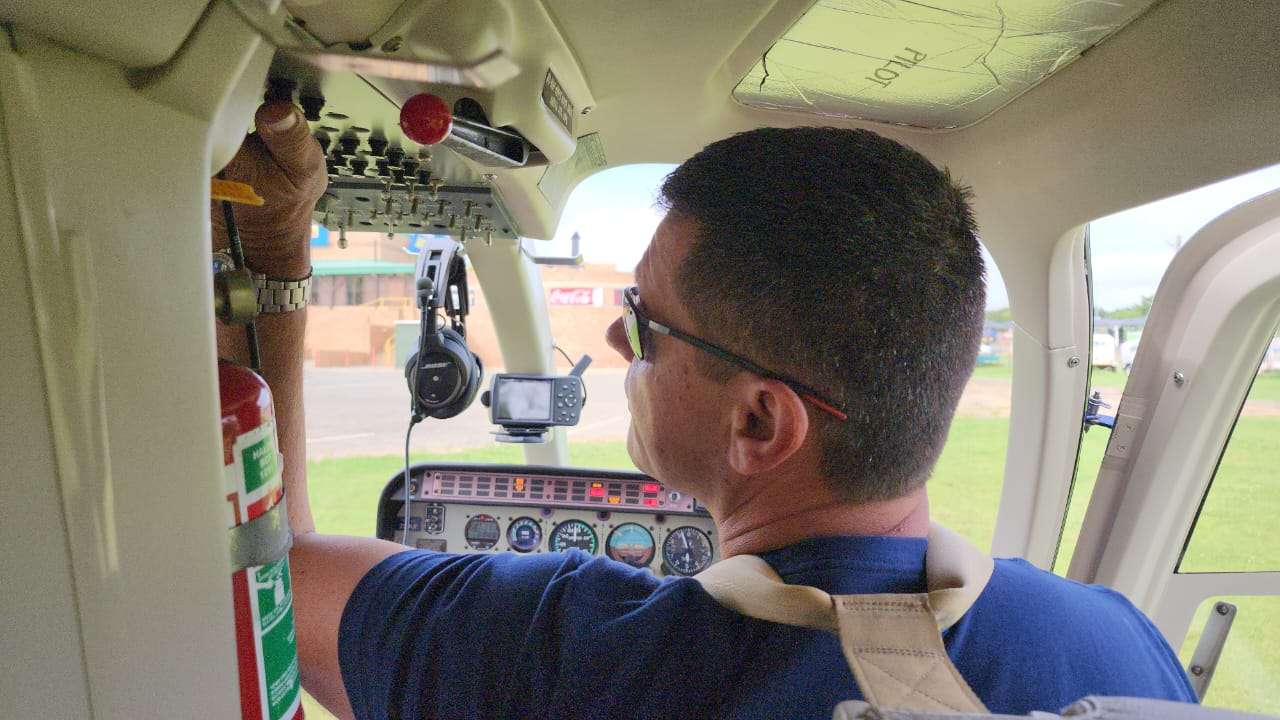
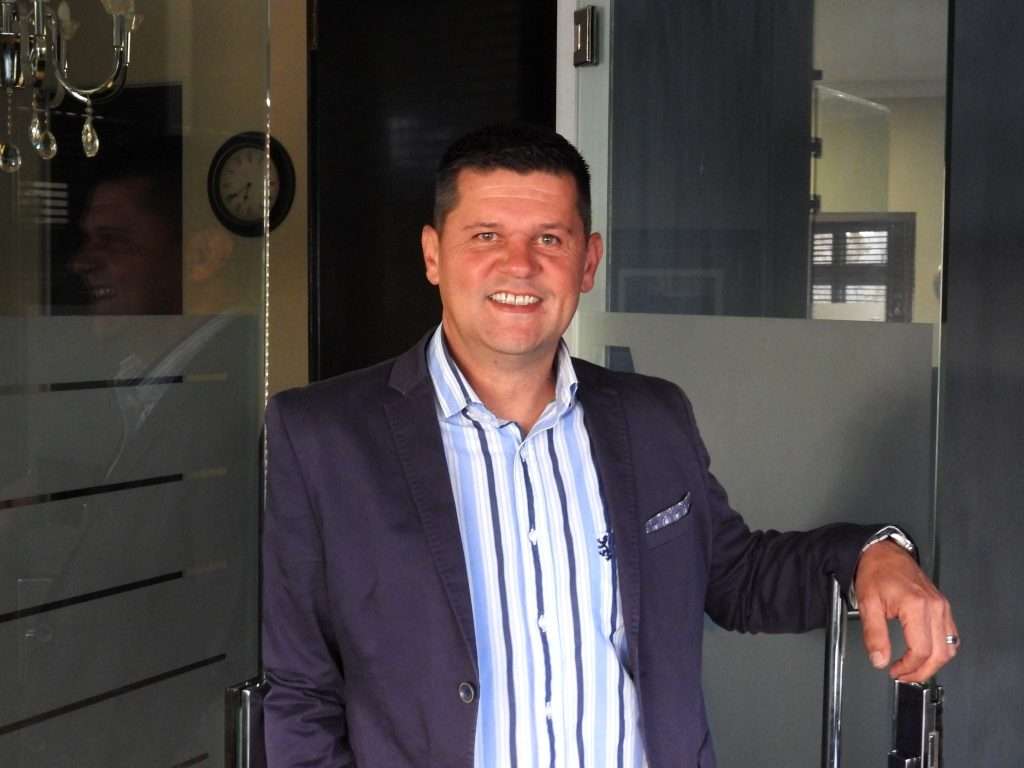
iSSC Group CEO Emil Henrico isn’t your typical executive – he’s also a helicopter pilot, effortlessly transitioning from navigating the skies to leading in the boardroom.
Emil’s entry into IT was influenced by his father who was an IT manager at an agricultural research centre. Naturally, he wanted to follow his father’s footsteps. “During my school holidays, my father would teach me little things about IT, like computer networking,” he recalls. “On the other hand, my uncle was a Unix and Linux programmer so the other half of my school holidays were spent with him, which helped me understand both ends of the equation.”
Emil carried on in that direction and started off working as a network technician, IT support and desktop support. He later went off to work as a developer in the UK and returned to South Africa and worked himself up from a network engineer to programmer and spent a number of years as a problem and program manager with NTT Data (formerly Dimension Data). “I later enrolled into a middle management course while I was with Dimension Data, which led to my involvement with iSSC,” he explains.
This was around the time Emil transitioned from being a program manager to CIO with iSSC Group. “This was close to a decade ago where cloud computing started taking off,” he adds.
“Considering my background in understanding different technologies, the best part about being a CIO at the time was having the opportunities to play around with them,” he says. “As the iSSC team grew, I quickly realised that I wanted to get involved in business development and new ways of thinking – that’s where an understanding of business and strategy comes into play and the period I transition from CIO to CEO.”
According to Emil, technical expertise and a deep understanding of business are a formidable combination of which he relied on heavily.
“Fast-forward some years later, my move into the CEO role was to succeed the previous chief executive when he left the company to start his own,” says Emil. “Today I now have a very capable team running day-to-day operations and instead of having an upper management structure, I have a couple of cloud architects and support engineers and because the team is so strong, there isn’t a need for an upper management structure, which allows me to focus on new business and new territories,” he notes.
iSSC currently has operations in South Africa, Lesotho, Mauritius and the UK. Emil highlights that the business model works regardless of the country they’re in. "We've built such a robust system that no one has to log a call every five minutes to fix it!”
Culture over experience
“I’ve deliberately hand-picked my team because people often forget that culture can sometimes be more important than experience and allows me to focus on business and strategy," Emil points out. “The age-old metaphor: ‘one bad apple spoils the whole barrel’ rings very true in my world.”
He highlights that even trust plays an important role, which made the Covid-19 pandemic a non-factor for Emil and his team – they had already started working remotely and built that trust, confident everyone would deliver in areas they needed to.
But Emil’s transition to CEO wasn’t without its learnings. “It’s quite different sitting and leading a very technical meeting with a client versus leading a meeting with other C-suite executives who aren’t really that interested in technology, but want to understand what you can do for the business.
“There isn’t a grey area with technology, it either works or it doesn’t, but engaging with executives and getting into their minds, and earning their trust, is a different ball game,’ he observes. “For example, if you take over a company’s IT environment, that suggests that they trust you with their business – that’s the part I enjoy, the challenge and the responsibility that comes with it!”
Building that trust is both challenging and rewarding for Emil.
Mind your business
Generally, IT executives who move from a technical role to a chief executive role tend to take one of two approaches, getting a holistic view of the business or upskilling themselves through an executive MBA.
“Whether you want to understand business or life or even want to get into politics your first point of reference is understanding business and grabbing the opportunity of attending business school with both hands is a must, an MBA affords you a different way of thinking,” he notes.
According to Emil, CEOs generally fall into two personality types: those who are risk-averse and fear uncertainty, and those who embrace risk. Emil sees himself in the latter group, but with a crucial distinction, he believes in taking risks only when he has the capability to manage them. “I’d prefer to take any risk head-on, provided I’m prepared to manage it,” he explains.
Emil also offers some valuable advice to his peers and aspiring CEOs:
- Enrol into a business course;
- Understand finances;
- Decide which area you want to play in and master it;
- Understand your own business and its vision;
- Understand other people’s business needs and have a plan to address them;
- Understand the culture in your business – a solid organisational culture can solve many problems.
What does an executive do when he’s not immersed in business or strategy? For Emil, the answer is simple, he takes to the skies. His passion for aviation began in childhood with toy planes and has since evolved into a hands-on pursuit. Today, he enjoys flying helicopters in his spare time.
“One of the biggest reasons why I enjoy flying is the level of focus that’s required – you can’t think of anything else while you’re flying,” he explains. “But flying a helicopter is also the most challenging thing you can do – it challenges you physically and mentally.”