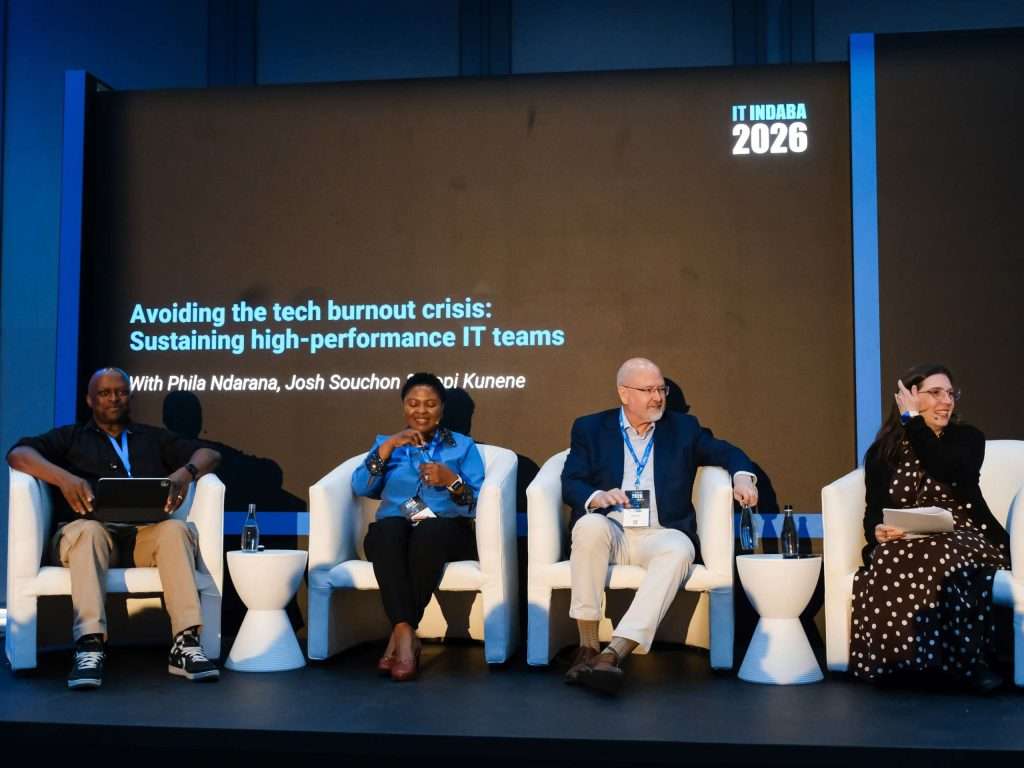
With technology teams being asked to move faster, deliver more, and respond to an endless stream of competing demands, the risk of burnout is higher than ever. In a panel discussion at the 2026 IT Indaba, Josh Souchon, IT executive at Opp-Gen, Phila Ndarana, CTO at the Auditor General of South Africa, and Popi Kunene, operations director at Mgoza Group, tackled this dilemma.
While it may be perceived as an individual problem, burnout has a far-reaching organisational impact. As leaders in the tech space, we need to ask ourselves whether the way we plan, prioritise, and manage our teams, and if the behaviour that we ourselves model, is in fact increasing the risk of staff burnouts.
There’s no quick fix when it comes to burnout. Once it happens, those affected are generally out of action for a considerable period, with some never returning to the workplace at all. That’s why rigorous burnout prevention strategies should be put in place before exhaustion sets in, said Josh. This comes down to planning, which helps team members to better understand what’s expected of them and to create manageable processes.
“Control everything that you can control, so that it becomes predictable for your broader team,” Josh added. “Understand that as IT, there will always be deadlines, but deadlines become crises when you haven’t planned, knowing that that deadline will happen. Put it in the diary, plan, schedule, and have a routine.”
Preventing burnout also comes with learning when to say no, said Phila. In the tech space especially, he said, there is often a much higher demand that we can satisfy, and this is exacerbated when you say yes to everything.
“As technology people, we think that’s customer service. But sometimes a no is actually customer service, and that's the shift that we need to make. That it's okay to say no, because if you say yes to everything, you create all this wonderful technology, and do all of these things, and then you find that the business cannot consume everything. Then that is all wasted effort. So, it's important that we know when to say no and we know when to say yes.” Providing context when saying no and doing so in a clear and respectful manner, is also important.
Setting boundaries
Clarifying the team’s priorities is also key, noted Popi. “If they think everything must always be on, then they answer to everything. One, they end up missing the important things. Two, if there are some things that are always on, you need to schedule things correctly, defining which team deals with this, and ensuring they work on rotation.”
Teams also need to clarify upfront how long certain tasks will take, accounting for fixing defects afterwards and setting clear boundaries. Leaders also cannot constantly just rely on certain people to fix everything, Popi added, which is a common problem in IT.
“There are those one or two heroes that we always run to, which leads to bottlenecks. If your team has one or two heroes who are supposed to be solving your problems, you are already running towards disaster because you're not organising things properly.”
Succession planning is therefore vital, added Josh. “If you have one person doing the role, you already have a key person dependency problem because you need to have three.” So, you need to evaluate your organisation, define clear boundaries and establish who needs to do what, when, Popi explained.
“Sometimes you burn out your best person,” she cautioned. “Then they don't even have time to share their skills or key learnings with your other team members. That’s why it's important that how you work and how you engage with your teams, your leaders and your business is determined upfront.”
Make those tough decisions and have those tough discussions before disaster strikes, Popi continued. This also comes with creating psychological safety for your team, where they know that they can speak to you about emotions without the worry that it will impact their professional growth prospects.
The importance of switching off
An always-on work culture is ultimately toxic, the panel agreed. As leaders, we need to model better behaviour and also respect boundaries by not sending late-night work emails, for example. Phila also encouraged employees to manage upwards by not responding to non-critical communications after hours and on the weekend.
“If you're working seven days a week, you’re not working at an optimum performance level, and you run a real risk of burnout if you’re performing at a high level,” said Josh. It’s about moving away from normalising constant availability towards a model where predictable routines allow for genuine recovery time.
Taking leave and completely ceasing work communication is also vital. “Taking leave for a week or two allows the individual to wind down and have a real break,” said Josh. “If they're on their phone the whole time, they’re not having a break.” Create a culture, where employees are encouraged to look after themselves when they go away so they can come back into the organisation and be proactive.