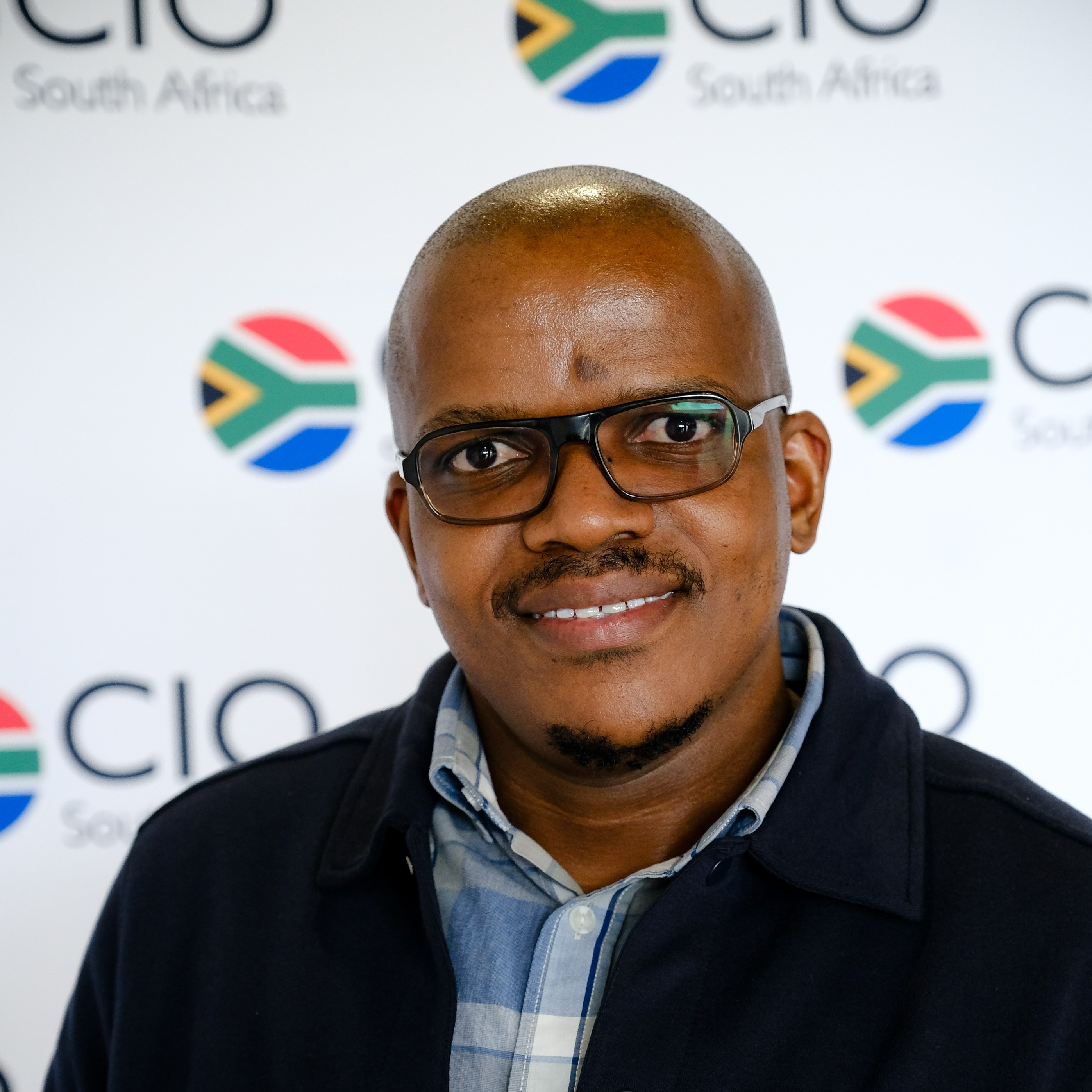
As the Quality Council for Trades and Occupations’ (QCTO) director of IT, Tafadzwa Ramhewa and his team are fortifying back-end systems and implementing rigorous quality assurance processes to combat fraudulent qualifications and elevate the credibility of tradesmen.
The Quality Council for Trades and Occupations’ (QCTO’s) director of IT, Tafadzwa Ramhewa, is an exceptional blend of scholar and athlete. Known for championing continuous learning, he also leads an active lifestyle. A passionate runner, Tafadzwa recently completed his first 42.2km race at the Soweto Marathon.
With aspirations to qualify for the Two Oceans Marathon, Tafadzwa is also sharpening his swimming skills as he aims to complete a half-Ironman. “It involves a 1.9km swim, a 90km cycle, and a 21km run – I’m going to need a lot of training,” he says with a smile.
As the director of information technology at the Quality Council for Trades and Occupations (QCTO), Tafadzwa is responsible for leading IT at South Africa's public entity, whose mandate is to oversee the design, implementation, assessment and certification of occupational qualifications, including trades, on the Occupational Qualifications Sub-Framework (OQSF).
“Our main thrust as the QCTO is to do quality assurance, accreditation and certification for the trades and occupational space,” Tafadzwa explains. “We create curricula for those who want to study trades and occupational qualifications in conjunction with the Sector Education and Training Authorities (SETAs).
QCTO qualifications include boilermaking, welding, and tax practitioner. Others, such as data science and AI, originate from development quality partners like MICT-SETA.
“The QCTO does a lot of advocacy and stakeholder management – circumventing things like bogus colleagues. For example, a person who is registered for a specific trade would hear that the Department of Social Development is allocating money towards early childhood development (ECD) practitioners, and without going through the correct re-accreditation process, would advertise that their company also offers that qualification, without QCTO accreditation” he notes.
Tafadzwa points out that the qualifications an entity receives from the QCTO are not blanket qualifications. For instance, those registered for boilermaking trade qualification cannot simply say they offer other qualifications without the required accreditation for that specific additional qualification.
People, processes and technology
“My role as IT director is to provide the platforms to enable automation and reporting on the business streams at the QCTO,” he explains. “We currently have a strong certification and verification system; however, a small portion of the assessment and accreditation are still manual.
“At this stage, we are working off the people, process, and technology (PPT) framework on the back of a project we initiated some years back to rebuild an ERP system to automate those parts of accreditation, and we realised that there were some gaps in that process: the employees were doing the work, but there were some inconsistencies across the teams – inconsistent operating procedures,” he adds. In effect, the business tools to be built, as Tafadzwa explains, would be misaligned due to those process gaps.
Today, the QCTO is on a digital transformation journey, a process improvement process, leveraging the lean six sigma framework. “However, my role is to assess this entire process at its root cause, bearing in mind the ‘people and process’ aspects in the PPT framework because if I don’t, it affects the technology that comes out of there,” he points out. “Taking a step back from technology and a closer look at the people (culture and attitudes towards the executing process).”
A new life in Mzansi
Born in Zimbabwe, Tafadzwa studied electronic engineering, which took five years to complete. The first three years were based on campus and the fourth year was the industrial attachment portion (one-year internship) of the degree. After completing his internship, Tafadzwa returned to do his honours.
“I interned at a company called Africom based in Zimbabwe, a data communications company,” he says. “The company mainly worked on fibre, which was relatively new at the time – they were an early adopter and also partnered with SAP, which was my introduction to the world of data networking.”
He was hooked and shortly after completing his honours, Tafadzwa got Cisco certified, a lucrative qualification at the time, which came in handy as the job market was thin due to the country’s economic situation. “My brother had just moved to South Africa for work, and I followed closely behind and got a specialist skills permit,” he explained. “South Africa had a network engineer shortage then, so it worked out perfectly for me.”
He worked in the space for a short stint, quickly realising it wasn’t for him. An opportunity for a Procter & Gamble (P&G) and HP joint venture project came up: what he called a proper networking job. “I got immersed in networking and got further Cisco certifications. The plan at the time was to become a qualified Cisco Certified Inter-network Expert (CCIE) – very lucrative and paid more than CAs then,” he notes.
Tafadzwa then moved on to Computer Sciences Corporation (now known as DXC Technology). The company was a global IT managed services company and active in many industries. One of CSC’s clients in South Africa was Trafigura and Puma, inthe fuel industry. Puma Energy has filling stations in Africa – a few in South Africa – but many on the rest of the continent. As an African region network engineer, Tafadzwa was responsible for the data network of nearly 15 African countries.
“It was a pleasant change of scenery, moving from working in a factory to some swanky offices in Rosebank,” he jokes.
A shift to the public sector
Tafadzwa’s career then took on a different direction, after he spotted an opportunity with the Department of Trade and Industry as a technology architect. “It was a six-month stint, but short as it was, it became a step up in terms of portfolio – I was doing more than just networking and now working in enterprise/technology architecture!” he says.
He later tried his hand at consulting before joining the QCTO, doing private contract work with government entities on technology strategies. “I don’t like driving without a licence. As such, I decided to get certified in that area,” he adds.
Reflecting on his journey, Tafadzwa observes that transitioning from the private to the public sector is often easier than the reverse, although success ultimately depends on the individual.
For him, staying relevant as a technology executive hinges on continuous learning. “I believe in continuous learning because in this industry – that’s the difference between you being relevant or obsolete as a technology executive,” he asserts.