Can consumers trust a system making automated decisions about them? At the 2026 IT Indaba, panellists unpacked the concept of “digital ethics by design”, explaining why human oversight remains mandatory even as multi-agent AI networks and super-intelligence redefine corporate decision-making.
As AI moves from simple automation to teams of agents working together, technology leaders face a big question: how do you move fast without losing trust, accountability and ethics? That was the focus of a panel discussion titled Digital ethics by design: Building consumer trust in the algorithm age.
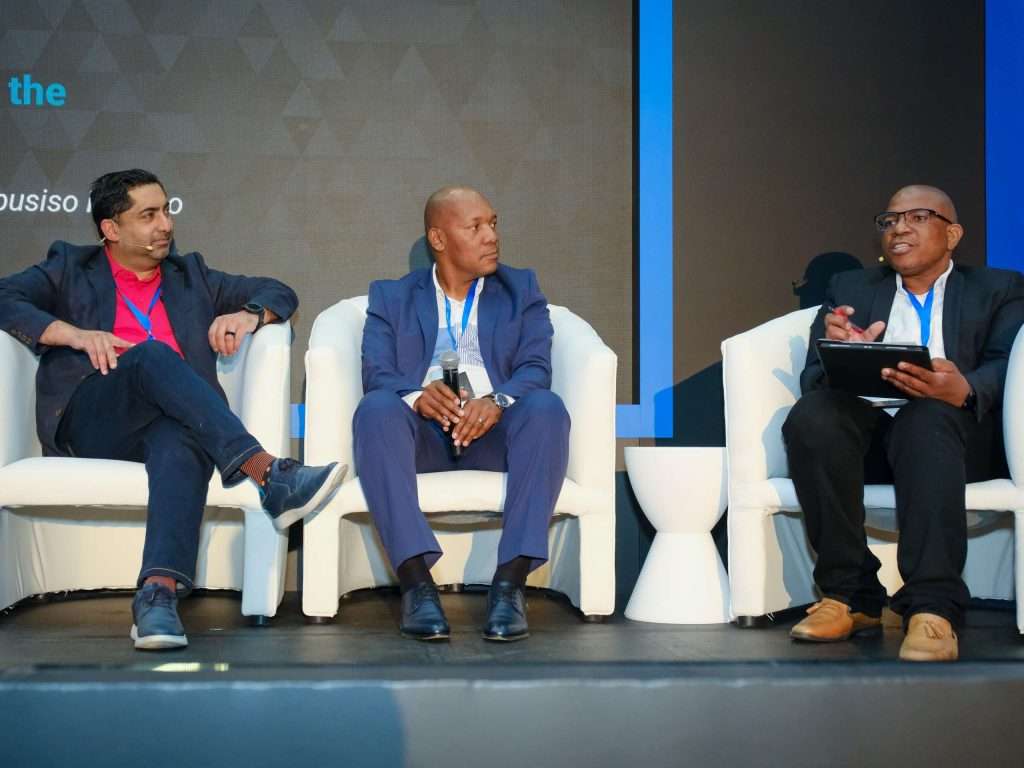
An executive panel featuring Abdul Baba, CTIO, Infrastructure SA; Sibusiso Mbingo, executive: digital and technology, C Ahead Digital and Molifi Sehaole, VP of information management business services at Sasol, explored why digital ethics must be engineered by design and why human oversight remains mandatory at every stage.
Embedding trust at the design stage
Trust is the ultimate currency of digital transformation, but it cannot be retrofitted onto an algorithm after an incident occurs. Sibusiso stresses that ethical guardrails and data governance belong strictly in the design phase rather than during deployment.
“Most of the time system builders want to jump straight into building, but you have to apply thinking behind what design should look like and understand the problem you are trying to solve. Incorrect data at a small scale produces a catastrophic impact when fed into AI, because the system executes decisions at a speed the organisation cannot easily contain.” said Sibusiso.
Molifi outlined a structured framework for human control at all phases to prevent automated systems from operating as unmonitored black boxes.
He told attendees that the algorithm should act strictly as an adviser or recommendation engine, which provides scoring or options while a human makes the final decision.
While AI autonomously executes high-volume decisions, there must be human oversight to perform continuous exception checks, spot audits and fine-tune performance. This way humans maintain full control over the entire use case, overriding automated systems in high-risk or safety-critical industrial operations.
“Digital ethics has to be by design, not retrospective. It is not about finding a scapegoat when things go wrong; it is about ensuring we do not become overly reliant on models and that we fully comprehend how decisions are made,” explained Molifi.
Multi-agent complexity and the super-intelligence horizon
Addressing the shift towards multi-agent AI networks and emerging super-intelligence, Abdul highlighted that governance must span every architectural layer – from applications and data to board-level culture.
He cited Elon Musk pushing flying cars back to 2028 to get safety and trust right, because innovation can’t come at the expense of human safety.
Drawing on his doctoral research in AI preparedness, Abdul warned that emerging super-intelligence will only amplify organisational risk if foundational controls are missing.
“There is a concept called AI preparedness. Super-intelligence is already emerging, but AI is artificial. You must build everything in so that the human is kept in the loop at all times. Companies that prepare up front, embed ethics into their operational culture and maintain human oversight will succeed, while those that do not will face severe fallout.”