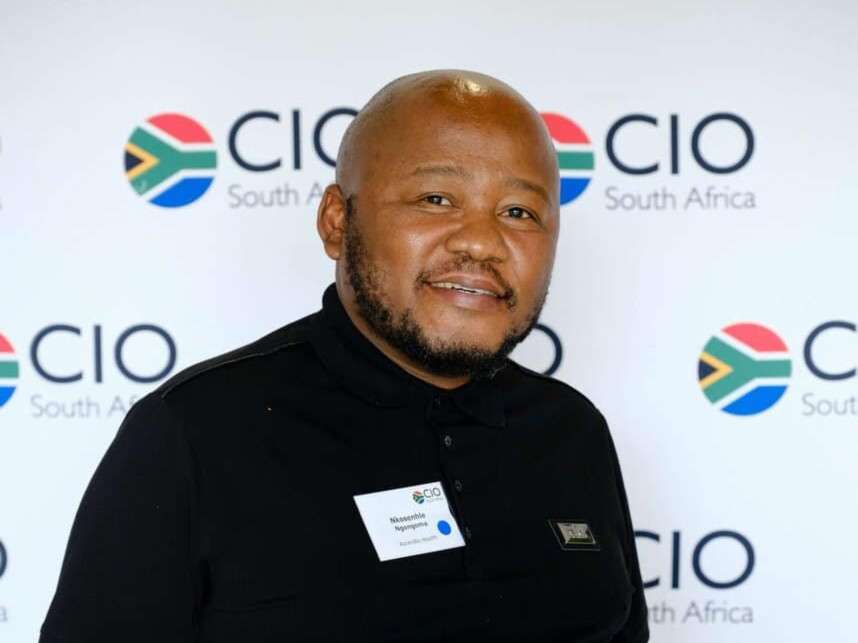
From power utility to railways, airports, pharmaceuticals and now hotels, Nkosenhle Ngongoma, City Lodge’s divisional director: IT, has built his career on deliberate jumps. With his MBA almost complete, he has the top job in his sights.
Ask Nkosenhle Ngongoma what falls under IT at City Lodge Hotels and the list runs well beyond servers and networks. It takes in television sets, door locks, music systems and ovens connected to the network, across 56 hotels in southern Africa, all supported from head office by a small team.
“We look after TVs. We look after door locks. Yes, we look after door locks! We have online integrated ovens in our kitchens. We look after the music system. I think you’ve heard, when you’re walking in the mall or at the hotel, the soft ambiance music that’s playing. Someone must make sure that it plays,” says Nkosenhle.
He dates his CIO career at about 10 years, from Toyota Financial Services to City Lodge Hotels, with stops at Eskom, Prasa, Airports Company South Africa and pharmaceutical company Ascendis Health along the way. He joined City Lodge roughly two and a half years ago and reports to the CFO.
A move that looked wrong on paper
Nkosenhle has never been shy of a jump that raised eyebrows. One came when he left Eskom for Prasa, a decision his friends found hard to understand. “Most of my friends had said you can’t leave Eskom for Prasa; that no one leaves Eskom,” he says.
“But that subsequently opened up more opportunities for me, and then I went to Airports Company South Africa.” Nkosenhle’s reason was simple. “I could not see a potential move and promotion anytime soon,” he explains. The lesson stuck, and it features in his advice to CIOs coming up behind him.
“They need to take charge of their own career. It is very rare that you’re going to be in one company for 20 years and eventually be promoted to CIO. Sometimes you’re going to have to move, and those moves are the ones that can actually take you to where you want to be. In some cases, when you’re waiting for a promotion, they’ll bring in someone from outside,” he says.
Culture shock
The jump from healthcare to hospitality was the biggest so far. “When I joined the hotel group, I came from Ascendis Health, which is a pharmaceutical company, and they said, 'Such a big change. Do you think you’re going to make it in hospitality?’”
He brushed it off, but was quick to realise the differences between the two industries was vast. It was not the traditional IT he was accustomed to. “I didn’t foresee that I’m going to manage TVs. I didn’t foresee that I’d be managing music systems,” he quips.
At one point, his team even managed relationships with mobile network operators that had towers on hotel property. It was a culture shock for Nkosenhle – the architecture of hospitality technology was a new puzzle. This new puzzle includes websites, online travel agencies, like Bookings.com, who are competition and partners at the same time.
“We’ve got travel agencies that connect directly into your system to make bookings. That's another platform that connects into your system,” he adds. Medical, by contrast, Nkosenhle notes, was easy. “ERP, that's all that you had, and inventory management systems."
Two and a half years on, however, the verdict is positive, Nkosenhle reflects, adding that hospitality is not just normal IT. “It's a different beast altogether. But it’s been very, very rewarding, a fulfilling learning and growing experience, as a person and as a leader, so I’m very grateful for this opportunity.”
Keeping 56 hotels online
Distance is the day-to-day challenge. “We manage 56 hotels across southern Africa. I’ve got a very small team. I don’t have presence at the hotels and we manage everything remotely at head office. We work with third parties, so coordinating that with my team and ensuring that the hotels are getting the best service, and relying on other third parties, can be a very big challenge rather than when you have people on the ground,” he says.
Two systems keep him awake. The first is the property management system, which handles bookings, check-in, room availability and housekeeping cycles. “If that system goes down, it’s centralised. It means that all our hotels cannot operate,” says Nkosenhle, adding that it is also a legacy system.
The second is cybersecurity, made harder by the free Wi-Fi offered to guests. “You actually get onto our network, so we have to segregate the guest traffic and the corporate traffic, which is our traffic, so that you don’t have access to any of our systems. But it doesn’t stop there. There are hackers that come and launch an attack from a hotel. When they do that, our IP is the one that appears on the other side. If investigators, or foreign investigators, ask where did this originate, they will just say, ‘Oh, it's coming from City Lodge Hotels’. Then they will come to us and say there’s been an attack on our systems that was launched from your network. We have to protect this,” he says.
Pricing, AI and a big decision
AI is already at work in the business, most visibly in pricing. “Our pricing is linked to a few dynamic activities that happen in the market, including how our competitors are pricing. I think you’ll see it mostly with the airlines. When you search for a flight at Easter, for instance, you know how expensive it’s going to get. We’re following the same model. With our 56 hotels, we have to find out what’s happening around each and every hotel’s area three months in advance so that we know how to charge correctly,” he says.
City Lodge Hotel GrandWest in Cape Town is his example. “When there is a music concert at GrandWest, prices at our City Lodge Hotel GrandWest will be adjusted because demand will also be high.” The pricing model is built in-house rather than running on a public platform.
Generative AI is being tested for policy development, job profiles and presentations, with a wider rollout to senior management planned for December. Governance comes first. “It is a problem and we are aware of some staff using public AI platforms,” he admits, which is why the company is steering people to protected versions so that company data is not leaked.
The biggest decision on his desk is a replacement for the property management system. “It’s a big investment for the business and also a big impact to the business, so getting it right is of the utmost importance,” he says. Approval is the toughest part at present, but he describes the end as close, calling the new system “a whole new chapter”.
Hitting the ground running
Nkosenhle has delivered a great deal since his appointment. The infrastructure, more than 10 years old, has had a full refresh. Office 2016 has been upgraded to Office 365. A new website, launched about a year ago, doubles as a point of sale, and a new ERP implementation began recently.
“I had to hit the ground running. I’ve also had to develop my strategy as I run with the initiatives themselves. I’m actually doing it while implementing at the same time. And the strategy has to be aligned to the business priorities and also funded," he says.
His decision-making has changed as a result. “I have very supportive management and report to the CFO. Exco as a whole is also supportive and I’ve been able to consult different stakeholders before I make decisions, and get meaningful input from them,” he says.
Hotel operations teams are a rich source of that input. “Most of our operations teams at the hotels have been with the company for a long time, mostly over 20 years. They understand the business much better than almost all of us. They started at the bottom of the hotel as receptionists and moved up all the way, and are able to provide key insights,” he says. The operation is built around “champions” who handle everything from DStv to guest satisfaction and point-of-sale systems.
Leading by situation
His leadership philosophy has not changed. “I lead by situation; it’s always been my philosophy. I look at the task, the people I’m leading, their experience and capabilities, and then I provide support at the level that I think they will require,” he says.
He has four direct reports and an open-door policy. “My job is to find out how I can support my team to do their jobs better, by giving them the opportunity to tackle issues and helping them course correct when necessary,” he says. Staff who bring him an issue are first asked whether they have discussed it with their manager.
The view from the boardroom
Outside City Lodge Hotels, Nkosenhle is deputy chairperson of the council at Sefako Makgatho Health Sciences University, where he started in 2022 and is now in his second term; and sits on the board of the South African Health Products Regulatory Authority. He also holds a postgraduate diploma in digital business from Wits and expects to complete his MBA at the University of Johannesburg by the end of the year.
At board level, the role is oversight and advice. “It’s not operational stuff. It is more risk management, cybersecurity, IT security as a whole, budget management, spending on IT, and the project management of ICT,” he says. At the university, he helped to make the case for a CIO post. “When I joined, they didn’t have a CIO position, so I had to motivate and have them put a business case together of why they needed a CIO as a university rather than just an IT manager.”
The work doubles as peer support. “In most cases there’s only one CIO in the business. They will do as much as they can with their teams, but sometimes they want to hear peer-to-peer advice or a recommendation on what they want to do, so I come in handy for those businesses,” he says. He is encouraged to see more CIOs joining boards. “That has not been happening in the past. For me it’s a good thing.”
Next stop: the top job
The MBA has a purpose. “I did my MBA because I want to become a COO or CEO one day. Will it be next year? I don’t think so. But it’s something that I would like to achieve in the future, to lead an organisation fully. It could be an IT business, or it could be a business that relies on IT. It could be anything,” he says.
For CIOs following him, he lists a master’s, ideally an MBA, visibility at industry events and forums, and mentorship as key stepping stones. He also wants them to grasp what drives the business. “There is no manual to become a CIO. There are also CIOs that come from businesses not directly involved in IT, which means it’s not only a technology-focused role. It is a business-focused, strategy-focused role that is supported by IT. And also, the dynamics around you. Learn to understand organisational awareness, influence, and integrity ,” he says.
Away from the desk
Weekends are for hiking and the bush. “I used to run a lot, but not anymore. Now I normally go for a hike on a Saturday morning, maybe 10km,” he says. His ideal break is a game lodge with the family: four children – three boys and a girl, aged 15 to 21. “It’s so quiet. Tranquil. If I could, I’d switch off the network when I was there, but it’s not my choice, and my kids would not like that.”
To unwind after a long day, he watches crime series such as Money Heist and Tyler Perry's productions. He drinks Chardonnay and enjoys good coffee, like the one available at head office.
Nkosenhle also let slip that he used to be a writer, which suggests his next move may not be the last surprise.