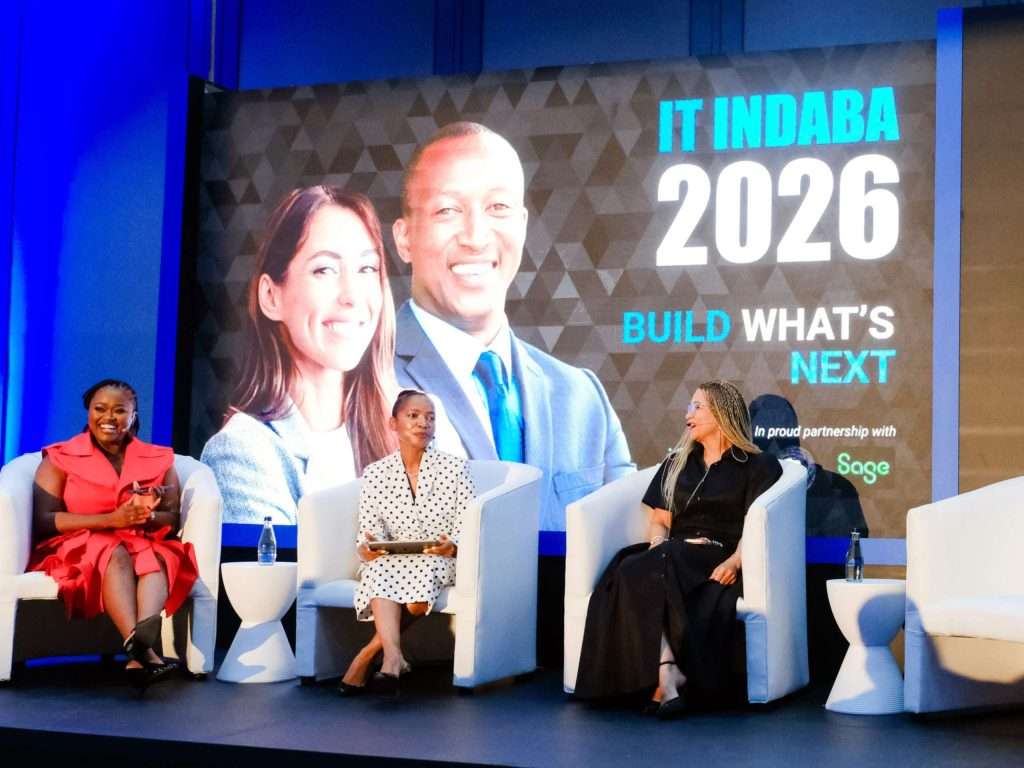
Having diverse employees in the room means little if their perspectives do not influence decisions. Organisations must look beyond representation and create environments where different ways of thinking can contribute to business performance.
This was the central message from Faith Burn, chief technology and operations officer at Land Bank; Makopi Nkopodi, group technology: product management executive at Nedbank and Nomonde White, CIO: group compliance at Absa, during a discussion at the 2026 IT Indaba.
The session, titled The inclusion advantage: How to get diverse teams delivering top performance, explored how organisations can move beyond demographic representation to build inclusive cultures that encourage innovation, engagement and better decision-making.
“Inclusion needs to be something we talk about as something that influences how we work as an organisation,” said Makopi. “Inclusion becomes a business capability when it’s embedded in the operations of the organisation and influences how we make decisions. It influences how we prioritise work. It influences which customer problems we are going to solve.”
She argued that organisations risk missing out on the benefits of diversity when representation does not translate into meaningful participation. “You can have representation from all the demographics in the room, but if that representation doesn’t influence decision-making, then you are not getting the benefits of diversity.”
Looking beyond demographic categories
Faith encouraged organisations to broaden their understanding of diversity beyond conventional demographic categories such as race.
She pointed out that even employees who fall within the same demographic group may have vastly different experiences and ways of thinking. “If you’ve got a colleague from Limpopo and a colleague from KZN, they may fall in the same category but their thinking could be different,” she said.
She also highlighted neurodiversity, noting that employees with diagnosed or undiagnosed ADHD may engage differently in meetings, including becoming impatient with lengthy discussions or preferring colleagues to get straight to the point.
Her argument was that genuine inclusion requires organisations to recognise these differences and make an effort to understand how people communicate.
For example, an employee may struggle to articulate an idea in a conventional or polished manner. If colleagues move on without attempting to understand the contribution, the organisation risks overlooking a potentially valuable perspective.
Different perspectives strengthen teams
Nomonde similarly challenged the idea that representation automatically leads to better organisational performance.
While acknowledging its importance, she argued that diverse teams become more effective when their members are encouraged to challenge established thinking.
“Representation on its own doesn’t necessarily translate to high performance,” she said. “High performing teams are not necessarily those where everyone approaches problems the same way. In fact, some of the most valuable conversations are those which challenge our own assumptions, perspectives we haven’t considered before.”
Her comments reinforced the importance of creating opportunities for employees to contribute perspectives that may differ from those of their colleagues or leaders.
Psychological safety must extend to decision-making
Makopi argued that psychological safety should go beyond ensuring employees feel comfortable speaking up. Their contributions must also receive genuine consideration.
“Psychological safety isn’t only about making people feel comfortable, it’s ensuring people’s contributions are considered,” she said. “If, in one meeting, I contribute and my contribution doesn’t influence decisions, what are the chances I’ll contribute again?”
She cautioned that organisations could have diverse teams on paper while continuing to rely on the same dominant voices and established ways of making decisions. “We can have a diverse group of people sitting around the table, but if you still have the same dominant voices, still making decisions the same way, making the same assumptions, you are not taking advantage of diversity.”