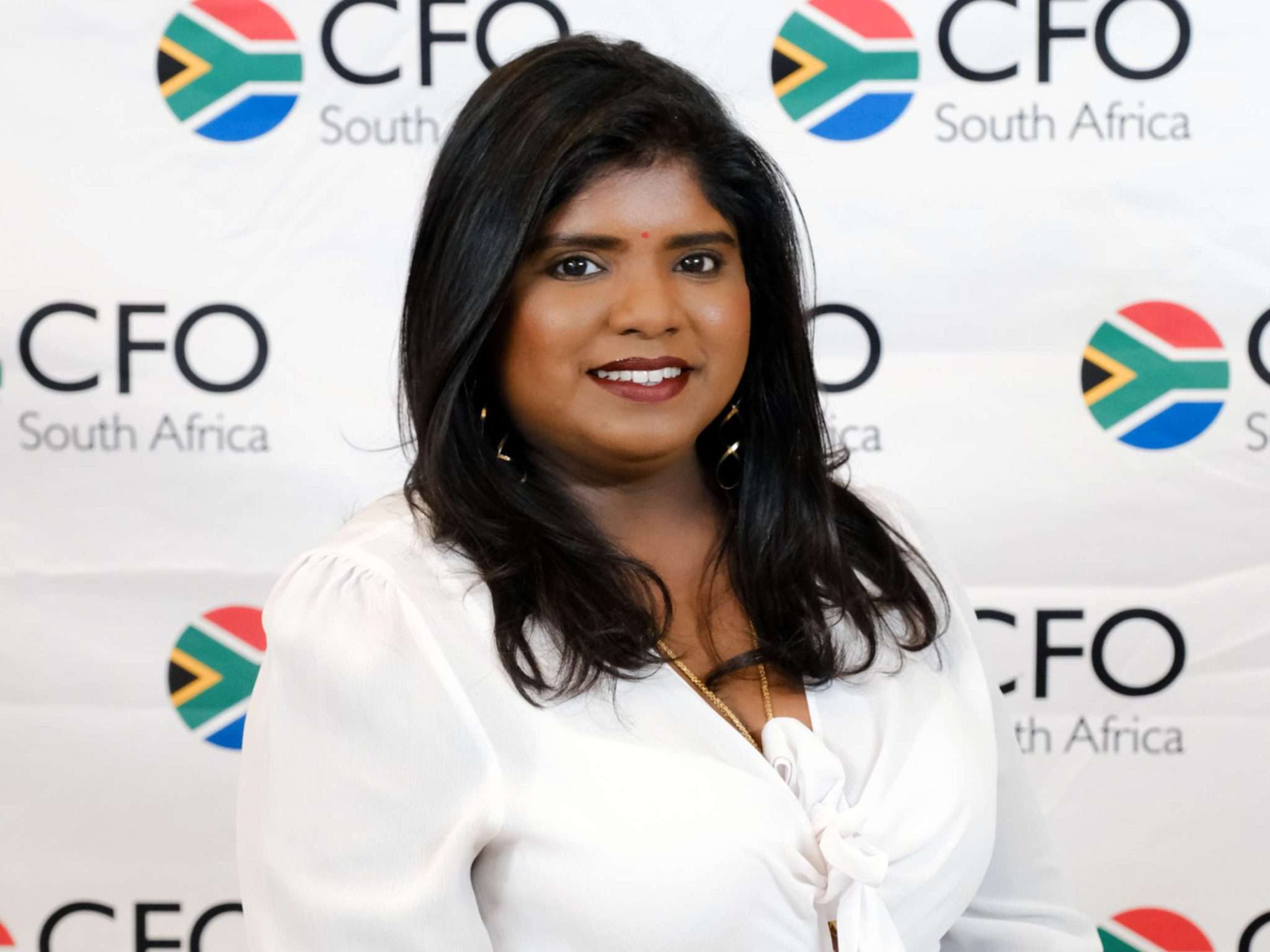

For Youth Day, CIO South Africa posed two questions to IT executives. In response, technology executive Vinoliah Martin, Multichoice / Canal Plus group executive for information and digital technology Maggie Matsie and W&R SETA CIO Barnabas Masekwameng look back at their younger selves and share their advice for the post-digital generation.
As the country marks Youth Day, three prominent IT executives reflect on their personal journeys and the rapid evolution of the digital landscape. While they urge the next generation to trust their voices, build youth-driven parallel economies and confidently challenge the corporate status quo, they also offer a vital warning to Gen Alpha. In a world heavily dominated by screens and artificial intelligence, the leaders stress that emotional intelligence, empathy and real-world conversations will ultimately be a young leader's greatest assets.
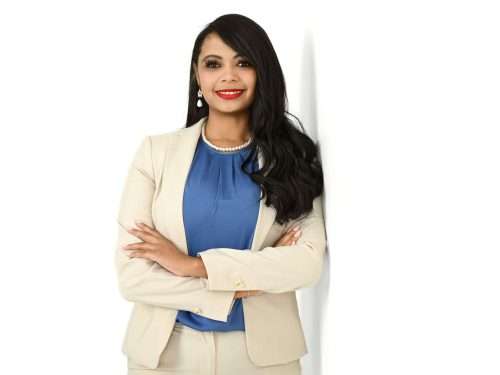
Vinoliah Martin, technology executive
Q: What would you tell your younger self if you had the opportunity to go back in time?
For me, it would be to trust your voice and have confidence in it sooner. What you have to say matters, even in rooms that feel intimidating or filled with people who seem more experienced. Don’t wait for permission to step forward or for the moment you feel completely ready; growth comes from taking ownership before you feel fully equipped.
I would also tell my younger self to focus on learning rather than perfection. Chasing perfection often becomes a trap; it slows you down, it creates self-doubt and convinces you that you're never quite ready.
Learning, on the other hand, keeps you moving forward. Every mistake becomes a lesson, every setback offers you insights that you can use to move forward and every experience compounds into wisdom that you can draw on throughout your journey.
Then, lastly, never underestimate the power of networks and networking. Your network is one of the most valuable assets you will ever build. Opportunities, mentorship, sponsorship and even lifelong friendships often come through the relationships you nurture along the way. So it is important that you are intentional about building genuine connections, not just transactional ones.
Reach out to people you admire, stay in touch with former colleagues, show up at events even when it feels uncomfortable and always be willing to give back and bring others along on the journey with you.
Q: What is your message to Gen Alpha? (2010 – 2025) A generation that doesn't know the world pre-digital era?
To our Gen Alpha generation, you are growing up in a world that is evolving faster than any generation before you, with emerging technologies continuously shaping the future in ways we can only begin to imagine. While technology is powerful, your greatest advantage will always be your humanity. So, stay curious and never stop learning, your ability to adapt, learn and reinvent yourself will be one of your most valuable strengths.
Be bold enough to challenge the status quo, ask difficult questions and think differently. As you shape your future, remember the unique opportunity you have to contribute to Africa’s growth and transformation, in using technology to solve real problems, applying innovation to address local challenges, unlock potential and create lasting impact that can improve the lives of people and can uplift communities across the continent.
Then also become leaders who are grounded in empathy, integrity and purpose. The future will not only need innovators; it will also need compassionate leaders who recognise that true progress is defined by the positive impact we make on society. You have the opportunity to help build a more connected, inclusive and sustainable world. So dream big, embrace change and never underestimate the power of one idea, one action or one person to make a lasting difference in our country and continent.
Maggie Matsie: Multichoice / Canal Plus, group executive for information and digital technology

Q: What would you tell your younger self if you had the opportunity to go back in time?
I would say that “we did it.”
I was one of the first kids to join a multiracial school, which introduced me to a world I had never been exposed to. I vividly remember visiting my aunt when I was eight. She was a domestic worker in Vanderbijlpark, where my school was. Because I travelled from Parys to Vanderbijlpark – about 60 kilometres – every day, sometimes I would have to wait until 5pm to be picked up.
Fast forward a few years – I admired my teachers and wanted to be one, as that was the only profession I was exposed to in a small, predominantly Afrikaans town like Parys. I love my community and enjoy speaking Afrikaans, but you easily get boxed in and used to not seeing the other side.
Moving to a multiracial boarding school exposed me to the idea that there were careers beyond teachers, police officers and nurses.
The reason I say “we did it” is because my 14-year-old self wrote down on a piece of paper that I wanted an office. My parents did not have much money, and university was a dream I didn't think would happen. The fact that I was able to go to university without needing financial aid is incredible. I’d also tell my younger self to dream bigger and not expect life to be linear. The office will come (we got it by the way), but the real reward will are the people, lessons and impact she never imagined.
Q: What is your message to Gen Alpha? (2010 – 2025) A generation that doesn't know the world pre-digital era?
I've actually never thought of that. But I live with digital natives. My husband and I sometimes sit and think, “Must be nice.” Must be nice to just have endless Wi-Fi, because sometimes it still feels like we are dreaming. These are the humans we are raising, and they have such unlimited thinking. In a world where technology can give you answers instantly, your greatest advantage will be knowing how to think, question and un-learn and relearn as quick as possible.
I always pray to God and the universe to help me not to project my fears and myopic thinking onto these kids. I do not want to diminish what we are meant to learn through them. For example, I sometimes catch myself wanting to be rigid when my son studies. I want to say, “Who can focus when there is music on?” But I am learning that is what makes him who he is. The one time I made him study without music, he got 20 percent. I try to ensure I do not pass on my own fears just because my parents did.
In fact, I would flip the perspective: we should be the ones listening more and changing our preconceived ideas about what success looks like, because we are shaping the next generation.
Barnabas Masekwameng, ICT executive and CIO at the Wholesale and Retail SETA (W&R SETA)

Q: What would you tell your younger self if you had the opportunity to go back in time?
Knowing what I know now, I would be able to contribute more than politicians. I would say to young people: instead of being left-wingers, let us develop a parallel economic landscape.
This is what India did. India once had the same posture we have in South Africa – the economy was declining and confidence was very low. But the prime minister who came in said, “I cannot change the legacy, but let’s create a parallel economy that is youth-driven and technology-driven, one that positions us as competitors to the first world.”
They did exactly that, and the parallel economy superseded the legacy one. Now, the legacy economy is forced to conform to this new dimension. That is why India is ranked number five in the world.
So, I would say to young people: use the national and international influence that you have, and start developing economic development zones electronically. Doing things in parallel does not mean you need capital-intensive programmes. You can create an industrial zone on a platform, promote it and let it operate in parallel.
By doing that, it forces the government to take notice – they are spending billions, while these creators are not even spending hundreds of thousands, yet the impact of their intervention is greater. Ultimately, the government will say, “Let’s adopt this as a South African citizenry concept, and let South Africa have sovereignty over it.”
Q: What is your message to Gen Alpha? (2010 – 2025) A generation that doesn't know the world pre-digital era?
The good thing about Gen Alpha, in the context of South Africa and current trends, is that they do not see colour. They do not see boundaries. They perceive themselves as global participants – they can connect with anyone, anywhere at any time.
But the first message I would give to Gen Alpha is to get your act together. A phone and a couch, a TV or a gaming console – that is not your life. You still need to have conversations with the people you live with and those who are close to you. Most of them actually enjoy talking to imaginary friends on their phones. They have created their own digital worlds and they are comfortable in them. As a result, they become – not necessarily introverts – but people who are anti-people.
They forget that in the future, they may be employed by or employ other people, and they will need those people to listen to their instructions. However, they will be ill-equipped because they interact mostly with machines. They need to interact with humans.
I read a case study about Amazon. Jeff Bezos said he would give employees a bonus if they stayed more than two years, because it is well known that people do not stay long at Amazon due to the culture. He would say things like, “This is my kids’ money – you are messing with my kids’ wealth.” People do not stay in that kind of environment. Now imagine if the majority of individuals in future workplaces have zero emotional intelligence.
They might have a high IQ but they are not developing enough emotional intelligence. So I would say to Gen Alpha: you were not born by a robot. You were born by human beings – your mother and your father – who are also connected to siblings, cousins and relatives. Come back to life, and into the human world.
How many times have you taken kids to a family gathering? They will be happy at first – hugs all around – and in no time, everyone has retreated to their own corner, looking at their phones and connecting with friends who are not even at the event.
You really need to learn to converse.
Some of us grew up in an era where, even without bonfires, we had coal stoves at home. You would be given a task: “It is your turn this week to make the fire.” After eating, everyone would sit around that stove. You would hear the old stories, you would laugh and you would realise – growing up – that those stories were actually culturing you. They were teaching you how we live. They were teaching you to recognise: this is your cousin, this is your relative.
I do not want our Gen Alphas to lose their identity and who they really are. They are human beings. They have emotions. A phone, a robot or an AI tool does not have feelings. It is artificial. It does not have emotions. But you need to be able to say, “What I said upset that person,” and then recollect yourself, apologise and say, “I am so sorry I hurt you.”
I am very conscious of the behaviour that Gen Z and Gen Alpha are adopting by virtue of the augmented reality that is at their disposal. Right now, we seem to be grooming cold kids. I often tell my own children, “Say sorry to your sister – and mean it. Give her a hug.”