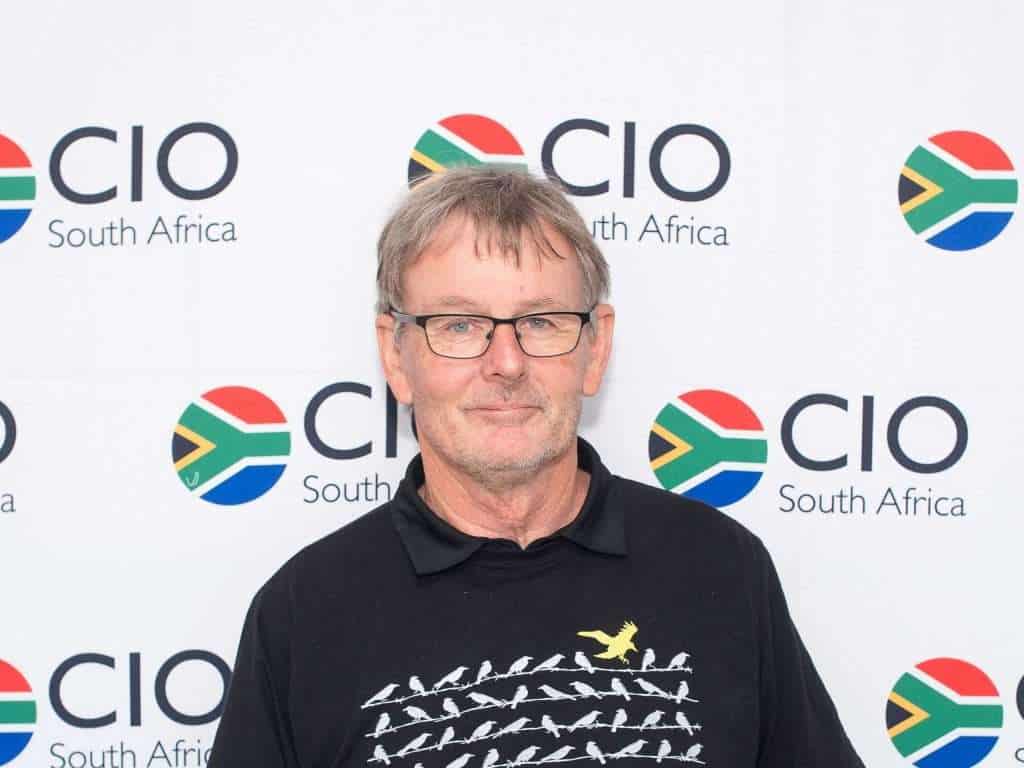
From birthday celebrations at Spur Steak Ranches to gourmet burgers at RocoMamas, Spur Corporation has become a staple in South African dining culture. But behind the scenes, a complex technology ecosystem keeps the experience consistent and seamless across regions. Spur Corporation CTO Marius du Toit lifts the lid on how IT drives operational excellence across the group’s diverse portfolio.
There’s a good chance that you, or someone close to you, has celebrated a birthday at one of Spur Corporation’s iconic restaurants, like Spur Steak Ranches. And if a spirited debate ever broke out about the best burgers and milkshakes in town, RocoMamas, another franchise under the Spur banner, would likely be high on the list.
But have you ever stopped to consider the technology powering these dining experiences? From South Africa to Mauritius and the Middle East, Spur Corporation operates a vast network of outlets, each relying on seamless tech integration. Marius du Toit, chief technology officer (CTO) at Spur Corporation, shares the essential ingredients behind managing IT in the fast-paced world of casual dining.
Q: Many restaurant chains still rely on legacy POS or inventory systems. How do you decide whether to modernise or integrate these with newer tech?
A: The question is even more complex and nuanced than this phrasing. Restaurant POS systems are often mini-ERPs (with ordering, HR, finance/reports, kitchen management, and more) baked in there. Additionally, many restaurant groups are franchise groups, and many such groups operate several brands. Thus, there are many different strategies around dealing with these questions. There are no ‘tips’. One must choose the correct strategy for each situation.
Q: What’s the most unexpected challenge you’ve faced when trying to transform a legacy system, and how did your team solve it?
A: I’ve had countless unexpected challenges and there is no ‘best’ approach. Rather, one should deeply understand all of the possible strategies – and then apply the most appropriate one(s) at the right time. There really are many possible playbooks.
Q: What are the top three IT considerations you focus on when your group enters a new market, whether local or international?
A: There are, in fact, many ‘threes’ to consider: current-state/ambition/gap-analyses; cost/risk/benefit; people/process/technology; buy/build/rent; scope/budget/schedule, etc. All of these must be bedded down for each new situation.
Q: How do you future-proof tech investments in territories where infrastructure or regulations may change rapidly?
A: Change equals risk. The likelihood and the impact of change (through infrastructure/regulations, but also through technology, culture, ownership, opportunity, etc.) drive the amount of effort and investment pertaining to the future-proofing of each of the change-drivers.
Q: Who was your most influential mentor in tech, and what advice from them do you still use today?
A: We are the products of our decisions/actions as well as the influences of countless others. This may be one way of interpreting the Ubuntu ‘I am because you are’ philosophy. I am influenced by everyone I meet.
Q: Are you paying it forward as a mentor yourself? If so, what’s a lesson you find young IT professionals often overlook when stepping into the fast-paced world of IT?
A: The world owes us nothing. Yet, we owe the world something. The first part helps us get off our backsides and the second part helps us define our contributions to others. When juniors come to terms with this apparent contradiction, they are well on their way.
Q: What’s one AI use case you believe is underrated or underutilised in the restaurant space – something that could be a game-changer in the next few years?
A: AI's possible contributions in risk mitigation (as opposed to cost reduction and/or benefit creation) is often underrated. We have had huge successes there already.
Q: Have you seen any AI pilots that didn’t go as expected, and what did you learn from the outcome?
A: If you just throw a screwdriver at people, they may decide to use it as a hammer (or not to use it at all). Soon AI will be pervasive, but today such initiatives will still fail without good change management.
Q: What’s your secret sauce for attracting top IT talent into a restaurant business, where tech might not be the first drawcard?
A: Don’t, for one moment (in 2025), underestimate the use of tech in any type of business. Wild amounts of innovation are happening everywhere – i.e. in all types of businesses.
Q: Retention is often harder than recruitment. How do you keep your team motivated when the work ranges from plumbing systems to cutting-edge innovations?
A: We all look for the same things in all types of relationships. Retention is easier if those ‘things’ are properly addressed in work relationships too, i.e. just basic common sense combined with concomitant actions are usually good enough.
Q: Where do you turn to for inspiration?
A: There is a huge difference between information/wisdom (research) and snake-oil (‘do your own research’). I try very hard to lean towards the former while also fighting the social media algorithms.
Q: Are there any favourite hobbies, books, or podcasts that keep your thinking sharp as an IT leader?
A: Just a general Mens sana in corpore sano which is a Latin phrase that translates to ‘a healthy mind in a healthy body’ mindset seems to help me a lot.