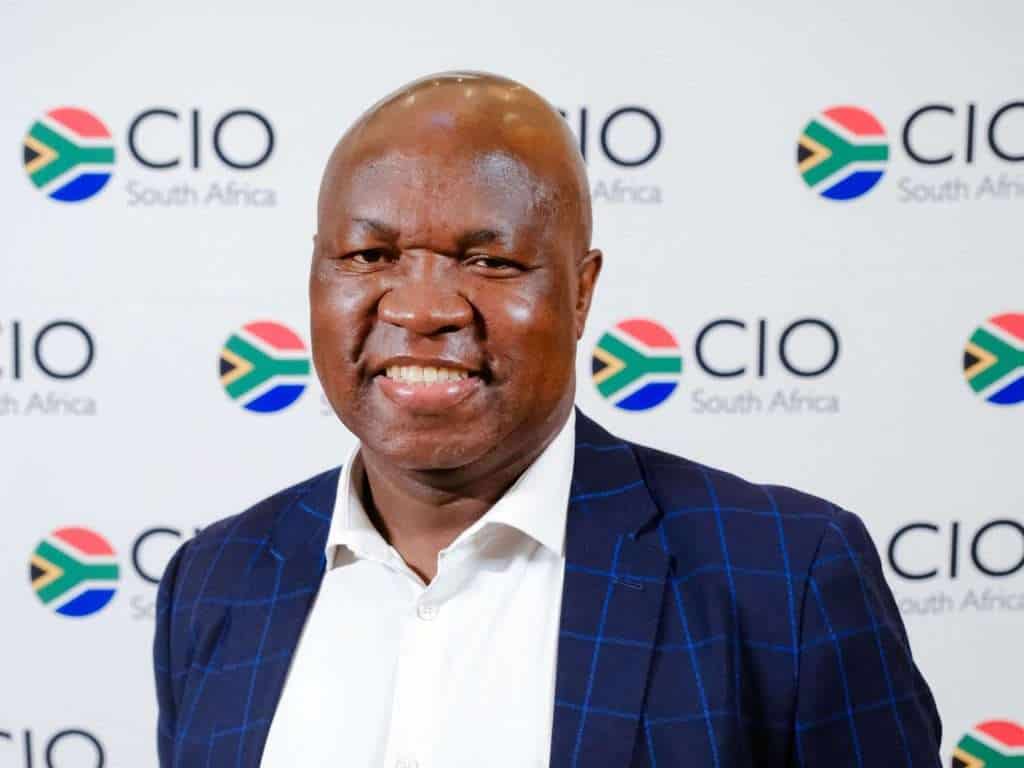
Newly appointed to the Saica board, University of the Witwatersrand chief information officer Dr Mgobansimbi Stanley Mpofu warns that a business without technology is destined for extinction. He unpacks why modern boards can no longer afford to leave IT experts out of the boardroom.
The South African Institute of Chartered Accountants (Saica) has appointed University of the Witwatersrand chief information officer Dr Mgobansimbi Stanley Mpofu to its board.
He joins the professional accounting body shortly after being appointed as a member of the ICT Committee of Council at the Council on Higher Education.
With more than 32 years of experience in the technology industry and 10 years in higher education sectors, Mgobansimbi believes that the absence of technology experts in board conversations exposes organisations to significant technological risk.
“A business without technology is a business going to be extinct in a matter of time,” he said. “Equally important, companies have recognised that conversations at the board level cannot just be about legalities and financial sustainability.”
He says technology now drives everything in every industry and cannot be left as an afterthought like it was in the 90s when IT was some little cost centre. “ICT is now relevant as a strategic business partner.”
Guiding board-level technology decisions
Saica is the principal organisation responsible for training, accrediting and regulating chartered accountants in South Africa. As artificial intelligence and automation reshape the accounting and audit professions, Mgobansimbi says he is not stepping in to manage IT operations as that is the role of Saica’s CIO and her team.
“Remember I am joining the board as an expert in technology. Saica has its own CIO and my role is to assist the board in the technology landscape,” he says.
“My skill set is grounded around technology as well as governance, meaning I become an asset for an organisation that requires someone with a good understanding of technology as well as governance in general, such as King V and ICT governance.”
He added that modern boards can no longer treat digital as a purely operational issue, as technology is now the cornerstone of every business outcome.
“Considering that technology is embedded in every process of the tasks in different parts of the organisation, it is therefore not a matter of choice that boards require technological expertise in their deliberations. The absence of technology experts in board conversations will expose organisations when dealing with many aspects of technology such as cyber resilience and artificial intelligence just to mention a couple,” Mgobansimbi says.
Empowering teams to lead
A highly effective and capable team assists Mgobansimbi in balancing his dual board commitments alongside his responsibilities as a university executive. He commended the strong work ethic within his division, as well as the support of his general managers and the chief information security officer in managing these diverse portfolios.
“These board roles are not simultaneous, leaving me with adequate time to allocate accordingly while prioritising Wits University duties,” he says. “My good team of direct reports take care of operations while I focus on strategic matters and decision-making for Wits University.”
A multi-award-winning IT leader, Mgobansimbi finds balance through his family and community obligations.
“I unwind by being with my Mpofu clan members, participation in my parish as a Catholic, watching my favourite sport soccer, doing small-scale farming activities and lastly playing my recently discovered interesting sport of golf,” he concludes.