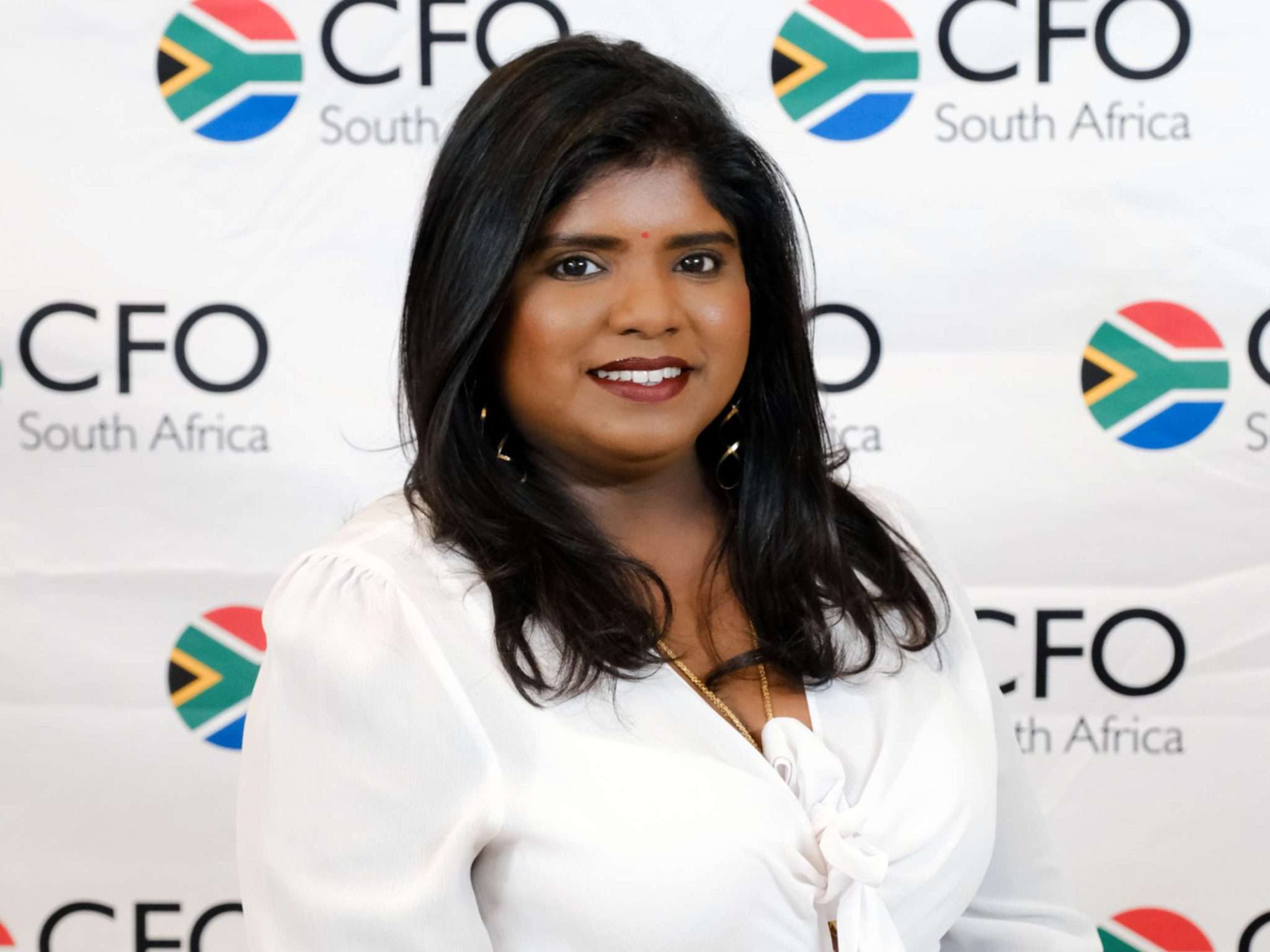
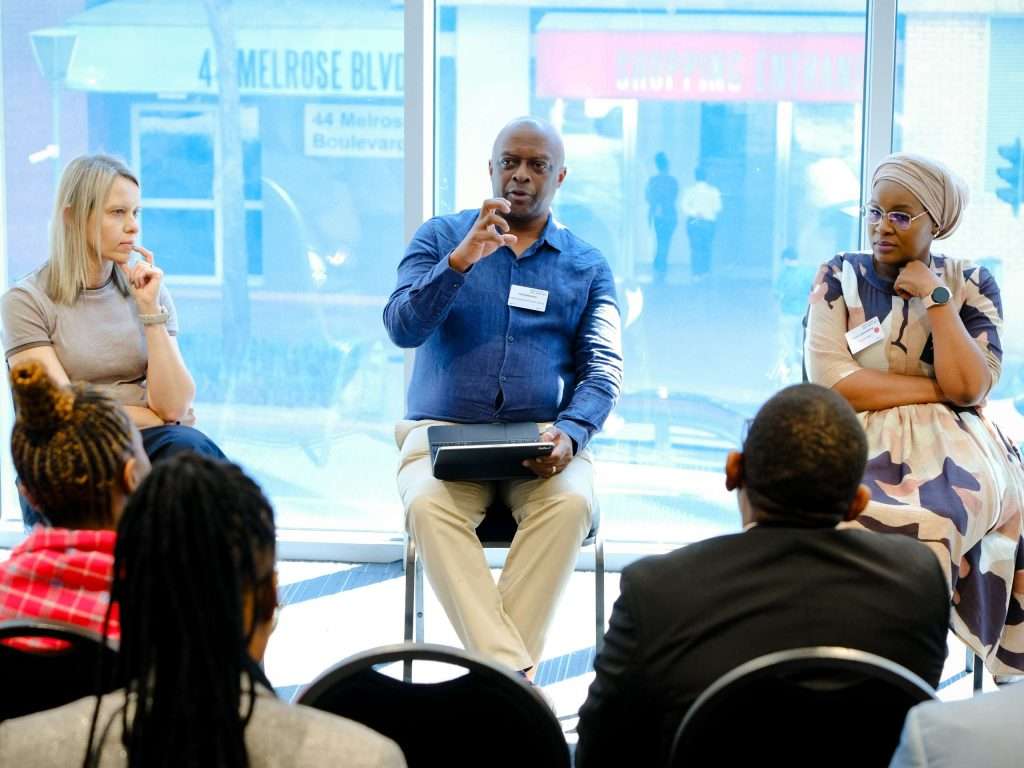
During a breakaway session on tackling workplace tension, Zeda CIO Pulana Ngwasheng unpacked her five types of corporate friction. She was joined by Auditor-General CTO Phila Ndarana and AB InBev VP of people Inette Swart.
Attendees at the third annual Executive Day at Melrose Arch on 3 September challenged conventional wisdom that a quiet boardroom or a frictionless meeting is the ultimate marker of high performance.
They argued that a workplace with no visible disagreement is usually a workplace where people are too hesitant, too disempowered or too afraid of political blowback to say what they actually think.
“Friction is not automatically bad or good – it really depends on the context of the friction. For you to understand how to respond to it with intention, you need to understand the source of it,” said Pulana Ngwasheng, CIO at Zeda.
That reframe set up the session’s central contribution: a practical framework for telling the difference between friction that builds the firm and friction that destroys it. Pulana offered five distinct categories.
The five categories of friction
The first one was mandated friction, when it’s unclear where a decision or responsibility actually belongs in the company, creating execution bottlenecks.
The next category is process friction which is when tensions arise from designed corporate processes that make execution harder than it needs to be.
Then comes relationship friction. This centres around people dynamics and navigating different personalities, working styles and points of view on how colleagues should relate to one another.
This is followed by truth or trust friction which occurs when team members operate from entirely different versions of the truth and cannot locate common, legitimate ground.
The last category is culture friction which refers to the culture shock a new hire experiences on entering a company.
“You walk into a culture and you are automatically drawn into different friction situations simply because of culture shock,” Pulana explained. “Someone can interview brilliantly and still fail to deliver – not for lack of skill, but because of that mismatch.”
Pulana was direct about the risk of getting this wrong. “Using the absence of friction as a barometer of organisational health is a dangerous fallacy. A friction-free room isn’t a healthy room – it’s a room with no dissent and no opposing views.”
“Some of the best decisions that I’ve been part of have come from rooms where there was extreme disagreement,” she said. “The difference between constructive and destructive friction comes down to respect, professional principle and ‘playing the board and not the man’.”
Psychological safety
Phila Ndarana, CTO at the Auditor-General of South Africa, picked up the thread by naming the condition that must exist before any of Pulana’s five frictions can even surface: psychological safety.
“If there’s no psychological safety, that necessary friction cannot be inculcated in the organisation,” he said.
Without it, tension does not get diagnosed; it simply goes quiet. Phila pushed back hard on the instinct to treat kindness and accountability as opposites, calling it “the biggest fallacy that we face as leaders”.
In his view, kindness is discipline, not softness: “It is easier not to be kind than to be kind,” he said, arguing that tolerating poor performance is not kindness at all – it is a tax on everyone else carrying the load.
Whatever the conversation, he was clear on the one line that cannot be crossed: “No matter what kind of conversation you have with a person... they’ve got to leave your space with their dignity intact.” As he put it, feedback exists “not to break them, but to build them.”
Inette Swart, VP of people at AB InBev, added the structural and cultural counterpart: “You cannot expect people to deliver if they do not know what is expected of them.”
She pointed to AB InBev’s own exco sitting in an open-plan office as a deliberate, physical answer to the bypassing problem Pulana described – proximity that lets leaders hear issues early, before they escalate.
She also drew on Liz Wiseman’s Multipliers book to make the case that a coaching culture starts with leaders being willing to let people fail, rather than stepping in to solve every problem themselves.
The day was made possible by Principal Partners, Cassava Technologies, Entelect, iOCO, MakwaIT, Old Mutual South Africa Corporate, Regenesys Corporate Education, Executive Partners, BDO South Africa, Discovery Limited, Deel Local Payroll, powered by PaySpace, HCLTech, Hyland, ITR Technology, Jem, Kaspersky, LRMG, Marsh, Ninety One, STANLIB Asset Management, Wits Plus and Workday.