
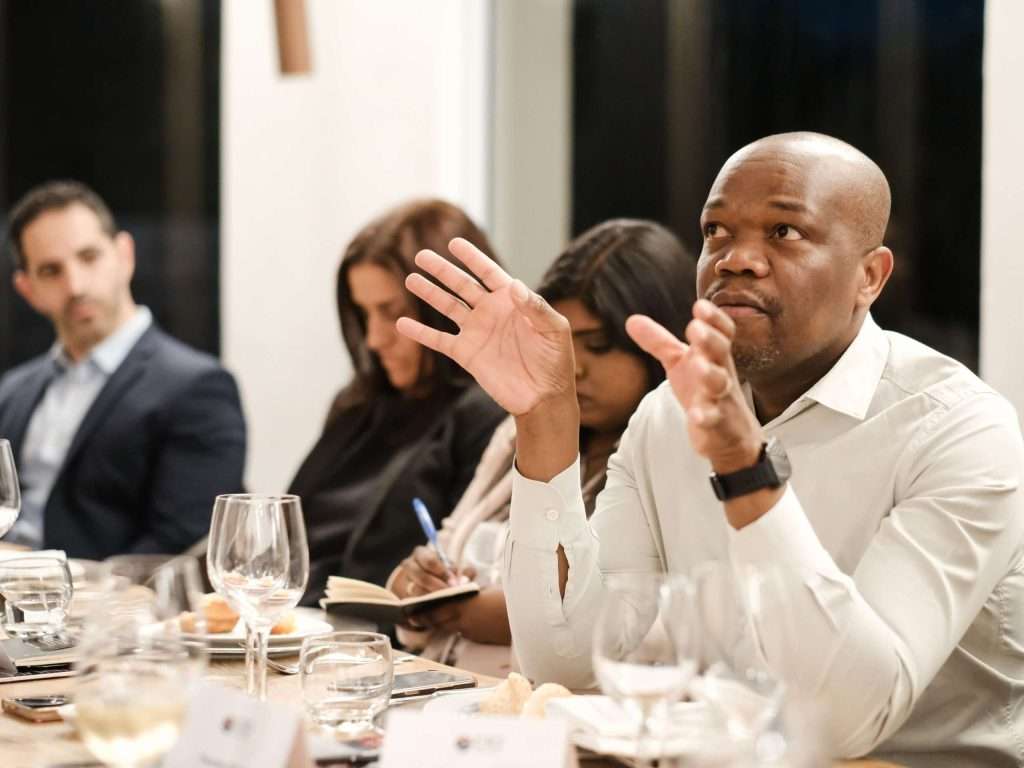
During a CIO Dinner that took place at The Westcliff hotel in Johannesburg, on 13 October, CIOs said AI rebuilt an undocumented application in 18 hours, yet replacing a core system still costs from R1 billion to R5 billion or more.
The gap between what AI can do in an afternoon and what financial institutions can afford to risk, dominated the CIO dinner conversation at the exclusive, intimate dinner, that took place under the theme titled AI applied engineering.
Throughout the evening, guests kept returning to one problem: the old systems that still run the business.
The price of a new core
“A core replacement starts at R1 billion and easily escalates to R5 billion or more,” explained one guest. When deciding on the future of legacy systems, companies must also pay to run the old and new systems side by side, and the board has to approve the whole project.
A prominent bank’s experience had made South African financial institutions wary of full overhauls, one attendee shared. At the same time CIOs are under pressure to hand back efficiency savings while cloud and AI costs climb.
Another guest said the real problem was that a mainframe rebuild did not bring in revenue quickly. Boards sign off faster on new products than on risk reduction, so old systems stay put.

The cost of waiting
But doing nothing is risky too. Attendees pointed to a month-long mainframe outage at NatWest Group in Scotland in which a software upgrade became corrupted. Technicians were unable to roll back to the previous version resulting in the month-long mainframe disaster.
The conversation then turned to what actually drives companies to modernise legacy software. While commercial leaders often stall mainframe overhauls because they don't offer immediate revenue, dinner guests noted that the primary catalyst is often the shrinking pool of engineers who understand decades-old codebases.
But some guests were optimistic because newer AI models could now read old code and map how it connects and write down the rules that no one documented. “Human judgement remains essential, so you don’t simply rebuild the exact same technical debt,” said one attendee.
A cheaper route
For financial institutions that cannot rip out the core, attendees mused that joining the systems together instead of a complete overhaul might be the safer bet. Opening a bank account, for example, involves several separate checks. “You can chain these systems together using AI to collect evidence and present a single approval pack,” said one guest. One review replaces a string of hand-offs and delays.
Speed also brings its own problem. Another guest explained that his company engineers now push eight times more code, which leaves human review as the bottleneck. Their answer is to let AI review low-risk code and keep people for the code the business depends on most.
Attendees also highlighted cultural resistance as a key barrier to automating software development workflows with AI. “In large corporate banks, employees are often defensive around their turf and withhold information out of fear that transparency threatens their jobs,” said one guest.
As the evening concluded tech leaders agreed that while AI could accelerate code delivery, unravel legacy logic and automate routine testing, the future of software engineering relies on empowering human talent to shape meaningful business outcomes.
Those in attendance were:
Aliyah Allie, executive head, DisChem - X, bigly labs
Cypro Mailula, CDO, Momentum Group
Dan Manyemwe, CCO, Entelect
Gavin Moss, CIO, RMB
Maria Carpenter, executive head, Momentum Multiply
Narissa Delport, senior writer, CIO South Africa
Nir Haimov, CIO, Discovery Health
Nomahlubi Sonjica, community manager, CIO South Africa
Nomonde White, CIO: Group Compliance, Absa
Rafeea Saib, group information technology executive, Old Mutual
Timothy Kroon, COO, Entelect