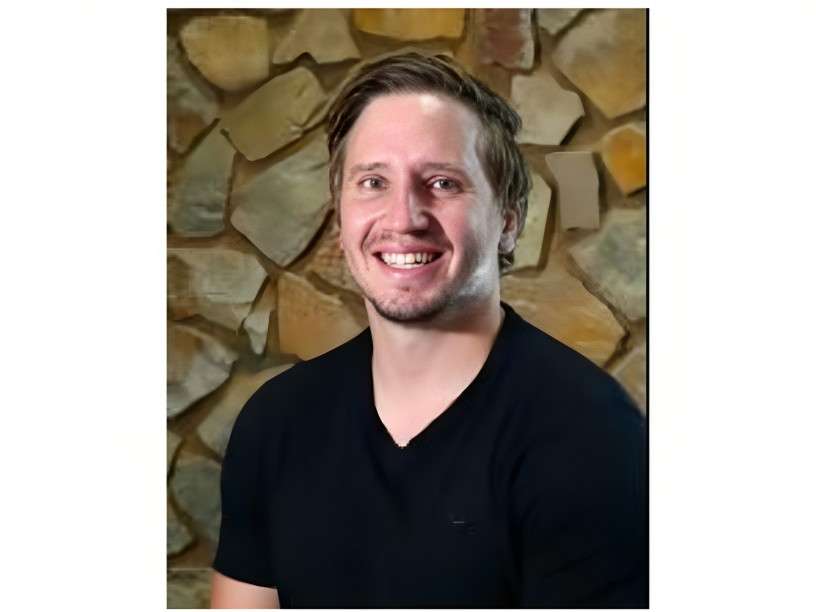
CIO South Africa recently caught up with Tiaan Taljaard, group chief information officer at Seacom, and here is what he shared about his role.
Tiaan Taljaard, group chief information officer at Seacom, is driven by the mission of connecting Africa to the world and enabling individuals and enterprises to access digital tools securely. In this interview, he explores how he bridges the gap between emerging technologies and real business needs, shapes data foundations to support artificial intelligence adoption and prioritises cybersecurity and infrastructure resilience.
What makes you excited to get up in the morning?
What excites me is the opportunity to take technology and turn it into something that genuinely changes how a business operates.
I have always been interested in emerging technology, and a large part of my career has been spent working across data, analytics, automation and AI. But the technology itself is only part of what interests me. The real challenge is understanding what the business is trying to achieve, where people are struggling, and then finding the right technology to help solve that problem.
As I have moved into broader technology leadership, that has become even more important to me. I spend a lot of time looking at what is changing in technology but also listening to what our teams and customers need. When you can bring those two worlds together and see technology genuinely improve how the business works, that is what I find exciting.
Where are you as an organisation in terms of AI maturity? Where would you place Seacom?
I would describe Seacom as being in the transition from building the foundations for AI to applying it more deliberately across the business.
We are spending a lot of time simplifying our technology landscape and strengthening the foundations, particularly around data, governance and process architecture. That is important because I don't believe you can scale AI effectively if the underlying data, processes and controls are not ready.
We are now moving beyond the foundation stage and looking much more closely at where AI can have a practical impact. We have a number of use cases and proofs of concept across the organisation, from productivity and knowledge-based solutions to opportunities for greater automation and intelligence within our processes and operations.
For me, the next stage of AI maturity is less about how many AI tools we deploy and more about adoption and measurable impact. The question I keep coming back to is: where is the business experiencing friction, and can AI genuinely help us solve it? That is where I believe the real value will come from.
What keeps you up at night?
Cybersecurity and resilience are probably the two areas I think about most. Cybersecurity is constantly evolving, so you can never treat it as something that is complete. We continue to strengthen our security posture, but I also believe resilience is about accepting that you cannot prevent every possible event. You need to be equally prepared to detect an incident quickly, contain it, communicate effectively, recover, learn from it and continuously improve.
The other area is infrastructure resilience and availability. As a telecommunications business, our customers rely on the services we provide to keep their own businesses connected and operating. That creates a significant responsibility for us.
For me, it comes down to trust. Customers trust us with critical connectivity and services, and part of my role is making sure that our technology environment is secure and resilient enough to protect that trust.
What is the biggest shift you have had to make in how you lead or think about your role in the last 12 to 18 months?
Probably the biggest shift has been learning to lead through others rather than feeling that I need to be close to every solution myself.
I have always been quite hands-on. Earlier in my career, I was directly involved in areas like data, analytics, automation and technology delivery, and I enjoyed getting into the details and solving problems with the team. Moving into a CIO role changes that responsibility. You cannot be the person solving every problem. You have to trust and empower the people around you, create clarity on where you are going, and give them the space to lead.
The other shift has been becoming much more business-facing. My technical background is still incredibly valuable, but I increasingly have to translate technology into business priorities, outcomes and decisions.
For me, that has probably been the biggest evolution: moving from asking, “How do we solve this technology problem?” to asking, “What are we trying to achieve as a business, and how can technology help us get there?”
When you eventually step away from your role, what do you hope to have left behind?
I would want to leave behind a technology organisation that is stronger than when I found it: one that operates exceptionally well, has great people, and genuinely helps Seacom grow and achieve its ambition of connecting Africa to the world.
That purpose is something I find incredibly meaningful. Connectivity gives businesses access to global markets, cloud platforms and new technologies, but it also gives people across Africa access to information, education and opportunities that may not otherwise have been available to them. Technology can have a very real impact beyond the organisation itself.
From an IT perspective, I would like us to build on that by creating a function that combines operational excellence with the courage to keep pushing into what comes next. Whether that is AI, greater automation, autonomous networks or other emerging technologies, I would like Seacom to be known for applying these technologies in ways that make sense in an African context.
Ultimately, I would hope to leave behind great people, strong foundations and a technology organisation capable of continuing to evolve long after I have moved on.