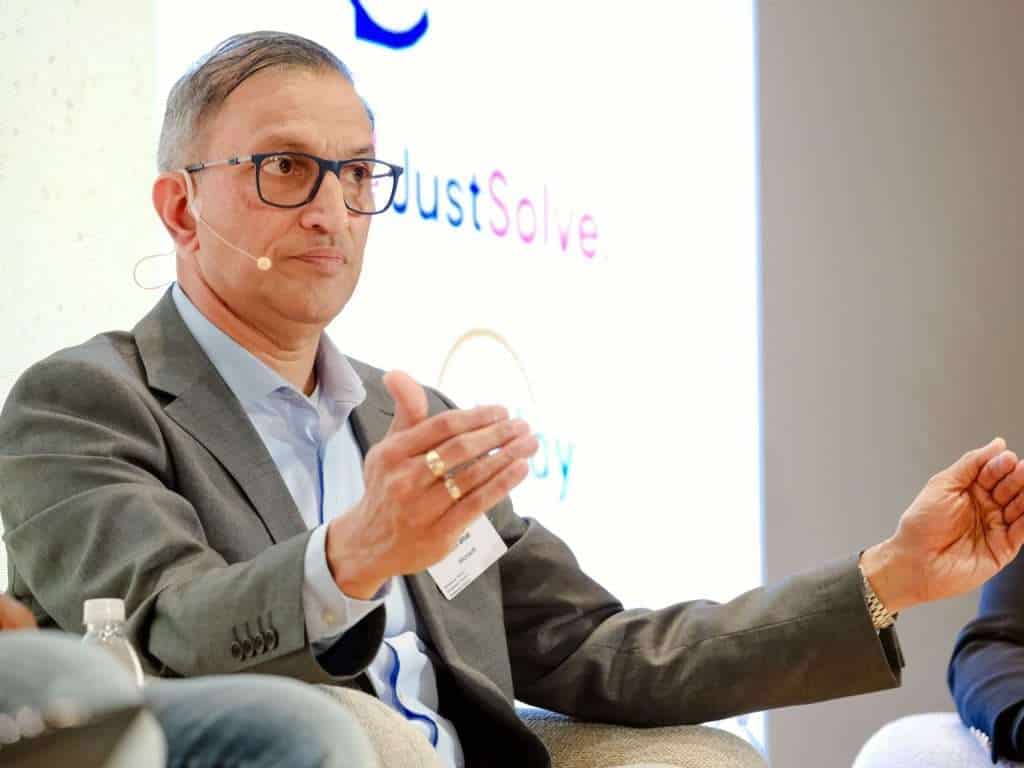
Three C-suite executives revealed how CIOs can drive business transformation through strategic partnerships at the recent 2025 CIO Day held in Johannesburg.
For years, digital transformation was viewed as the exclusive domain of IT. Webber Wentzel CFO Aneshree Naidoo, Microsoft CTO Ravi Bhat, and Vodacom CHRO Matimba Mbungela explained that no digital transformation succeeds in isolation. Instead, it flourishes when the CIO, CFO and CHRO operate in lockstep. This so-called “power trio” ensures that digital adoption is aligned to strategy, financially viable and culturally embraced.
“If digital strategy isn’t on the top of every board, exco and company agenda, then there’s a real risk of misalignment and missed opportunity,” said Aneshree.
She debunked a common myth in the IT industry that all CFOs simply say “no” to funding new technology initiatives. “That’s a sign of past times,” she noted. Today, digital transformation should be the number one strategic objective on every executive’s agenda. It’s not about justifying spend on shiny new tools – it’s about aligning tech investments with the medium-to-long-term business strategy.
This requires that the CIO examine the broader business value, including risk mitigation, efficiency gains, regulatory compliance, talent enablement and future readiness. “Track ROI, yes, but track it against the business case. Are we still heading in the right direction? Or do we need to shift gears?” she added.
Aneshree cautioned that a successful transformation will falter if IT is expected to drive it alone. “Technology might drive change, but people power adoption,” she explained. ‘If the people come, the numbers will follow automatically.”
CIOs should lead confidently
This is where the CHRO plays a critical role. For Matimba, the differentiator in today’s transformation journey is the IT leader’s conviction. “Things have changed, and will continue to change, the only difference is the exponential nature at which it is changing currently,” he said. “The only way to win is with conviction.”
He added that CIOs and tech professionals need to be confident in their skills and the value they bring to the table, as this is their licence to operate. “It’s a new world for all of us,” he acknowledged, “but the power lies in your staff. They are not hiding, they are curious and they’re exploring.”
Matimba advocated for tapping into internal talent through practical mechanisms like minimum training requirements in AI and internal innovation challenges. One example was a team of 300 Vodacom employees participating in a hacking solution challenge; many of the ideas developed were organically born from within the business, not brought in from outside consultants.
This type of action learning – where employees learn by solving real problems – serves a dual purpose: upskilling teams and surfacing transformative use cases from within. “When the workforce sees that their ideas are valued, transformation becomes less about top-down change and more about co-creation,” he added.
Navigating AI-related fears
Ravi brought the conversation to a critical inflexion point: the artificial intelligence (AI) revolution. “Every role in the company is changing due to the adoption of technology,” he said. “If there is a tech transformation, the expectation is that the role will evolve.”
While it can be a powerful enabler for the workforce, it needs to be approached with careful consideration of the responsibility that comes with it. That means embedding principles such as fairness, security, inclusivity and transparency into every AI deployment. Without them, companies risk building models that are untrusted, underutilised, or ethically questionable.
He explained that, once the policies and the governance are in place, the pace will follow, because people will be less afraid of what can happen.
Aneshree echoed this, pointing out how she is often faced with employees who are scared they will lose their jobs. “Digital transformation is not about displacing people, it’s about displacing tasks,” she stressed. Mundane, repetitive and non-value-adding tasks should be automated, freeing people up to do higher-value work. “Transparent communication, open dialogue and empathetic leadership are essential.”
This, however, must be paired with deliberate retraining and redeployment. “Without upskilling, transformation initiatives risk failing both strategically and ethically.”
Ravi explained that enabling people to do their jobs is ultimately the priority when deploying any technology, not taking their jobs from them. “AI is giving you an opportunity to be the first. It’s flattening the entry curve for people around the world who want to use technology. Once everyone in the organisation understands that they can do something significantly better if AI takes over the mundane and menial, the momentum to embrace it will accelerate,” he said.
Modelling the right behaviour
All three executives underscored the need for leadership to model the behaviours they wish to see in the rest of the organisation.
“People emulate what leaders do – they don’t just take instructions and execute. When CIOs partner with CFOs and CHROs, they will follow,” Ravi emphasised. “Does the audio and video match?”
Additionally, Matimba suggested that continuously challenging yourself as a leader builds the conviction IT leaders need to sell tech initiatives to their c-suite.
“We have to stay close,” Aneshree agreed. “We have to test each other. Are we seeing the same new book? Is our elevator pitch the same?” She noted that she does this regularly with her C-suite at Webber Wentzel, trusting her colleagues to be the experts in their fields.
The panel discussion concluded by reiterating the need for a united front from the CIO, CHRO and CFO. The CIO ensures the technology is robust, scalable and well-integrated. The CHRO ensures that staff are trained, supported and protected. The CFO ensures that these efforts have sustainable, strategic value.