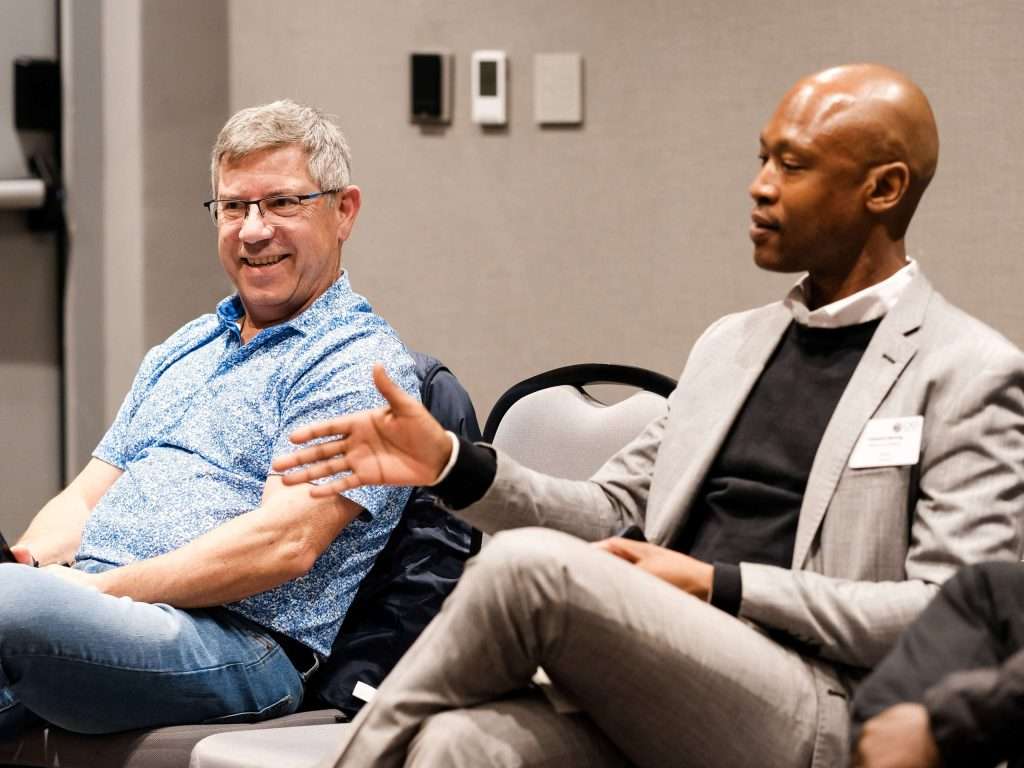
IT leaders shared blunt assessments about their experiences with AI at the 2026 CIO Day, calling for a more deliberate approach to AI in software development and using the technology as a “power tool for skilled engineers” rather than a crutch for inexperience.
Anchored by the theme The Agility Imperative tech leaders at one of four breakaway sessions at the Marriott Hotel, Melrose Arch in Johannesburg, unpacked lessons around what leadership shifts are now non-negotiable for CIOs.
Nicole Borges, CIO for global markets, Standard Bank Group and Paskaran Pather, executive: hospitality, manufacturing and pharma, Liquid Intelligent Technologies South Africa, opened the session by highlighting three pivotal shifts in the CIO role: adding value for clients; building capabilities around those outcomes and becoming business architects rather than order-takers.
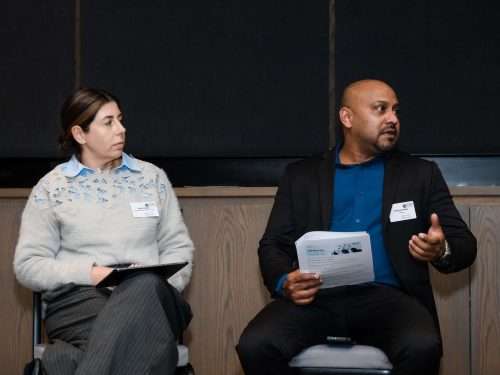
Nicole highlighted how CIOs are moving away from “obsessing about systems or applications” to deeply understanding client outcomes and the value chain. “How do we move away from the risk avoiders, and how do we enable our business to become business disruptors?” she asked attendees.
Paskaran added that CIOs needed to be architects of business. “Stop waiting for the business to define requirements.”
CIOs also emphasised that AI is rewriting the rules at a rate that is faster than human adaptation, boards are asking harder questions and “the old ways of leading are simply not enough anymore”.
The South African case for AI
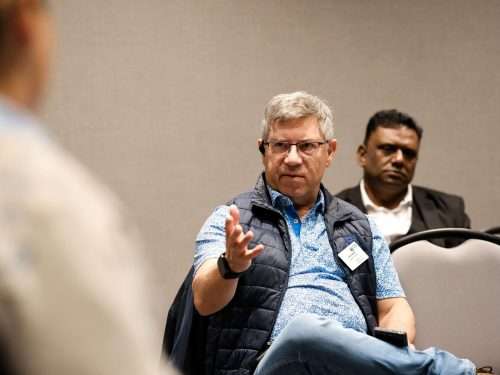
“This is not something that you can take on by yourself anymore. You have to put a team together, and everyone is wearing different hats,” said Kevin Wilson, group general manager of IT for Stefanutti Stocks Construction.
Kevin further pointed out that South Africa is uniquely positioned to become “the next AI powerhouse on the continent” with more data centres than the rest of Africa combined.
“We’re busy with the construction of the tallest wind farm in Africa. I’m building two half‑a‑gigawatt plants in solar. So renewables is my second strongest division. South Africa must back local models, languages and open‑source ecosystems, while navigating real constraints in energy, skills, and governance.”
South Africa is increasingly positioning itself as a regional hub for AI solutions tailored to African realities – from local languages and low‑bandwidth environments to financial inclusion and public health, was a sentiment shared by another executive.
“If we get this right, we won’t just import AI from the global north, we’ll export African‑built AI that actually understands African problems,” he said.
The strategic choice, another leader said, is whether we “sign up with somebody who’s going to own our future – or build it here first”.
CIOs then highlighted an alarming skills gap that is emerging among junior developers and reliance on AI, driven in part by increasing reliance on AI coding assistants. While tools such as generative AI can boost productivity and speed up delivery, technology leaders warn that many early-career developers are skipping the hard work of mastering core engineering fundamentals.
Creating long‑term capability
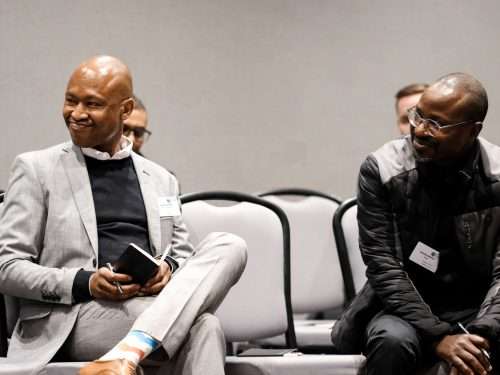
“AI should accelerate good engineers, not replace basic engineering disciplines. If you skip the fundamentals, you’re building critical systems on very shaky ground,” said Collin Govender, Altron Group chief operating officer.
According to executives, this over‑reliance on AI risks creating a generation of developers who can ship code quickly but struggle to debug complex systems, make sound architectural decisions, or spot security vulnerabilities. That, in turn, has serious implications for delivery quality, operational resilience, and long‑term talent pipelines, he added.
Many are investing in stricter code review practices, formal training programmes, and clear guardrails on when and how AI can be used in critical systems. They argued that without these measures, organisations may gain short‑term efficiency at the expense of long‑term capability and governance.
CIO Day was made possible by principal partners Entelect, Cassava, iOCO and Makwa IT; executive partners Deloitte, HCLTech, Hyland, ITR Technology, Kaspersky, Magic Orange and associate Workday.