
At CIO South Africa’s last dinner to close off 2024, leading CIOs shared that managing people will be the biggest challenge in driving innovation and creating business value in a highly connected economy.
On 31 October, top CIOs from diverse sectors gathered at Aurum Restaurant in Sandton for an intimate discussion themed ‘Curiosity, innovation or fear in the connected economy: creating business value in a converged landscape’. Surprisingly, people dominated the discussion over tech. The consensus was that curiosity is the foundation of innovation, and the apprehension surrounding it often stems from people’s perceptions.
This dinner was supported by CIO South Africa principal partner iOCO.
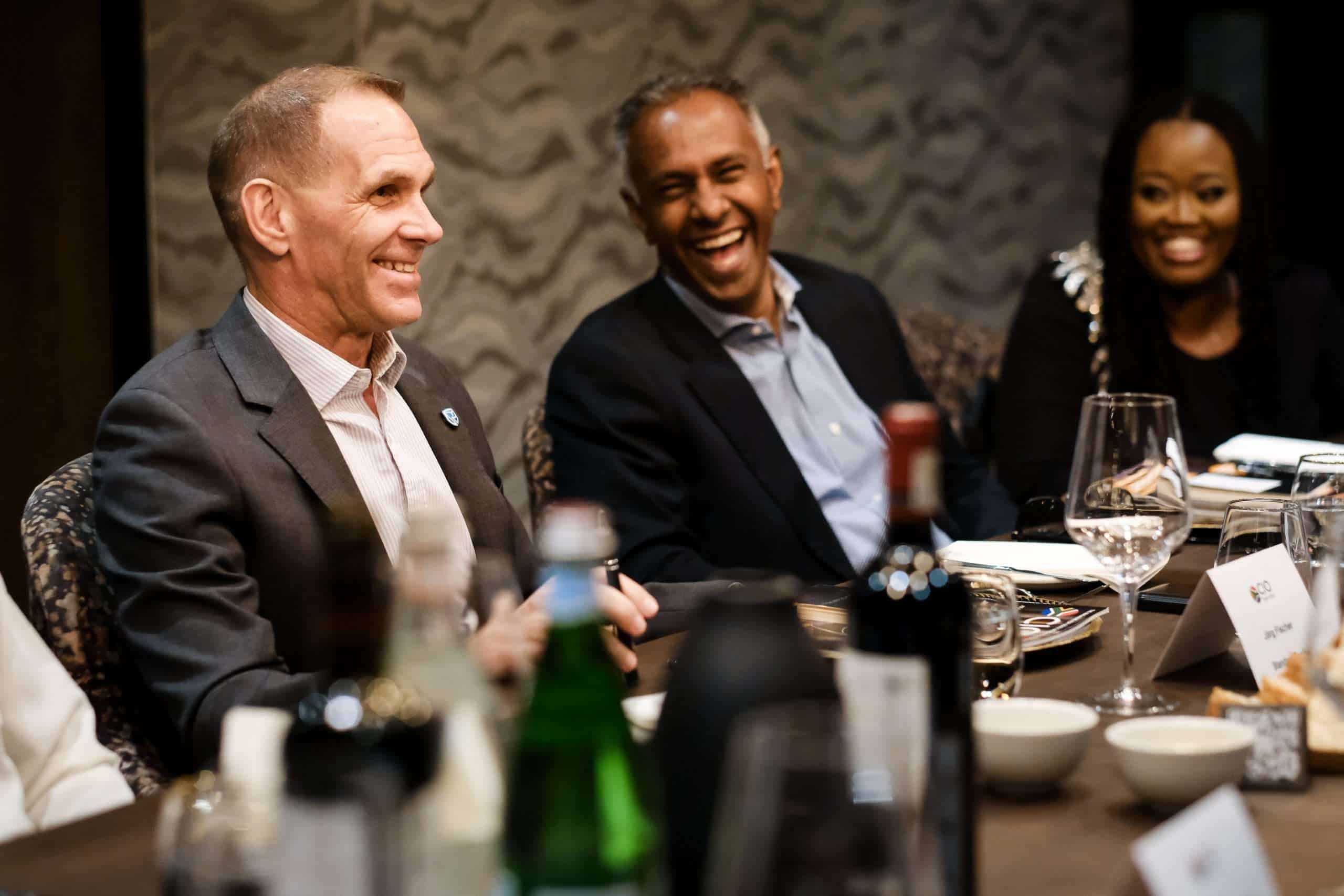
The CIOs agreed that innovation is not solely the responsibility of IT but must be embraced by the entire organisation to foster a culture that values improvement through innovation.
The evening started with CIO South Africa’s popular icebreaker quiz. One guest remarked that their greatest tech investment was their mobile phone, an essential part of their daily life. Another leader expressed excitement about the potential of IoT, predicting significant advancements ahead, especially in connection with AI.
Personal insights added a unique flavour to the evening. One attendee shared that breathing techniques had become an essential ritual to manage stress in a demanding corporate role. Another revealed the surprising nature of meetings in Asia, where business gatherings feel ceremonial and often involve a round of drinks. An unusual skill acquired as CIO, they noted, was public speaking.

Managing innovation and expectations
One CIO highlighted that innovation often comes with high expectations from boards, who sometimes compare local progress with advancements seen abroad. “Innovation is challenging but possible,” one guest advised. “You need clear objectives and a collaborative approach.”
Another CIO noted that fear of change can hinder innovation, recalling an e-tender platform introduced in a tender-driven organisation to reduce manual processes and corruption. The digital solution eliminated loopholes exploited in paper-based tenders, but it was met with resistance and excuses about the digital divide. The CIO’s team removed physical tender boxes, forcing adoption, and within months the solution’s value overcame initial fears.

Several attendees echoed this sentiment, agreeing that innovation often requires firm commitment to ensure people engage with the new systems. As one put it, “If you don’t insist on change, people may avoid it, but once they experience its value, their perceptions shift.”
It’s not just a battle for innovation but a battle to manage change – people’s biggest fear, the attendees noted.

Innovation across sectors
The conversation shifted to managing innovation across sectors. In media, one attendee said, technologies such generative AI simply wouldn’t work. “I’m in the storytelling business and It’s hard to write original and authentic stories merely using AI, those stories need real people behind them,” they said. “Bite-size news is one thing through AI, but bigger and meaningful stories require that human touch.”
In the same breath, the CIO said that there was a case for digital storytelling, to eliminate printing and the use of paper which was also more cost-effective. However, the appeal of holding a newspaper or even a book in your hands will never go away.

In banking, two CIOs revealed that the number of branches and ATMs is decreasing with more people going digital. There’s still a pocket of society that needs to be considered, however – the unbanked, low-income but cash-driven community, people who still need to go into branches to deposit their earnings, and more importantly, people that want to be assisted by a human being rather than a bot.
“Innovations like Payshap offer excellent, affordable solutions for instant payments, but they also require a careful balance of trust,” they noted.
One fear related to innovation expressed by a CIO was making long-term decisions. “The world changes so rapidly and changes in technology are happening faster than they used to in the past. So making a long-term decision or tech investment is risky – that tech might change during the implementation process even before you get full ROI or when the next big thing ‘tech’ comes along, and that can be argued as a bad investment.”

This is where education on the part of the CIO comes in – to educate the board on how innovation really works and taking the role of a thought leader or subject matter expert.
“What is your adaptability to deal with curiosity as a CIO?” one guest asked. “Your strategy needs to incorporate agility and adaptability,” another responded.
“Your strategy also can’t lock you in for years, it needs flexibility because long-term strategies tend to blow throw budgets,” another IT leader added.

The conversation closed with reflections on strategy. “Your strategy must be adaptable and flexible, avoiding long-term commitments that could blow budgets,” one leader advised. Cloud technologies were highlighted for providing the flexibility to adjust as new advancements arise.
As a parting thought, the CIOs agreed that an innovative culture yields success, but alignment with business goals is essential. “Ultimately, if the quality of your people is poor, the quality of your innovation will be too.”

Those in attendance were:
- Jörg Fischer, Standard Bank Group CIO
- Mary-Lyn Raath iOCO Head of digital South Africa
- Martina Madali, Group CIO Arena Holdings
- Nomahlubi Sonjica, CIO South Africa Community manager
- Nomonde White-Ndlovu, Bidvest Bank CIO
- Nomthi Nelwamondo, MTN Executive for information technology
- Pandelani Munyai, Transnet Group CIO
- Reabetswe Rabaji, CIO South Africa Managing editor
- Thuthuka Mhlongo, Transnet GM: Technology Architecture
- Ziaad Suleman, EOH Group chief commercial officer