Technology leaders at the IT Indaba 2025 explored how organisations can unlock the power of data to drive decision-making and innovation.
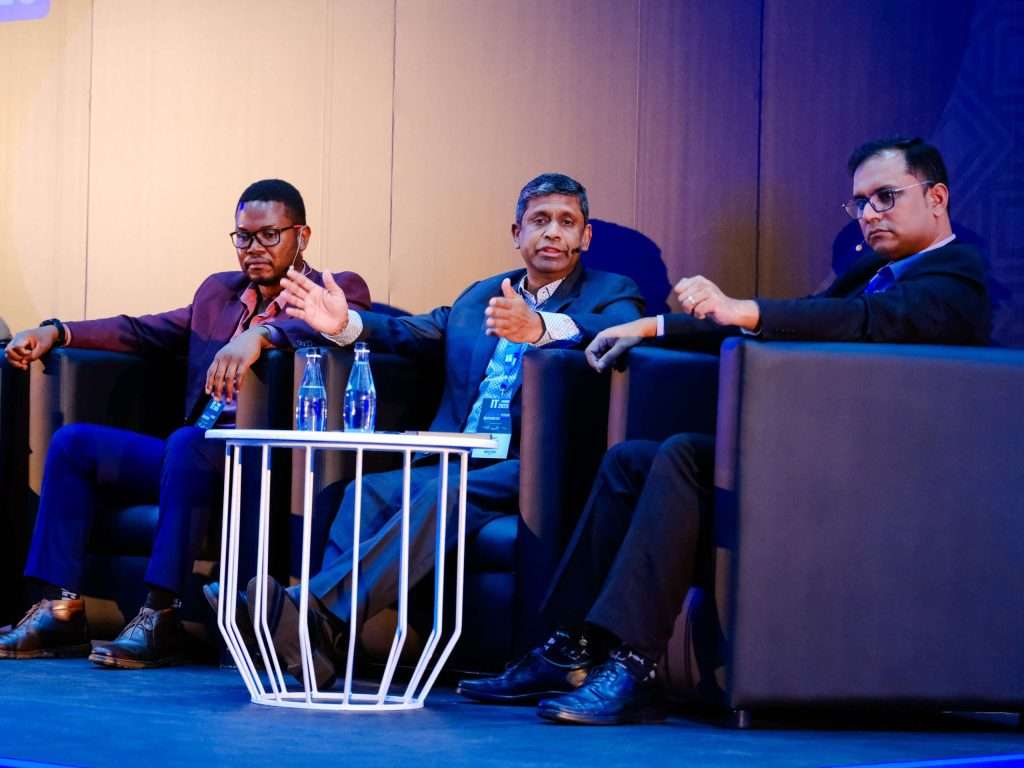
IT executives Prenesh Padayachee group chief digital operations officer at Seacom, Devan Reddy vice president of information technology at Toyota and Dr Andy Mabaso, group chief technology officer at Altron came together in a session where they unpacked how data is transforming decision-making, reshaping strategy, and redefining value across industries.
During a panel discussion titled Data-driven leadership: Are CIOs truly maximising the power of data?, the panellists explored how organisations can translate information into long-term value and what true data-driven leadership looks like in practice.
Prenesh described how data has become central to Seacom’s operations, guiding both strategic and technical decisions. From determining where to expand infrastructure to managing bandwidth demand, he said Seacom’s network evolution is increasingly data-led.
“We’re guided by data on where usage is moving and how to get the source closer to the end user. That allows us to make informed investments and optimise performance across our Pan-African network,” he explained.
Prenesh added that customer behaviour has changed significantly, with consumption patterns becoming more unpredictable and demanding greater flexibility. Seacom, he said, now relies on a blend of unstructured data and artificial intelligence to stay ahead.
“Usage has become elastic, customers demand more bandwidth for shorter periods and that requires us to be agile. We now rely on unstructured data, artificial intelligence and machine learning to understand patterns and make faster decisions,” he said.
Scalability essential
According to Prenesh, the future of connectivity will depend on how well organisations prepare for data growth driven by AI and cloud technologies. He emphasised the importance of designing networks that can scale efficiently.
“As data usage increases, we are investing in fibre rollouts and technology cycles that allow us to move quickly from 100 to 400 to 800 Gbps. Scalability is no longer optional, it’s essential,” he stressed.
For Devan, the shift to a data-driven culture has transformed how Toyota operates from a traditional car manufacturer to a mobility solutions company. He explained that data now drives every part of Toyota’s value chain, from production to customer engagement.
“At Toyota, data isn’t new to us. It’s part of the Toyota Way and the Toyota Production System. The principle has always been simple, we collect data, analyse it and then act on it,” he said.
Devan emphasised that technology alone doesn’t make a company data-driven. What matters is creating a culture where information translates into action and continuous improvement.
“We always ask, what action does this data drive? If the data doesn’t lead to action, then it’s not serving its purpose,” Devan explained.
Shaping future generations
He explained that Toyota’s transformation also extends to risk management. Following severe floods that destroyed three of the company’s data centres, Devan said they overhauled their disaster recovery approach and the team adopted a hybrid cloud infrastructure and implemented the 3-2-1 data backup principle, maintaining three copies of data, on two different media, with one stored off-site.
“That experience taught us to think differently about resilience. Data protection isn’t about avoiding failure, it’s about recovering quickly when it happens,” he observed.
Devan also reflected on how data literacy is shaping future generations.
“Even my seven-year-old uses ChatGPT for schoolwork,” he said with a smile. “The next generation will grow up understanding data intuitively. That changes everything about how we design systems, educate people and lead teams.”
Dr Andy described data as the lifeblood of business, explaining that no organisation can function effectively without it. What matters most, he said, is how data is used to accelerate outcomes and create measurable value.
Trusted data
“It’s impossible to run any organisation without data,” he said. “The real question is how else can we use it to reach our goals faster and more efficiently.”
At Altron, Andy said that the focus is on three outcomes, revenue growth, cost efficiency and customer value. He explained that these guide every data project across the group’s diverse business units.
“When we talk about being data-driven, it’s not about collecting more data. It’s about using what we already have to make better decisions. That requires structure, governance and trust,” he explained.
Andy said Altron has used artificial intelligence to break long-standing data silos across its business.
“We struggled for 18 months to create a single view of the customer manually. AI allowed us to do it in weeks, helping teams access consistent, trusted data in real time,” he stated.
Andy gave examples of how Altron applies these principles across sectors from Netstar using vehicle data for insurance insights to HealthTech helping pharmaceutical companies monitor prescription patterns. Each case, he said, reflects how data can be turned into actionable intelligence that benefits both businesses and customers.
A strategic asset
“Clean, governed data is critical. If you don’t have clear ownership and structure, you’ll always get garbage in and garbage out. Governance ensures trust and accuracy, which are the foundation of every decision,” he said.
All three leaders agreed that while AI and automation are transforming how organisations process data, human judgement remains essential. Data, they said, must empower people to make better decisions not replace them.
Andy emphasised that the biggest challenge for leaders is cultural, not technical.
“Technology can give you answers, but you still need people who can interpret those answers and act on them with confidence,” he insisted.
Devan added that true data-driven leadership means ensuring everyone in the organisation understands the role of data in achieving strategic goals.
“It’s about creating an environment where people don’t just see data as numbers, but as insight that drives the business forward,” he said.
For Prenesh, the future belongs to organisations that treat data as a strategic asset, not just an operational tool. “Data tells the story of how your business behaves. The leaders who can listen to that story and act on it are the ones who will thrive,” he said.