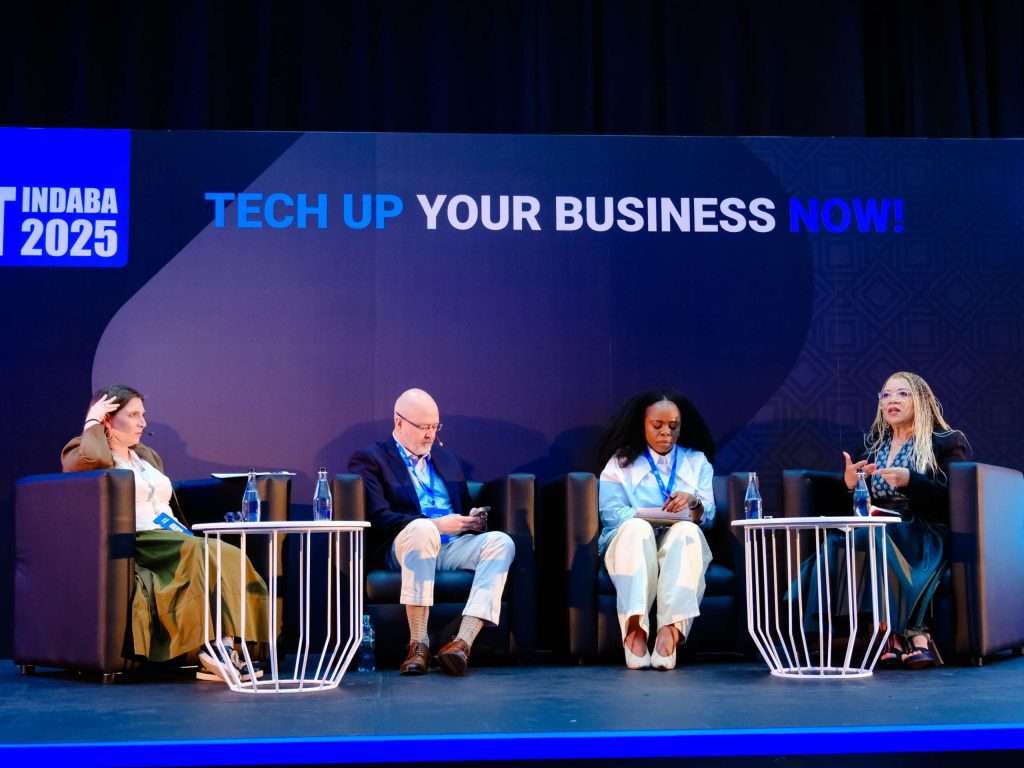
The first-ever IT Indaba brought together Josh Souchon, IT executive at Opp-Gen; Faith Burn, CTOO at Landbank; and Mary Mahuma, CIO of Philip Morris Southern Africa who explained what it really takes to build a lasting IT career.
Although their stories spanned different continents and industries, top IT execs all echoed that skills, curiosity, and adaptability are the fuel for thriving in the digital age during a session titled Mapping your IT career at the 2025 IT Indaba.
Josh opened with a story of unexpected turns. Moving from mining to startups to financial services, to even potentially studying medicine, Josh embraced transformation wherever he went.
Choosing your path
These experiences shaped his belief that IT careers can branch into three clear paths. “The developer path is the traditional technical route, where you embrace leadership, get involved in digital transformation and build experience step by step. The business analyst path focuses on taking a business product through its digital transformation journey. The delivery path, which I chose given my engineering background, is project management, focusing on successfully delivering projects, even if others are stronger coders than me.”
As he described it, the key lies not in where you start, but how you embrace opportunities along the way. “These paths are available to everyone, but you need to find your inflection point. Get involved in projects no matter how small and build your career step by step.”
“Young people on your team need continuous learning, mentorship, guidance and challenges. They’re hungry to learn and show what they can do. Embrace that. Finally, learn to fail fast. Don’t bet everything on a perfect solution. Get knocked over, get up, learn and continue.”
Curiosity sparks growth
That same sense of curiosity and openness defined the journey of Faith as she reflected on her first encounter with a computer with a smile.
“My journey began the first time I saw a computer, maybe in the first or second week of varsity. I’m that old. The reason I chose computer science wasn’t well thought out, it just sounded interesting since I had never seen a computer before. Today I thank God for my curiosity, and I believe curiosity is one of the most important skills we need, especially in this digital age.”
Faith explained how this curiosity has kept her career moving forward. “I started at the bottom in IT but opened myself up to different things. I spent time in DevOps, in the IT division, and as a consultant to external businesses. Through that process, I left myself open to learning something different. I went from being a developer to managing incidents while in IT, just growing broader," she said.
"Whenever my CTO gave me jobs to do, I didn’t limit myself to my job description. I felt that anything I could do to help was valuable, and with that, I built experience. Before I knew it, without even intending to, I had learnt the entire value chain, not just the application management side I was responsible for,” she added.
Her career path, she explained, was shaped by constantly embracing new challenges, moving across industries, and holding on through difficult times. “Resilience is really important. Emotional intelligence leads to collaboration. Digital thinking and mindsets require that we don’t act in silos and don’t act as an entity on our own, so collaborating is critical.”
Digital leadership
Rounding off the session, Mary shifted the focus to what it means to lead in the modern IT era. She urged digital leaders to prepare themselves not only with technical skills but also with self-awareness, business skills and with the ability to create value.
“It’s important to understand that as technical as you are, your technology skills alone will not sustain you at higher levels. You need self-development, self-awareness and agility. Remaining curious and exploring beyond the traditional IT track is key. For me, that meant studying everything from digital marketing and law, to IT and supply chain.”
She stressed that leadership today is no longer about simply keeping systems running and also challenged leaders to think about technology and people as a shared ecosystem.
“Another critical area is orchestrating human-AI collaboration. As CIOs, we must influence conversations about which work is done by people, by systems, and by AI. This requires thinking beyond technology to understand trade, supply chains and the overall business model. A CIO who understands these aspects can move from being a technical enabler to a strategic business partner.”