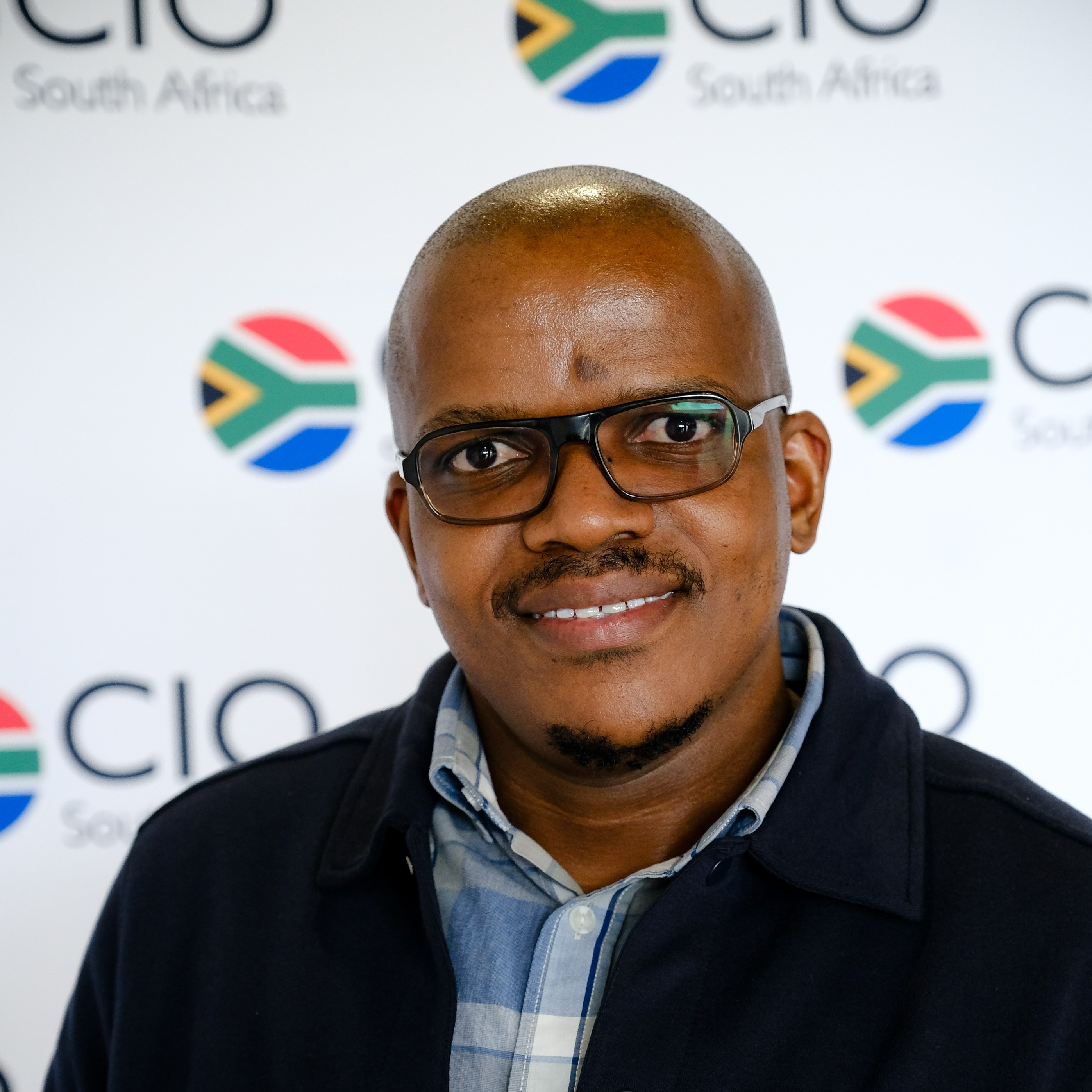
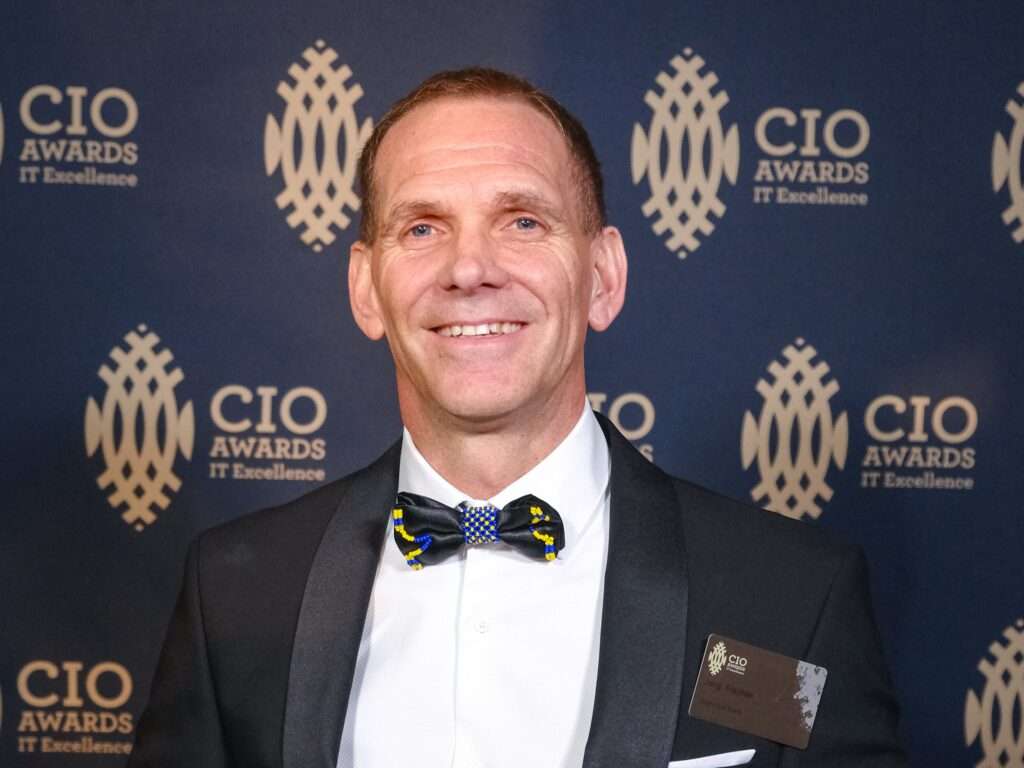
Jörg Fischer, 2023’s CIO of the Year and CIO of Standard Bank Group, shares his insights on the key qualities that define successful leadership in today’s IT landscape. This year, Jörg returns as a judge for the 2024 CIO Awards.
With just a month remaining before the biggest celebration in South Africa’s IT sector, often referred to as the ‘Oscars of IT’, CIO South Africa caught up with Jörg Fischer, who last year walked away with the Cybersecurity Award, the Strategy and Leadership Award, and the ultimate accolade: CIO of the Year.
Now serving as one of the 12 esteemed judges for the 2024 CIO Awards, Jörg highlights solid leadership, continuous learning and staying on the pulse of the latest technologies as some of the core ingredients for a successful CIO.
“The awards will be a good opportunity to socialise, network and connect with our industry counterparts. Importantly, I’m looking forward to celebrating with all the winners,” says Jörg, offering a glimpse of what attendees can expect.
Ingredients for success
According to Jörg, the key qualities for a successful CIO involve driving strong leadership principles, cultivating the right culture, and delivering on business outcomes, not just technological goals.
“The ability to network, collaborate, negotiate (especially with vendors), and provide strong execution capability are crucial elements, but most importantly for me is to bring thought leadership, simplify and navigate complexities so that technology is easily understood in the organisation and our industry. Success in technology is more than just delivering on your IT binary KPIs. Real success is measured by delivering business value and outcomes.”
In a rapidly evolving technological landscape, continuous learning and skill development are critical, says Jörg. He emphasises the need for both depth of skill and breadth of experience to achieve success.
“For me, learning is more than just academia, it’s about creating a culture of learning in organisations and specifically for IT, where we learn from the past, we learn from mistakes, and we learn from others,” he adds. “Currently research and learning resources are unlimited, and in most instances, subscriptions are accessible and freely available.
Jörg also highlights the importance of peer-to-peer connections, technical advisory boards, and roundtable discussions with local and global experts as key sources of insight. “You have to stay current in the current trends and hype cycles and lead the thought leadership into your organisation,” he adds.
The role is much bigger
Jörg stresses that the role of a CIO extends beyond technology decisions, often encompassing social, environmental and political considerations.
“I’ve often said that a technology decision, path, or trade-off is no longer just solely a technology decision. It often has a social, environmental, or political impact. As IT professionals, it’s important that we make sustainable technology available, accessible, and affordable,” stresses Jörg.
Jörg urges IT leaders to evaluate the environmental impact of their decisions and crucially keep cybersecurity top of mind. “Environmentally sustainable technology is not often a key consideration and as IT professionals, we need to bring it to the top of the agenda. Going forward, it is going to be an equally important consideration as cost, stability, and security,” he says.
The new corporate athletes
For the next generation of IT leaders – what Jörg calls ‘corporate athletes’ – endurance, focus, grit and tenacity are key. He advises them to adopt an agile mindset, embrace both local and global learning, and seek mentors who challenge them.
“Don’t try to solve everything at once,” he says. “Adopt an agile mindset, as things change often in IT, be open to both local and global learning and insights, get a good mentor that challenges you, don’t just stay in your ’IT lane’ – work and partner with business.”
Jörg quotes a popular line by Steve Jobs to drive his point across:“It doesn’t make sense to hire smart people and tell them what to do; we hire smart people so they can tell us what to do.”
“So hire people that are smarter than you and then get out of their way,” he adds.
For Jörg, the recognition or winning an award is not just a personal achievement, but a reflection of the broader IT industry and its positive impact.
“Being nominated and recognised by your industry peers is important because it really amplifies how crucial the role of the CIO is in an organisation,” he says. “It is a 24/7 by 365 role, with little margin for error and always high expectations.”
He concludes by reminding us that “IT is a team sport”, and that the excitement generated by these awards extends beyond the winners to the entire IT community.