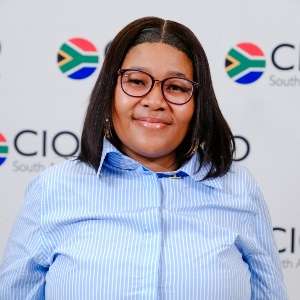

2025 High Performance Team and Strategy & Leadership Award winner and Mr Price Group CIO Kim Sim outlines her priorities and expectations for 2026.
Looking ahead to 2026, CIO South Africa caught up with 2025 CIO Award winner and Mr Price Group CIO Kim Sim in this exclusive Q&A to gather her expectations and reflections for the year. She reveals that she expects the year to be defined by execution, discipline and hard choices.
With several large-scale, business-critical technology programmes moving from planning into delivery, and a rapidly evolving group structure, Kim outlines what she hopes to achieve professionally, where she believes organisations will gain real advantage, and why honest use of data and focused investment will separate strong performers from the rest.
Q: At the start of the year, what are the main issues shaping your focus as CIO, and how are they different from what you expected a year ago?
A: A year ago, some of the biggest initiatives we are now working on were not even on the radar. A large part of last year was spent giving these programmes the attention they needed and securing approval.
This year is very much about moving from planning to delivery. We have been running RFPs, and now the focus is on selecting the right products and suppliers and actually kicking off these programmes. They are major strategic investments for the group. Alongside that, we are also re-envisioning and re-engineering some areas of the business to ensure we remain an agile, efficient and innovative organisation.
When you consider the major changes our group has gone through over the last few years, we look very different to how we did in 2019 and so as the landscape shifts over time, you have to ask yourself whether what got you here, will get you there.
Q: What are your key goals for 2026, professionally and personally?
A: Professionally, it is about landing these large, complex programmes successfully and supporting the group through its continued growth.
Personally, I do not really believe in new year’s resolutions, but I do believe in choosing something to focus on and improve. For me, that is being better at staying in contact with people. I think about people often, but I get busy and forget to reach out. My challenge to myself this year is to act on those moments and let people know I am thinking about them, and to do a better job of maintaining connections.
Q: In a country like South Africa, where skills, infrastructure and budgets are under pressure, what difficult choices are you expecting to make this year?
A: Skills remain a real challenge, particularly in certain specialist areas. You have to be creative in how you source skills, but also accept that in some cases you will need to develop them internally if you cannot find them externally.
Budgets are also under significant pressure. In the South African context, with low GDP growth and constrained consumer spending, margins are tight. That means we have to continuously look at our business to ensure we are as efficient and cost-effective as possible. We do not have the luxury of large margins that give you room for error.
These constraints affect your ability to attract skills and the pace at which you can move with technology. It comes down to making the right trade-offs. You need to spend where it really matters for the long term, while being disciplined in the short term. Even if you decide to say no to something, it is important to understand exactly what you are saying no to.
Q: Looking ahead, what do you think will set top performers apart from the rest by the end of 2026?
A: I do not think this is something entirely new, but I believe differentiation will come from how organisations use the data they already have. If you look at retailers in the same industry running similar core systems, the technology foundation is often comparable. The difference in performance comes from what they do with it.
Technology itself is not the competitive advantage. It is how you utilise it. Many organisations have good foundational systems in place, or are in the process of modernising them. Once those platforms are mature, the real value lies in how the business uses data to understand what is actually happening.
That means letting the data tell you the truth, rather than using data to support a preconceived view. It also requires being brave enough to change decisions and even strategy when the data does not support your assumptions. Organisations that can take an unbiased view, listen to what the data is really saying, and then act on it, even when it is uncomfortable, are the ones that will outperform others in 2026.