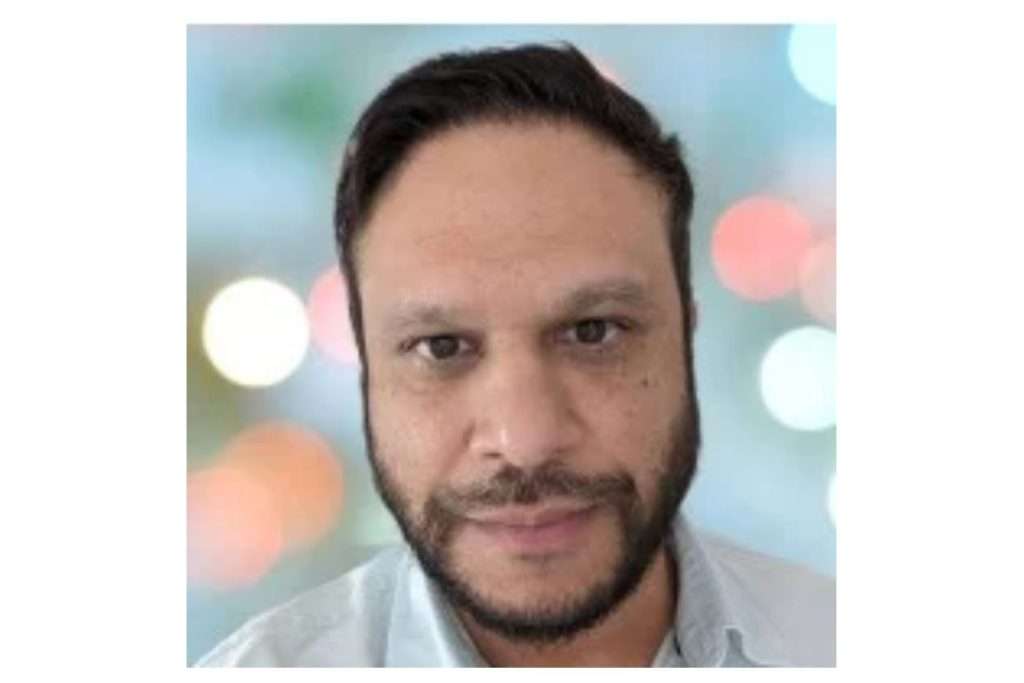
CIO South Africa recently caught up with Nesaar Banderker, head of IT at Sanlam Private Wealth, and here is what he shared about his role.
Over the past five years, Sanlam Private Wealth head of IT Nesaar Banderker has led a fundamental shift across the firm’s technology landscape – moving from keeping the lights on to building modern platforms that drive real business outcomes. Here, he reflects on balancing MCom studies with family life, fostering psychological safety, and building an autonomous IT team designed to thrive beyond his tenure.
What makes you excited to get up in the morning?
I am fortunate enough to live in one of the most beautiful parts of the world. Cape Town is an exceptional place to wake up in the morning, and I have a fantastic family around me. Those are the things that keep me grounded.
Professionally, what excites me is that we're no longer talking about technology modernisation as an aspiration. We have done much of the heavy lifting. Over the last five years, we've fundamentally changed the technology landscape at Sanlam Private Wealth. We've moved from spending most of our energy keeping the lights on to building modern platforms that allow us to solve real business problems and create better outcomes for our clients.
We still have a lot to do, which is what makes it interesting. Every day presents a new challenge and another opportunity to improve something.
I've also set myself a personal challenge to complete my MCom this year. I started it in 2004 but never submitted my thesis. Balancing studying, work and family isn't always easy, but my wife and I do a good job of keeping each other accountable and making sure our time is invested where it matters most.
What keeps you up at night?
Recently, it's been the stray kitten we rescued and the amount of money we are spending on it
On a more serious note, I'm generally not someone who loses sleep over operational challenges. I trust the team, I trust the plans we've put in place, and I have confidence in the direction we're heading.
What occupies my thinking is how quickly the world is changing. Whether it's geopolitical uncertainty, economic pressures, the pace of technological change, or the growing impact of AI, there is a lot happening around us. As technology leaders, our role is to help our organisations navigate that uncertainty while continuing to create value.
The day-to-day problems are usually solvable. The bigger challenge is understanding what the future might look like and making sure we are preparing for it.
What is the biggest shift you have had to make in how you lead or think about your role in the last 12 to 18 months?
I have been at Sanlam Private Wealth for just under six five years. When I arrived, the focus was very much on stabilising and simplifying the IT organisation. We were building foundations, reducing complexity and creating predictability.
Over the last 12 to 18 months, the conversation has shifted towards transformation and innovation. That's been the biggest change for the organisation, but it's also required a shift from me as a leader.
In the early years, success was about bringing order and stability. Today, success is increasingly about creating the conditions for innovation, helping people think differently and empowering teams to solve problems without waiting for direction.
Moving from stabilising to transforming requires a different leadership approach, and that's probably been the biggest adjustment. Fortunately, it's also one of the most rewarding parts of the journey.
When you eventually step away from your role, what do you hope to have left behind?
I talk about this with my team quite often. I tell them that I'm trying to build an IT organisation that doesn't depend on me being present. They usually look at me a bit strangely and ask whether I'm trying to work myself out of a job.
My answer is always the same: not at all. I'm trying to build an organisation that can be effective, efficient and innovative regardless of whether I'm in the room. More than any system or platform we've implemented, I'd like to leave behind a culture of ownership, accountability and continuous improvement. If teams can make good decisions, solve problems and continue moving the organisation forward without needing me to constantly drive it, then I've done my job.
For me, that's the ultimate measure of leadership: building a team and an organisation that becomes stronger, more capable and more autonomous over time.