With three months left in the year, CIO South Africa was curious to find out exactly what IT leaders will prioritise in their respective organisations in the coming years.
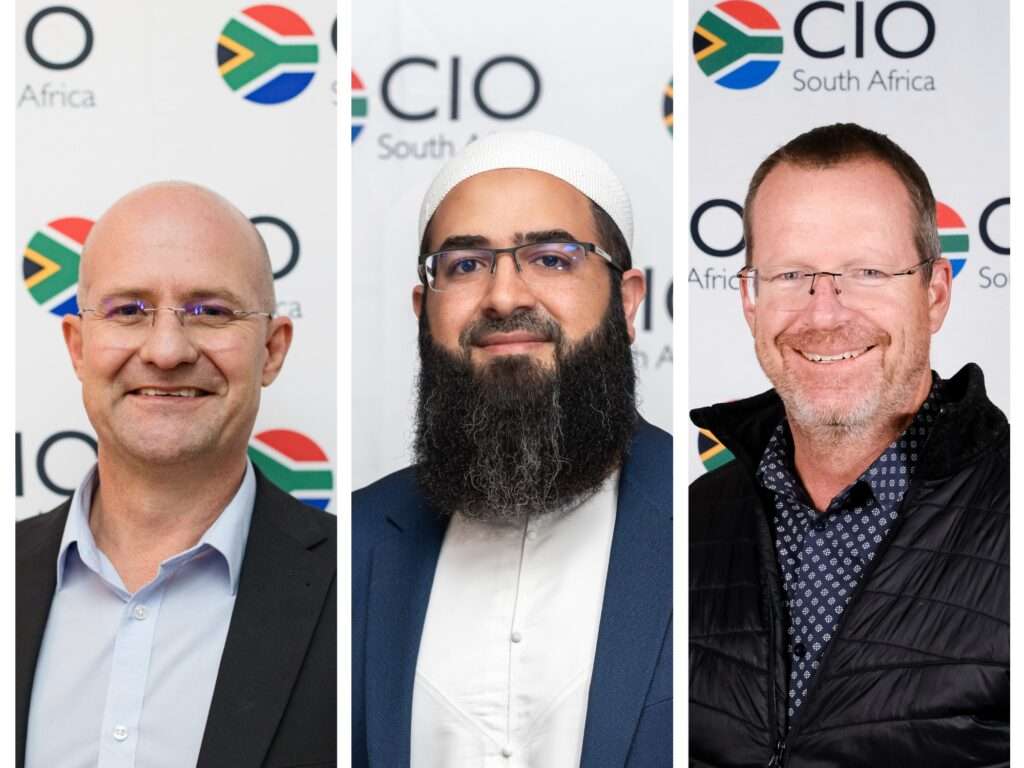
David Reynders, CTO at Merchant Capital, Hamzah Asmall, GM for digitalisation at Albaraka Bank, and Francois Swanepoel, CIO at Oceana Group, shared their core focus areas for 2025, putting technology and talent at the top of their agenda.
“The more things change, the more they stay the same,” best describes Merchant Capital CTO David Reynders’ sentiments regarding customer needs in financial services. “For us there is no significant change,” he says “Customers want the same things: easy-to-access funding with a quick turnaround. Digitisation and automation remain the key drivers.”
Much is the same for David when it comes to cyber-resilience. “Our investment in this continues at the same pace. We don’t see a spike in threats any more than in the increase from 2023 to 2024,” he points out.
Merchant Capital is fully cloud-based, but the company is currently cautious about adopting AI automation.
From a talent perspective, David says that making sure that people do meaningful work in an environment that has mutual respect embedded in its culture fosters great job satisfaction, talent development and upskilling.
Prioritising customer experience
For Hamzah Asmall, GM for digitalisation at Albaraka Bank, aligning capacity in core delivery capabilities for digital customer experience (CX), automation and decisioning will ensure there are sufficient tools to meet the bank’s goals for the year ahead, and contingency to cover the unknown.
“For emerging technologies without well-defined use cases, we are investing in R&D capacity to identify use cases (potentially disruptive) and use those to reverse influence the business goals as appropriate,” he explains.
“Cybersecurity is an evergreen topic and we will continue to rely on a range of credible industry partners and vendors to ensure we have a holistic view of the threat space and potential solutions,” he adds. “Data governance is a newer kid on the block, gaining more traction, given the organisational wide-scale adoption of analytics for decision making. We will probably be aligning to the ‘DMBOK’ (data management book of knowledge) through 2025 to mature our capability in this space,” he adds.
Looking at talent, Albaraka is focused on building a strong pipeline. “We are focused on the talent pipeline concept, bringing in graduates and progressing them through levels using on-the-job mentoring and formal training,” Hamzah explains. “Generative AI is supercharging this, since these tools free up senior time, allowing for more focus on mentoring juniors.”
Insights for decision-making
Aligning your IT strategy with evolving business goals for 2025 will require insights, tapping into AI and automation, as well as robust cybersecurity, says Francois Swanepoel, CIO at Oceana Group. Here are his four core keys and why:
- Data analytics – we focus on applying data analytics to gain deeper insights into our business for better decisions making
- Embracing emerging technologies – leveraging AI for productivity improvements and enhanced decision-making
- Enhancing digital transformation – automating business processes to enhance efficiency and boost productivity
- Cybersecurity – implementing cybersecurity measures for risk management and to prevent disruptions caused by cyber-attacks, thereby ensuring business continuity.
Francois echoes the sentiment of many IT leaders when he says cybersecurity is inevitable. ‘It’s not a matter of if, but when’.Oceana plans to address increasing threats by enhancing end-user security awareness, implementing advanced technologies, and conducting regular audits and tests.
“Cybersecurity will play a key role in risk management and business continuity,” Francois adds. “Increased threats will be addressed by focusing further on end-user security awareness training, implementing additional technologies to strengthen our defences. Additionally, we will continue with regular audits and testing exercises.”
Building agility and talent for 2025
Adaptability and training will be crucial for seamless IT integration in 2025, according to Francois. “It starts with scalability and flexibility, allowing IT infrastructure to adapt to changing business needs and advancements in technology, including leveraging cloud-native solutions that can scale as needed.”
Key initiatives include:
- Continuous learning programmes – implementing ongoing training programmes that focus on the existing and latest technologies.
- Personalised development plans – creating tailored development plans for IT staff based on their career goals and the organisation’s needs.
- Mentorship and coaching – mentorship programmes where experienced professionals guide and support less experienced team members.
- Multi-skilling – encouraging collaboration between IT teams to share knowledge and best practices.
As IT leaders look ahead to 2025, it’s clear that the balance between technological advancements and talent development will shape the future of their organisations.