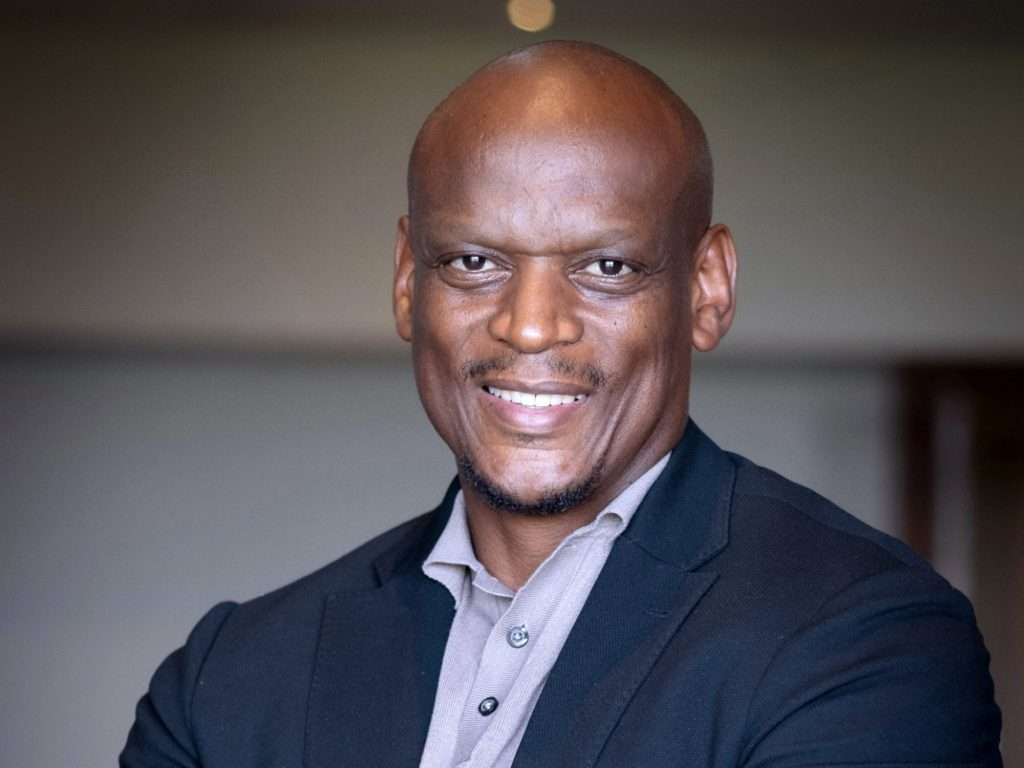
For Absa Group’s chief information officer for personal and private banking, Thatayaone “Thato” Matolong, the measure of technology leadership is not the sophistication of the technology itself, but the value it creates for customers, the trust it earns and the opportunities it opens for African talent and enterprise.
Thato’s view of the CIO role starts with a clear test: does technology solve a real problem for a customer, strengthen the business and widen opportunity? As CIO for Absa personal and private banking, he operates where rapid advances in AI, cyber risk and digital platforms meet the everyday financial needs of millions of people.
That perspective keeps his attention firmly outside the technology function. “Technology on its own does not mean much. What matters is the ability to see what is happening in communities and in the industry, and to remain relevant,” he explains. “That’s why I spend a lot of time in spaces that have nothing to do with technology.” For Thato, relevance comes from understanding how people live, transact and build livelihoods, and then translating that understanding into more useful, accessible and trusted financial services.
His approach is grounded in engineering discipline. A mechanical engineer by training, Thato studied at UCT and completed his engineering honours at the University of Pretoria. A leadership strategy programme at Harvard later broadened that technical foundation and, he says, “gave me a much broader global perspective on what we do”. The result is a leadership lens that combines systems thinking, commercial judgement and an awareness of technology’s wider consequences.
That judgement is being tested by a technology cycle moving faster than most institutions can comfortably absorb. Asked about his biggest challenge, he does not hesitate. “It’s change: the speed of change and the speed of technology. We talk about quantum computing and what it means for cybersecurity. We talk about AI, the opportunities it presents and the challenges it creates.”
The leadership challenge is not simply to adopt what is new. It is to convert innovation into measurable customer and commercial value without compromising transparency, security or trust. “On the one hand, stakeholders are asking for more use cases and commercial value. On the other, they are asking for transparency and trust — everything must be traceable. Balancing the two is difficult.”
His response is neither alarmist nor complacent. It is to build institutional readiness: the capability to evaluate emerging technologies early, govern them rigorously and scale them when the value is clear. “This is nothing new from a technology-trend perspective. We have seen these waves come and go before, and we need to prepare for this wave accordingly.”
Cybersecurity makes that responsibility immediate. As banks digitise more customer journeys, they also expand the surface that must be defended. “At the heart of it, fraudsters have access to the same technology as financial services organisations. Over time, attacks have multiplied, both in terms of the number of vectors and their frequency,” he explains.
For Thato, resilience is both a technical discipline and a collective obligation to protect confidence in the financial system. “The challenges are far greater than they were five years ago. We are evolving our tools and capabilities to respond accordingly.” Absa also contributes through industry bodies, he adds, because this is “a challenge that all financial institutions face”.
A human in the loop
On AI, Thato’s optimism is matched by a clear position on how it should be deployed: to augment human capability, improve customer outcomes and reshape products and services, not merely to remove cost. “I think it is the biggest opportunity, not only in our local market, but globally,” he says. “Augmented AI ensures that you always have a human in the loop. It is changing how we serve customers and the products we provide to them. It is not just about cutting costs; it is about reshaping the industry.”
The opportunity is practical: faster and more relevant service, products that respond to changing needs, and broader access to financial capability. It also demands judgement and accountability. “Customers using social media far more today, so being present in those spaces is equally important if we are to respond to their needs.” The principle, he stresses, does not change: “We will always have a human in the loop to help take us through this transition.”
Thato’s career reinforces his belief that the best technology leaders bring more than domain knowledge. He began in FMCG with Unilever before moving into banking – “a great move, personally”, but one that initially required him to step beyond the familiar. “It was quite a daunting moment because I was entering an industry that I did not fully understand. Over time, however, you realise how transferable engineering skills are. They enable you to respond to changing industries and remain relevant in the ecosystem.”
That experience shaped his view of the CIO as an enterprise leader rather than a custodian of systems. “The biggest lesson is that, to be honest, it is less about the technology. It is really about people: bringing in the right talent, being embedded in the business you serve and developing solutions that are relevant to customers. Technology is simply an enabler of that outcome.”
Technical credibility still matters, but so does knowing where expertise sits and how to mobilise it. “You are not going to know everything. You therefore need to partner with people who have deeper expertise and create value together.” It is a philosophy of leadership built on orchestration: aligning specialists, business leaders and partners around outcomes that matter.
Backing local fintechs
That partnership model extends beyond Absa. Thato sees Africa’s fintech ecosystem as a source of innovation, jobs and globally relevant intellectual property. The decisions he values most are those that outlast a particular role: growing local talent, backing local fintechs and creating platforms from which others can succeed.
He is candid about the opportunity still ahead. “Some of my more disappointing moments have come from not being able to engage and create commercial partnerships with as many fintechs as I would have liked. But it is something I continually strive to do.” The ambition is not philanthropy; it is to connect credible innovators to markets, institutional capability and the scale required to turn strong ideas into sustainable businesses.
Fintech founders often approach him as a sounding board, and his contribution is practical: pressure-test the proposition, sharpen the route to market and connect complementary capabilities. “They will say, ‘This is what I’m doing, what is your view? Is the angle I’m taking effective?’ I offer my perspective, help where I can and connect one founder with another. These fintechs may be able to work together to create something far bigger than they could achieve individually.”
His reference point is global, but his conviction is distinctly African: local firms can build for the continent and compete beyond it if they combine strengths and pursue scale. “India has produced some of the world’s largest companies. I always say to our local fintechs: if you join forces, perhaps you can become the next major global entity. That is the scale of technology, it knows no boundaries. It can extend across the continent and across the world.”
Opening doors
His advice to the next generation of CIOs is to build range, not a perfectly linear CV. “Every work experience matters, whether you have worked in manufacturing, insurance or logistics. As your career develops, all that experience matters. It is only over time that you begin to see how it all comes together.” That breadth, he believes, strengthens a leader’s ability to understand systems, customers and the commercial context in which technology must perform.
Leadership also creates an obligation to widen the path for others. He recalls thanking a mentor for a career opportunity: “I was thanking him for a career opportunity, and he said, ‘Now that I have opened doors for you, go and do the same for others.’” Thato has carried that instruction into how he develops people, supports entrepreneurs and thinks about the role of large institutions in the technology ecosystem.
For him, this is a societal as well as a business imperative. “South Africa has a large base of highly skilled, experienced professionals, as well as emerging talent from tertiary institutions. As technologists in executive roles, it is our duty to harness that talent and create opportunities for people, both within our organisations and across the industry we support.” In a market where scarce skills can constrain growth, developing talent is not adjacent to strategy; it is part of the strategy.
Running, coffee and a braai
Outside the office, Thato is a dedicated runner and a marathon enthusiast with an international race on his wish list before the end of the year. “I would like to run an international marathon before the end of the year. I also enjoy travelling, especially to obscure places that you might not ordinarily consider.”
His mornings start early. “I’m a typical runner. By 6:30, I have already covered 10 or 15 kilometres, and by 8 o’clock I’m on my third almond-milk cappuccino.” He can even drink coffee at 9 o’clock at night and still be asleep by about 10pm Instant is out of the question. “I prefer coffee from a machine. I don’t like instant coffee. That is where I spend most of my money. If I calculated how many coffees I have in a year, I’m sure the number would be significant.”
Running, he says, is more than fitness. “It connects me with friends, and it also gives me time to think through and solve complex problems. It is my escape. For others, it is golf; for me, it is running.” He did try cycling, but “being on a bike really scares me”.
His definition of a good life is just as grounded. “It is about being able to enjoy the simple things life offers: being healthy, contributing to society as best you can and spending time with good people, because life is short. Health is the most important thing. The ability to do basic things that others may not be able to do is such a privilege.”
After a big race, the reward is traditional “It is pap en vleis.” There is nothing quite like braai meat prepared at home.” And the braai master? “I have learnt over time, and I think I am fairly good at it now.”
Making sense of the world
The thread running through Thato’s career is the ability to turn complexity into direction. Asked to choose a superpower, he identifies “the ability to make sense of uncertainty in the world, at speed. There is so much happening around us every day that affects institutions, legacies and how we live our lives.” It is a concise description of the modern CIO’s task: read the shifts early, understand their second-order effects and act before uncertainty becomes inertia.
That outlook extends beyond the enterprise. If he had the G20’s leaders in the room, his message would be one of collective responsibility. “They carry a significant responsibility for the world order. It is less about what is good for an individual country and more about how, collectively and at a global scale, they can put nations in a better position than the one in which we find ourselves today.” Technology leadership, in this view, cannot be separated from the institutions, economies and communities it ultimately serves.
For Thato, that is the point of the CIO role: not to be defined by the latest technology, but to apply expertise, judgement and partnership so that technology earns trust, improves customers’ lives and expands what is possible for society.