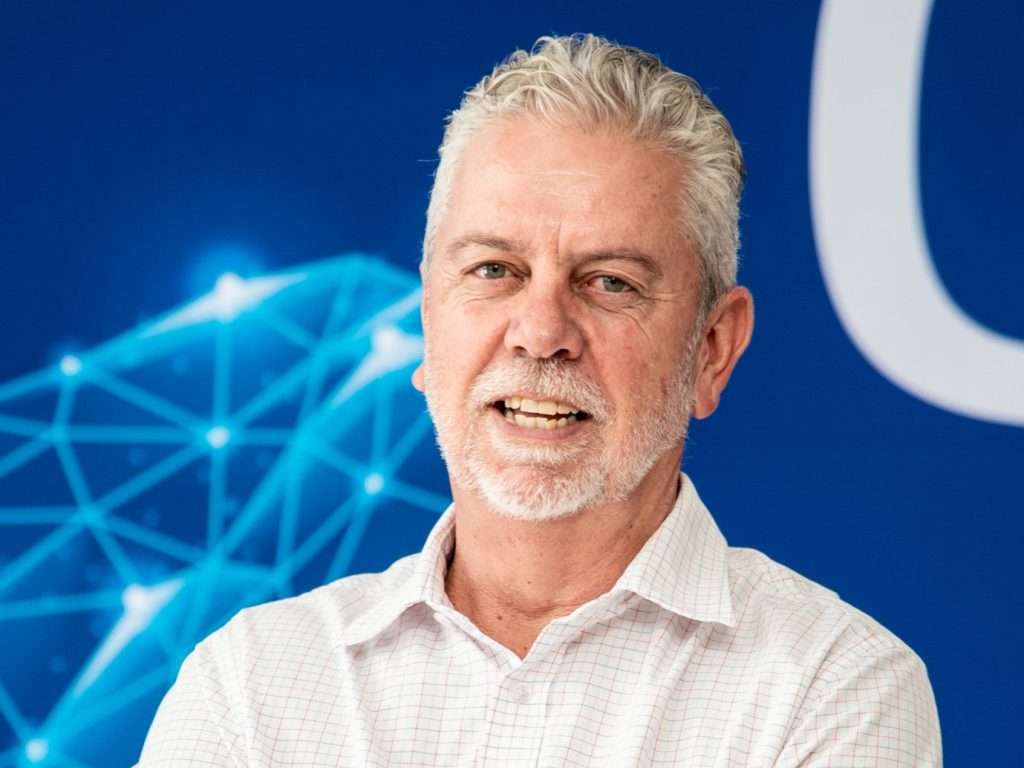
As group IT executive at Adcorp, Abri Erasmus leads with a solutionist mindset rooted in curiosity, structure and service. His journey from theology to technology reflects a philosophy that sees complexity as opportunity rather than chaos.
When Abri Erasmus stepped into the role of group IT executive, he inherited an organisation whose technology environment mirrored its global reach. With operations across South Africa and Australia and expansion into other territories, Adcorp’s IT landscape reflected years of acquisition and organic growth but lacked cohesion.
In 2019, Abri led a technology refresh that would become a defining chapter in the group’s transformation story. “Adcorp grew through acquisition and for many years there was never a unified IT strategy,” he recalls. “We identified 177 applications across the landscape, most of them with no integration, very little reporting capability and multiple ERPs so we had to simplify.”
Five years later, that complexity was reduced to two core platforms with complementary sales and payroll systems. The move to a software-as-a-service model brought structure and sustainability to an environment once weighed down by duplication and inefficiency. “We concluded that project in February last year,” he says.
Abri’s remit extends across territories, brands and regulatory environments. Reporting directly to the CEO, he sits on the Group exco and engages with both internal and external stakeholders. It is a governance-heavy space, but his strength lies in orchestration rather than control. “My role is to ensure that there’s an aligned IT strategy and operating model across territories,” he says. “We have a fully fledged outsourced IT model, so my focus is on coordination and vendor management rather than in-house capacity building.”
Operating within a fully outsourced environment, Abri is clear about the distinction between commodity IT and strategic partnerships. Commodity components can be replaced, but areas such as data architecture and cybersecurity demand deep collaboration with partners who understand the business context.
“Respect must be mutual, which is the basis of good vendor relationships. I also recommend carefully assessing contracts and defining expectations clearly. It’s also crucial for vendors to avoid over-promising,” Abri explains. For Adcorp, vendors that bring the right strategic fit deliver significant advantages, particularly in the emerging fields of AI and unified data management.
From theology to technology
Abri’s path to the CIO’s office was unconventional but intentional. After starting out in engineering, he switched to psychology and theology, completing a master’s before spending several years in ministry and community service. His shift into corporate life came in 2007 when he joined Gold Fields as an HR consultant. There, he developed a digital tool to assess and track employee competencies across the mining sector – an innovation that hinted at his aptitude for solving business challenges through technology.
“When Adcorp acquired that part of Gold Fields in 2010, I moved across and managed an HR consulting division and a psychometric assessment division for one of our training companies, PMI. In 2015, I joined the research and development team at Adcorp Group to explore future technologies and then moved into IT as a portfolio manager,” he explains.
It is a background that shaped his approach to leadership. “I like to see spaghetti,” he says with a smile. “I like to engage where there’s a mess and then we can start to unpack and unravel it. My basic skill is as a solutionist. I work with knowledgeable people to rebuild through partnerships and collaboration.”
Asked about the moment that shaped him most as a leader, Abri points not to a single event but to a process of discovery. “It’s the confirmation of your core capability. Sometimes you think you’re strong in a certain area and you travel a long road before you realise that’s not your strength. The moment you know who you are, you can start to strengthen and deploy that,” he says.
His view of career growth is pragmatic. “Your career is a journey, not a destination,” he says. “I had to reinvent myself several times. If you don’t keep learning, you fall behind.”
He attributes much of his progress to curiosity and willingness to get involved. “I’ve always gotten my hands dirty. If I see an opportunity, I serve as best as I can. That’s how people come to see you as someone who delivers.”
Hard lessons of change
Among all the projects he has led, none tested his resilience more than the migration from multiple ERPs to a unified environment. Adcorp selected Workday for both HCM and finance, with Salesforce supporting operations and the rollout was challenging.
“We were the first greenfield Workday Finance implementation in South Africa,” he explains. “It was managed by international consultants, so there were cost and localisation challenges. Our business is workforce management and we place 30 to 40 thousand people a week on client sites, harvest time data and process payroll and invoices. Workday didn’t have those capabilities.”
Rather than force-fit functionality, Abri led the team to adopt a best-of-breed approach. “You have to configure applications within their core capability,” he says. “We selected Bullhorn for Salesforce workforce management and made the two systems work together. Getting them to dance was the tricky part.”
It took four years to implement and required restarting halfway through after a change in design. Despite delays and redesigns, the system is now stable and fully operational. “We’ve completed a full financial year on Workday. It has brought benefits and investment realisation, though there’s still work to be done,” he says.
One of the most important aspects of the project according to Abri was change management, which he adds was more practical than theoretical. “Change management is 10 percent preparation and 90 percent experience,” he says. “Users only really engage when they start working on the system. We listened, we built trust and we created interim solutions where necessary. I have found that people are willing to change if it makes their work easier.”
Building a cyber resilient enterprise
In the past year, Adcorp has significantly strengthened its cybersecurity posture. The first step was identifying the business’s critical pathways to prioritise protection. Hardware was upgraded, licences corrected and both on-premise and hosted environments analysed.
Managed detection and response was deployed, penetration testing became routine and a three-year roadmap was established in partnership with a South African cybersecurity company. Today, every endpoint and application is monitored for malicious activity, a reflection of Abri’s insistence on building from basics to advanced defences.
While some enterprises rush headlong into AI, Adcorp is proceeding with deliberate caution. Abri acknowledges a lag but sees it as strategic. The company is currently putting together proofs of concept for a unified data architecture to ensure that its constructs are robust before scaling AI deployment.
“We want to avoid the high failure rates of AI projects, which are often rooted in poor data quality,” he explains. By sequencing data governance before AI rollout, Adcorp aims to make AI more sustainable.
Looking back, Abri says his only regret in his career is not formalising his IT education earlier. “I should have spent more time on structured learning, particularly in IT. As executives, we can focus so much on delivery that we neglect our own growth,” he admits.
Outside work, he finds balance in sport and companionship. “I enjoy anything with a racket, a ball and an opponent, so I frequently play paddle, tennis and golf,” he says.
He smiles when asked what surprises people most about him. “I’m not as serious as I look,” he says. “It just takes me a while to warm up.”
For Abri, leadership in technology is not about control or perfection, it’s about alignment, curiosity and humility. “Technology will keep changing. Our job is to build environments that adapt with it, and people who can see opportunity in the chaos.”