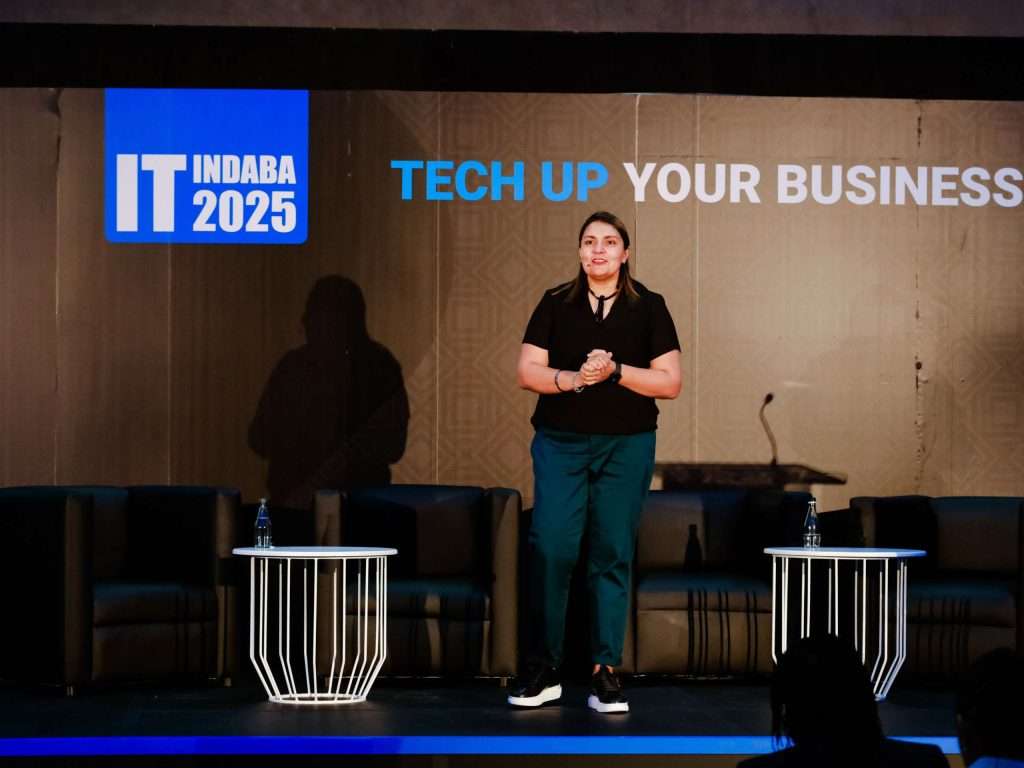
AI, driven through data, can empower employees, streamline processes and drive smarter decision-making, says Sage.
Data-driven artificial intelligence (AI) is transforming the way businesses operate, but it isn’t here to replace humans.
Tasneem Dajee, manager of pre-sales engineering at Sage Intacct explained that AI is designed to help employees work more efficiently, automate routine tasks and support smarter decision-making.
Addressing delegates at the recent IT Indaba on the topic of the power of data-driven artificial intelligence, Tasneem emphasised that this cutting-edge technology is only as good as its ability to enable companies and assist them.
As a case in point, Tasneem said that, when Sage started the AI journey, she needed to almost be “convinced that AI is going to be a game changer”. The main issue that first occurred to people was whether they would still have jobs, she said.
The thought process was that “humans are not going to be needed because AI is going to be able to fulfil so many of our tasks,” said Tasneem.
All about efficiency
Tasneem said that this was a position with which she totally disagreed as AI will enable people to work more efficiently and to do tasks in a shorter amount of time. “To be more efficient, in a nutshell.”
This is evidenced in how Tasneem refers to ChatGPT as her “absolute, absolute best friend”.
One of the aspects of AI that could prove to be useful is how it picks up on daily routines, said Tasneem, referencing that she was a habitual listener to classical music and AI tools had remembered this.
What Sage is doing is to build a repository of data, which means that its products learn algorithms or processes and then store these in the network, said Tasneem. This enables the software to pick up inconsistencies and automatically block those actions, she says.
For example, Sage is very deliberate about sustainability and would only use certain partners to travel based on their history and reputation. Sage, one of the IT Indaba’s partners, endeavours to be as sustainable as possible within every single area of the business. It also invests heavily in diversity and empowerment, Tasneem added.
Another example Tasneem cited was control over expenses, without which “we're definitely heading for disaster”. She said that if AI is able to limit travel spending, that will be a “game changer” because it will block the expense before it goes through the system.
Making integration happen
While Sage AI automates accounting tasks, detects errors, and uses real-time data to drive growth, built on more than 40 years of accounting expertise, Tasneem noted that “when I stand in front of you, it’s quite easy for me to say it’s very difficult to get one specific software that is going to do absolutely everything for your business”.
Tasneem referenced software such as accounts, payroll and HR, as well as integrating to a point-of-sale system to manage customers and suppliers through a type of knowledge base.
“If we have the capabilities to integrate, that gives us the power to be able to work in almost every vertical just because we’re going to continue doing what we do great, being accounting, payroll and HR, and we’re going to allow somebody else within that vertical or industry to do what they do great,” says Tasneem.
This, she explained, is why Sage offers an open API, so that it is possible for integration to happen, so that there is an ecosystem with Sage partners. “How it is that we work within our ecosystem is we sell you software and we rely on our very, very ambitious and fantastic business partners to be able to implement that software for you,” she said.