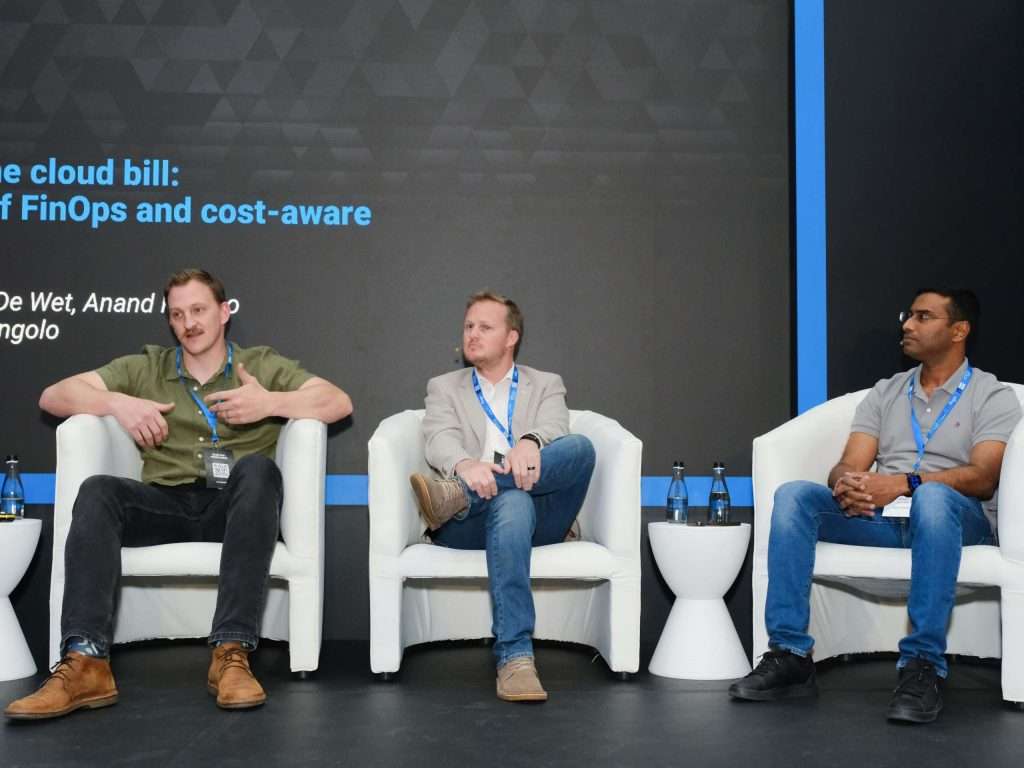
At the 2026 IT Indaba, Africa’s biggest IT conference and expo, technology leaders learnt how smarter cloud strategies can keep costs in check – while still unlocking AI value
Facilitated by emcee and seasoned manager Ronald Muringai, the informative panel discussion titled Taming the cloud bill: The rise of FinOps and cost-aware IT culture, outlined what is really driving these costs, and how AI is driving value.
Panellist Ricardo Springolo, CIO at Belgotex, noted that certain functions make sense to be cloud-based, but organisations are looking to the private cloud and on-premise for AI.
“Placement depends on where the workload sits. For our [AI] use case, I wanted a managed service with back-up considerations, and private was cheaper as it gave us a bundled service. Private cloud ticked all the boxes, and it was also through a local partner in Umhlanga (he is Pietermaritzburg-based). However, we still require some management on the public cloud because it’s valuable for specific functions.”
For Anand Naidoo, group CTO at Hello Group, cloud costing depends on the size of an organisation, but from a daily management perspective it gets tricky.
“Engineers know when to scale or if something went rouge, but they need good tools to continuously monitor the environment. Or, if product and business managers may notice a higher bill that doesn’t equate to more revenue, which raises a red flag. There must also be [IT and finance] architectural levels above that, that can spot anomalies. But sometimes things just get left. For example, if massive cloud capacity was needed due to huge sales volumes, but profits plateaued – with the cloud architecture still running.”
Cloud costs can quickly spiral if not monitored properly
For panellist Gerhard De Wet, CTO at JobJack, servicing thousands of clients means cloud scaling is critical, despite cost.
“We use AWS container-based solutions, which is more expensive, but scaling happens automatically. Because we’re constantly adding features on the cloud platform, we have to monitor the costs and understand where any increase comes from [in addition to adding features], for example, through inefficient code. From a small company perspective, my data and dev ops leads are in tune with what’s needed, and they’re enabled to take initiative to raise any issues,” said Gerhard.
Anand added that cloud costs can quickly spiral if not monitored properly. “We found that revenue line and OpEx weren’t talking to each other, and we were blaming tough economic times. Then our CFO pointed out that I’m 40 percent over cost, due to highly automated IT processes. It made sense, and if it wasn’t for that meeting it would’ve been missed.”
Balancing AI’s promise with its price
Ricardo believes that productivity AI demand is harder to predict but easier to govern, so it makes sense to keep this in the cloud. However, his team has been building a robot with computer vision to do stock counting, which requires a different set-up. “We use our own infrastructure so that [capacity] demand will be sustained – and so that it makes financial sense. I’ve also seen partners investing in their own data centres offering more bespoke arrangements, due to tokenised AI being expensive, so they’re carving out a piece of GPU for the cost to be more predictable.”
Gerhard countered that cost is difficult to predict before technology like AI is actually used. “It’s about the quality of the output and not just finances. You must be cautious where the tech is deployed and the scale; if it’s opened up to end users it can impact the bottom line based on cost. Ultimately, you need to consider if it’s bringing in more than costing you.”
For Anand, communication and clearly articulated cost impacts need to happen at the start of a project and be a continuous discussion.
“IT costs can be seen as ‘wasteful’ when context isn’t understood. When you spend time educating your colleagues about risk factors, stability, continuity of service, and how much revenue you could lose. Especially if you haven’t had your own incidents to relate to, use global and industry case studies to illustrate your point,” he said.
“I’m hesitant to add too much AI on a platform, it will hit you hardest,” cautioned Gerhard. “But it can be hard to find balance between not doing it and overinvesting. Diversify to make sure you’re not exposing yourself to risk,” he concluded.