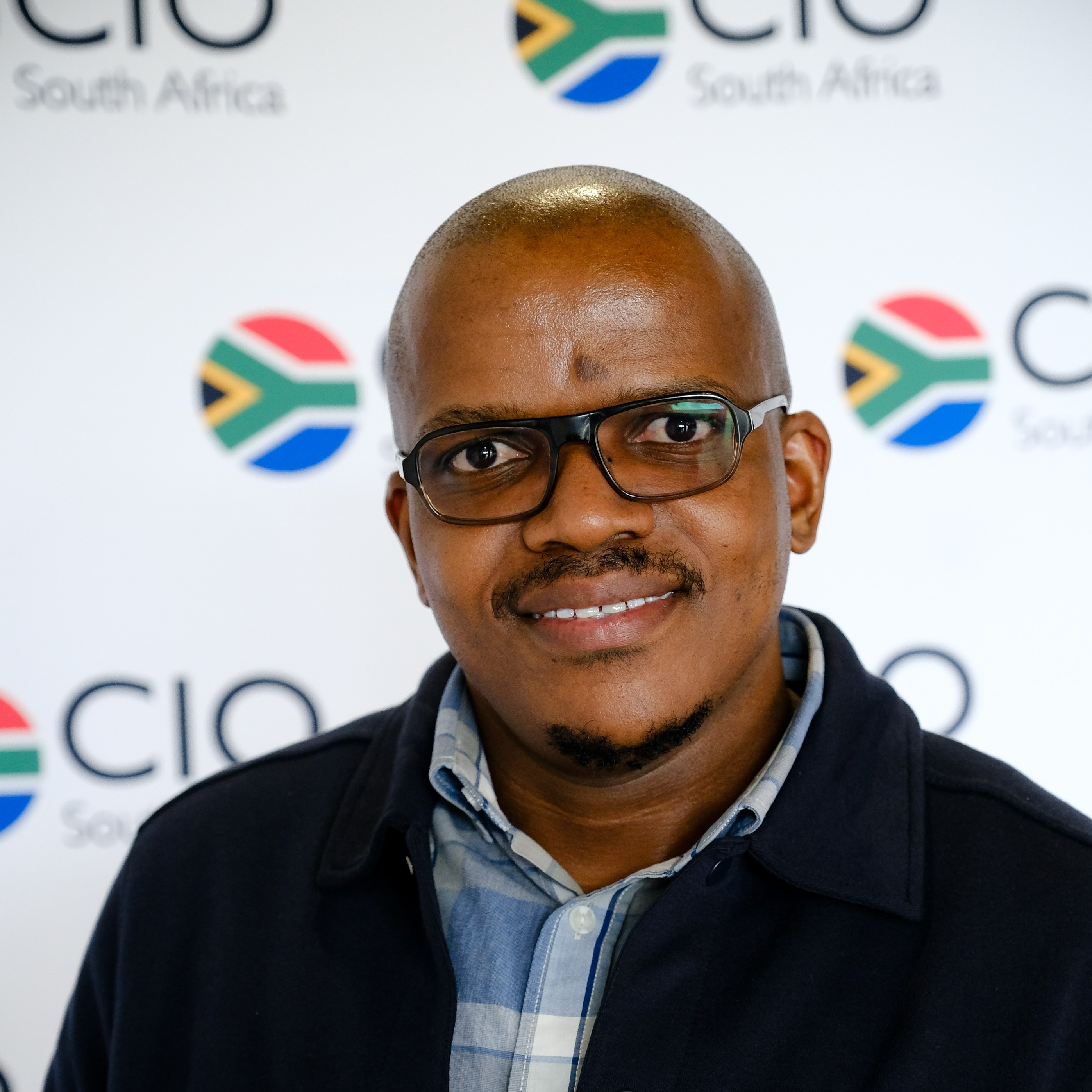

Discovery CDO Siphamandla Masuku has a passion for learning more about the human condition. His distinct approach to innovation integrates theoretical frameworks, cutting-edge technology and an in-depth understanding of human behaviour.
The journey from industrial engineering to technology leadership is a story often told in the IT world. However, Discovery's chief digital officer, Siphamandla Masuku, took a slightly different path. While many find comfort in the structured nature of engineering, Siphamandla found it too formulaic. Instead, he was drawn to the humanities, where understanding the human condition became his true passion. This led him to pursue psychology and industrial psychology, paving the way for his unique approach to digital leadership.
“Interestingly enough, I use my background in psychology a lot in my day-to-day work in IT,” Siphamandla revealed. “As the years have progressed, I’ve leaned into it a lot more in terms of how I see where IT is going.”
Originally from Richards Bay, he moved to Durban to pursue his studies in psychology. A short visit to his brother in Cape Town, combined with the Atlantic sea on his doorstep, meant that the east coast simply had to take a back seat and Siphamandla decided to stay.
It was in the Mother City that he decided to pursue his postgraduate studies in information systems management while working as a business analyst for a large insurer. During that time, he worked in the insurer’s innovation function, the early days of innovation units, particularly in South Africa. Siphamandla formed part of a small group that travelled abroad for research purposes as this new unit grew locally.
“I went from psychology at UKZN to information systems management at UCT and later a master’s degree at UCT’s Graduate School of Business, focusing on management practices and innovation, so it’s safe to say that I’ve had quite a diverse educational background,” he noted.
Evergreen competitiveness
If it sounds like Siphamandla wasn’t busy enough, he also co-founded a boutique innovation consulting firm during that time. The company focused on helping organisations understand how to leverage organisational design and manage innovation capabilities to identify new and emerging technologies that they could exploit to their benefit. “We spoke to what you need to have in terms of the organisational learning capacity to take on these new technologies and integrate them into your operations and get them to function,” he explained.
A major part of Siphamandla’s career has been centred around digital research and digital transformation, as well as establishing innovation units, while applying emerging technology to new strategic categories in organisations. Today, it is a huge part of Siphamandla's current role at Discovery, with a specific focus on generative AI.
“The goal is really understanding how we can diffuse new technologies in the organisation that goes beyond merely creating a competitive differentiator, but rather creating patterns of behaviour that can sustain that competitive differentiation,” he explained.
In the main, innovation units are really meant to look both outward and inward to identify new threats and opportunities, he added. “Spotting the signals amongst the noise.”
“Another layer to this is that many organisations primarily focus on how they can leverage AI to develop new products and services, a complementary focus that we share at Discovery and product development and enhancement. However, another critical focus on our end is how we can diffuse it internally to have sustained organisational competitive differentiation. This is a direct result of embedding AI tools in a way that enhances productivity, creativity, and collaboration, thereby augmenting key activities throughout our lifecycle and daily operations.”
Blending theory with innovation
And true to his nature, it isn’t enough for Siphamandla to merely do cool stuff. He also has to back it up with the relevant research – he’s currently pursuing his PhD focusing on innovation management and ethical AI adoption.
“One of the key things that I’ve learnt over the years when introducing new technologies is that it is almost always far less about the technology and rarely about having differentiation built into the technology itself,” he said.
“Even if the technology is differentiated, it is difficult to sustain competitive advantage with technological differentiation. The competitive advantage really comes through the people and how they apply the technology and the psychology behind that. Bearing that in mind, that’s where I’ve relied a lot on my psychology background. It’s largely linked to the classic trifecta you often hear about – people, process, and technology.”
One of Siphamandla’s favourite pastimes also linked to his day-to-day work is understanding frameworks and testing them out in practice and seeing how wonderful they are ideologically, and in some instances discovering how unrealistic they are in practice.
A set of tools and some football
One of his favourite theories is The Diffusion of Innovation Theory by EM Rogers. “In my view, the biggest contribution made to that theory was in 1991 through Geoffrey Moore’s Crossing the Chasm, which speaks about the difference of moving from an early adopter phase to an early majority phase,” he added.
“The book highlights how an understanding of the psychological profile of people can help create strategies to appeal to these different groups, moving from adoption to diffusion.”
As much as Siphamandla enjoys keeping his mind sharp through his studies and reading up on the latest emerging technologies, he also enjoys working with his hands. “I enjoy the occasional DIY project, however, my wife often thinks I should leave it to the professionals,” he joked. “That’s because I often need to call them in after a disastrous attempt at building something myself.”
Siphamandla has a knack for hitting the nail on the head when it comes to innovation, even if he's not quite building an entirely new cabinet. But where there's a toolbox, there's often a soccer ball nearby. As a dedicated father and soccer dad, he often spends his time taking his soccer-loving son to matches. “My son loves soccer, and quality time for us involves me taking him to practice or a game on weekends.
This interview was first published in the second issue of the 2024 CIO South Africa magazine. Click here to download your copy!