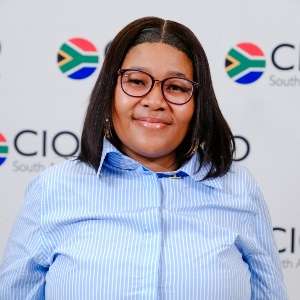
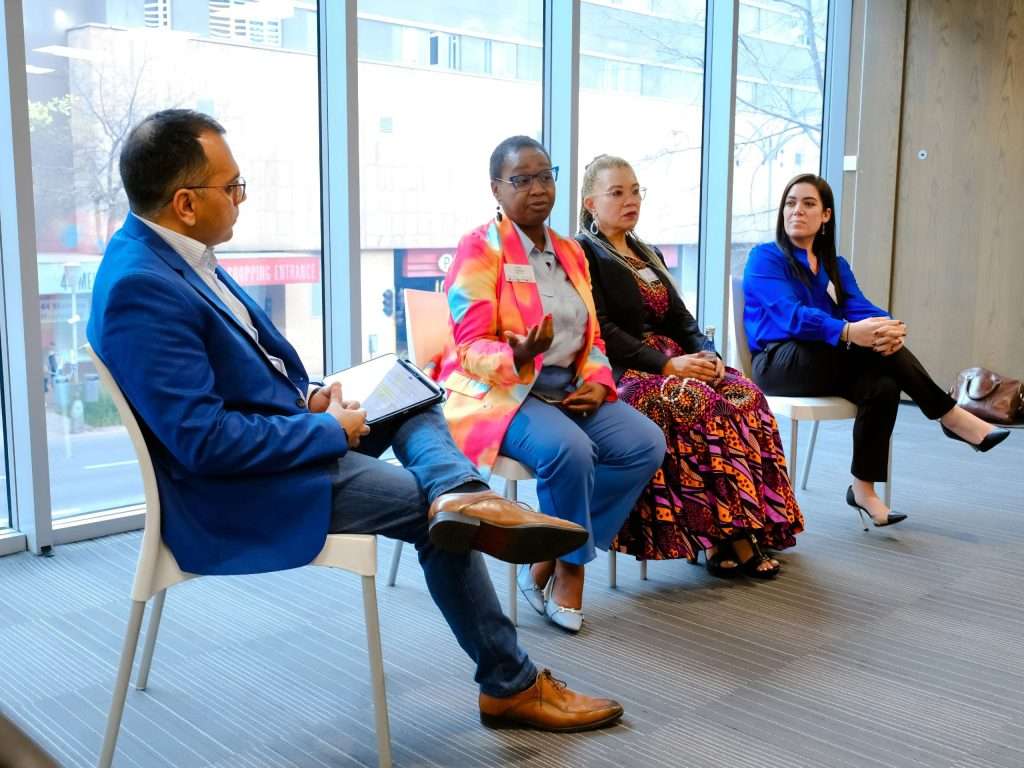
Land Bank CTOO Faith Burn stressed the importance of building diverse, multigenerational teams at the recent Executive Day held in the Melrose Arch District.
With executives navigating growing tensions between generations in the workplace, the ability to recognise and adapt to different generational needs is becoming a critical leadership skill.
A breakaway session led by African Risk Capacity finance executive Yusuf Bodiat gave attendees the opportunity to engage with perspectives from across the business landscape. The discussion featured Land Bank CTOO Faith Burn, CTrack CFO Natasha Gomes and KFC (Yum Brands) chief people and transformation officer Nolo Thobejane.
Millennials and Gen Z account for 57 percent of South Africa’s population, yet many leadership and executive roles remain concentrated among older generations. Faith said this imbalance often creates friction in the workplace, with younger generations feeling unheard and older generations frustrated with the perceived lack of work ethic from gen Z’s.
According to Faith the culture in a company is what creates the framework for collaboration. “We need both older and younger generations to deliver excellent outcomes. Younger professionals often bring creative solutions to problems, while older colleagues focus on process and structure. Both of which are required for successful delivery,” she explained.
She also connected the importance of generational diversity to the development of AI models. “AI has biases and hallucinations because humans introduced them. If only one type of person is feeding the machines, it could lead to harm. Intergenerational diversity is critical in shaping how we build and train these systems,” she said when asked about the impact of AI on the future of work.
The panel also addressed stereotypes about Gen Z, with Faith noting that the perception of younger professionals as lazy is misplaced. “The older generation often resists change and struggles to accept that different approaches can lead to the same or even better outcomes. That creates the impression that younger employees are unwilling to work,” she explained.
The hidden power of work-life balance
Natasha highlighted the importance of balance, pointing out that if younger generations succeed in maintaining work-life equilibrium, they could extend their careers beyond the traditional 40-year career. “We are seeing 50-year-olds burn out after years of overexertion and I believe this could be avoided if we had better work-life balance from early on in our careers,” she stated.
Nolo added that executives must adapt their leadership styles to thrive in the future. “I think that as executives, we learn new leadership skills, particularly around empathy and emotional intelligence. This will equip us with the skills to lead the next generation of workers who value more than just money but also want flexibility and purpose in their work,” she revealed.
The discussion also touched on AI’s role in reshaping the meaning of work in the future. Natasha stressed that business leaders must frame AI as an enabler. “The messaging about AI’s impact on work is important. It should be presented as something that’s here to empower employees, not replace them,” she said.
The session concluded with a clear message from IT, finance and HR: people remain the most valuable asset in any organisation and intergenerational diversity is a key driver of success.