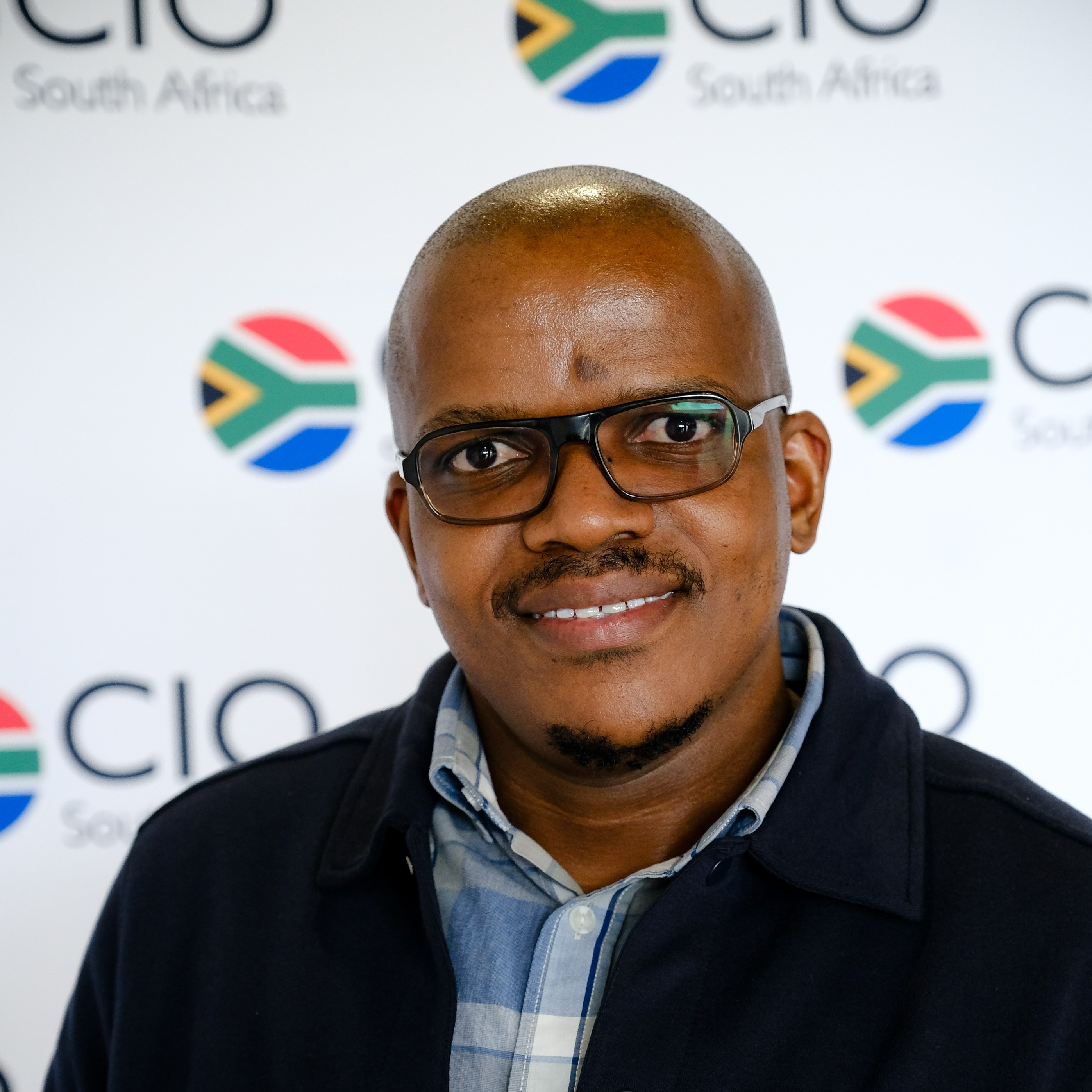
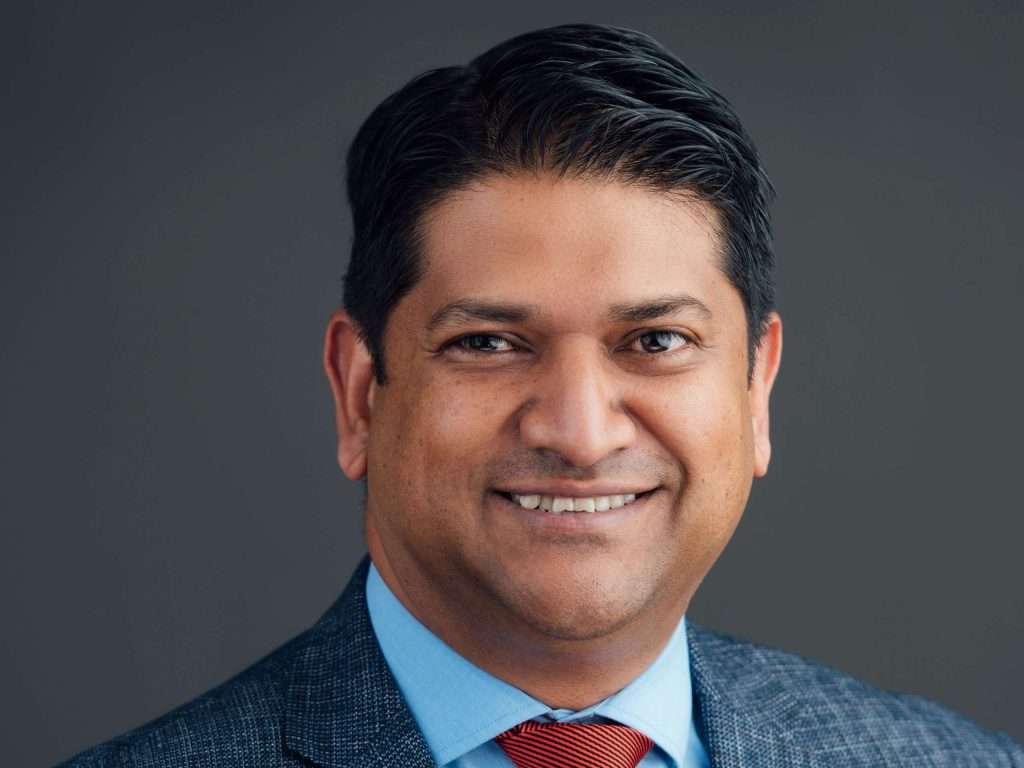
It's no exaggeration to say that the life of a technologist is demanding and constantly on the move, something that became clear when CIO South Africa caught up with Mahendra Beharie, vice president IT at DHL Express, sub-Saharan Africa. He took a moment from navigating the streets of Johannesburg to have a chat with the community’s senior writer, Reabetswe Rabaji.
Always on the move, Mahendra prefers listening to insightful audiobooks for inspiration. However, being on the go all the time can come at a price. He admits that finding balance is tough and remains a work-in-progress for him. “It’s about being present in the moment, which means when I am at home, I try to spend as much time with my family as possible,” he says.
He is not unfamiliar with the hustle and bustle of Johannesburg life; Mahendra grew up in Springs, in Johannesburg East. However, he began his career right in the trenches of DHL Express, working as a customs runner back in the early 90s. Very soon, Mahendra was bitten by the technology bug and worked his way into the logistics company’s IT department.
“I ended up working as an IT operator, responsible for changing DAT tapes and DLTs for the business backup systems,” he recalls. “I then moved up to the role of helpdesk and back-office support, and later senior systems administrator, and dabbled slightly in database administration.”
Mahendra then moved out of DHL Express IT and into a commercial role looking after sales development and tools, and branched out into pricing and products, and business intelligence. Somewhere between those transitions, he worked in costing and returned to DHL IT as CIO for the South African business. This was followed by a VP role and a seat on the Africa management board and the global exco for customer services. Today, Mahendra is VP for IT, sub-Saharan Africa. This unconventional route into IT culminates in nearly three decades that Mahendra has been with DHL.
On the educational front, Mahendra holds a BCom degree in general management. He also holds a certification from the Gordon Institute of Business Science’s international executive development programme. In addition, Mahendra facilitates most of DHL’s global leadership courses internally. Within the IT portfolio, Mahendra spearheads in-house training.
Empowering the customer
Mahendra is currently working on some exciting projects from an omnichannel communication and systems development perspective, all in the effort to empower DHL customers.
“Our way of empowering the customer involves a strong focus on user experience (UX) and making user-friendliness a priority for our agents on the ground, through pop-ups and knowledge management tools,” he explains. “Coupled with a seamless experience between departments. There’s also exciting progress on the CRM front, leveraging social listening and social media, while equipping our salespeople with tools to better understand customers' needs and behaviour. The insights gained from analytics tied to call cycles have been invaluable.”
From a customer feedback perspective, Mahendra and his team are paying close attention to real-time feedback. “Reacting to queries almost immediately, I’ve learnt, gives customers the comfort that someone is working hard to resolve their issue,” he observes. “Striking the balance between automated response and human interaction is vital to an engaging customer experience.”
Over and above delivering an exceptional customer experience, Mahendra is also paying close attention to cybersecurity on the continent and how it is evolving. On the technology stack, he says that within telecommunications, there are opportunities to leverage tech stacks in different ways.
Greener logistics
According to Mahendra, DHL is also making considerable efforts from an environmental impact perspective, particularly in the sustainable aviation fuel arena. “Our biggest impact comes from our DHL Express aircrafts, where we are looking at ways to create a greener footprint.
“We are also looking at how we can digitally recycle our equipment. It all boils down to repurposing and reusing our equipment to optimise it, notwithstanding our positive impact on the environment through the use of electric vehicles,” he explains.
Mahendra points out that it’s one thing to look at electric vehicles, but equally as important to consider things such as renewable energy. “You have to look at the full eco-system to build sustainable environmental solutions, including our buildings, with grey water and solar power. Then there are wind farms on the side of our sister company and much more…,” he continues.
From ESG to projects with great impact, Mahendra and his team have also been experimenting with generative AI and using different platforms to empower DHL’s workforce.
“Through different versions of ChatGPT, we’ve created our environment with safety guardrails to protect against intellectual property leakages. We’ve created platforms to leverage technology such as voice-to-text, without the intention for technology to replace everything – it has its place, especially with efficiency to enable people to move to the next level of efficiency,” he explains.
DHL’s IT team has also created data lakes behind AI tools to use voice prompts to give you the answers to questions based on the data you have, offering people major insights (i.e., meeting summaries).
All this experimentation with AI tools is also tied to DHL’s strategy for talent retention, a culture of learning. “Although I’ve been with DHL for 26 years now, I still feel like a youngster in the organisation because there are people who’ve been here longer,” Mahendra notes.
“It is essential to build your talent pool internally and attract people to the organisation. Our internal training and leadership models are supported by online courses with the ability to set timelines to complete those diverse courses, we empower employees to enhance their skills. We encourage the new ways of working, which include co-pilot, bots and other hybrid models,” he concludes.