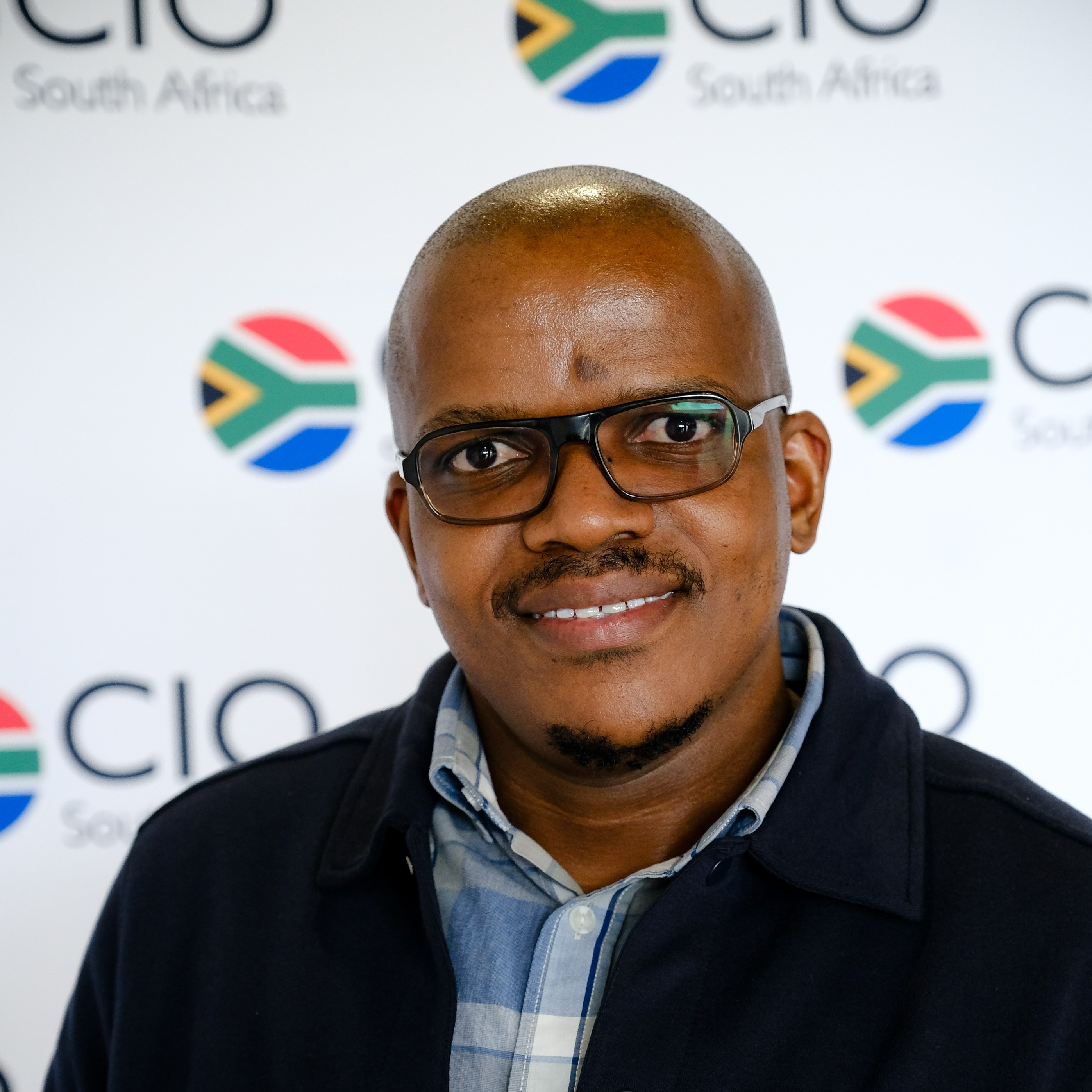

Pieter explores the dynamic world of aviation, where IT transcends its traditional role as a 'cost centre' to become a powerful revenue driver.
For peace of mind in the skies, Pieter Steyn, chief information and technology officer (CITO) at Luxaviation Group, is creating solutions that deliver seamless luxury travel experiences while generating revenue through the strategic use of data and analytics. But back on solid ground, the avid runner takes to the road to stay centred, maintain exceptional physical condition and keep his mind sharp.
A passionate long-distance athlete, Pieter enjoys ultra-distance running and trail events. He also has a keen interest in landscape photography – that’s when he’s not immersed in his greatest passion: mentorship and coaching. Recently, he ventured into corporate executive coaching, guiding peers and colleagues across diverse industries while leading his IT team.
Pieter admits that IT wasn’t initially part of his career plans. Like many high school graduates, he was uncertain about what to study. However, his hunger for learning ultimately paved the way for his success.
The hard graft was an all too familiar concept for him early on. At 19, Pieter was employed in a packing house in Pretoria before moving to Polokwane. Coincidentally, this job opened the door to his career in IT. Having a natural aptitude for computers, he soon offered IT support in his hometown. A tip from his cousin led him to Anglo American, where he landed a role in IT support.
“I was interviewed by an on-site engineer who worked for BCX’s eastern Limpopo division and managed to get the job,” Pieter recalls. “He was about to leave for New Zealand and only had three months to teach me everything he knew – from fibre optic cabling to telephone service support and access control.”
In a remote area where infrastructure needed to be built from the ground up, Pieter and his manager were the only ones who knew how to get it done. The hard work continued at Anglo, where he managed over 200 IT service requests a month. He hasn’t looked back since.
A smooth take off
Today, Pieter leads IT at Luxaviation Group, a multinational company operating in multiple countries, including the Americas, Mexico, the US, Europe and Africa. Luxaviation not only manages private jets but also boasts a substantial helicopter fleet. Many vivid yellow aircraft featured in National Geographic documentaries belong to Luxaviation’s subsidiary, Star Speed.
“Our helicopters cater to high-net-worth clients and provide shuttle services in the UK, mainly for island-to-island travel, which is a significant business both in the UK and South Africa,” Pieter explains. “A significant fleet of the company’s helicopters operates in South Africa alone.”
In South Africa, most private jets belong to discerning business clients. Once an aircraft is acquired, it must be registered with a competent aircraft management company and maintained by a skilled team. Luxaviation provides these services, ensuring aircraft are managed efficiently as independent businesses entities.
“At a certain point, Luxaviation acquired ExecuJet, which operates fixed-based operations (FBOs) at Lanseria and Cape Town International Airports. We now manage a significant fleet of business aircraft in South Africa, with an even greater number managed globally by Luxaviation Group,” Pieter explains.
Beyond bespoke luxury travel, Luxaviation is making significant investments in emerging technologies, including drones and electric vertical take-off and landing (eVTOL) aircraft. From an IT perspective, integrating these innovations offers both exciting opportunities and unique challenges. Pieter has refined his expertise in mergers and acquisitions (M&A), to stabilise and strengthen Luxaviation’s growing global portfolio.
“When Luxaviation was acquiring companies rapidly, they needed someone who could bring stability, integrate systems, and navigate chaos to compliance. I became that person, supported by an incredible team,” he says.
Experience doesn’t always count
Pieter’s appointment as CITO was far from guaranteed. At the time, he was relatively untested at this level, and experience was a key factor in the selection process. “When you step into a role like this, companies expect guarantees – you need both technical expertise and strong business acumen,” he notes.
His leadership was tested early. Appointed at the height of the Covid-19 pandemic, Pieter witnessed the aviation industry contract dramatically. “We went from around 2,000 flights a month to just three globally. Many companies in Lanseria and other airports went under,” he recalls.
Despite these challenges, Pieter has thrived. His role involves close collaboration with engineers, developers, data specialists, and business intelligence experts. He reports directly to Luxaviation Group CEO Patrick Hansen. “I’m fortunate to work with and be mentored by Patrick. He’s pragmatic and approachable, places people at the heart of what he does, and makes an effort to connect with employees on an individual level.”
Data as a revenue stream
Patrick’s ability to leverage data and analytics is something Pieter deeply admires. Data has become a critical revenue stream for Luxaviation.
“We’re not just selling luxury travel experiences; we’re also monetising data,” Pieter explains. “We collect proprietary information through our FBOs, refine it using AI and machine learning, and provide insights that give our partners a competitive advantage.”
Luxaviation’s newest FBO in Dubai exemplifies this data-driven approach. As the world’s largest private aviation facility, it features cutting-edge technology, including 20 kilometres of fibre-optic cabling and 500 high-resolution cameras integrated with both Luxaviation’s network and Dubai’s airport authority.
From an R&D perspective, Pieter’s team spends significant time developing AI-driven solutions. One such project is Wayfinder AI, a machine-learning-based application that has a sustainability calculator for alternative aviation fuel (SAF) embedded.
“Wayfinder stores detailed aircraft specifications, flight speeds, descent times and waiting periods upon landing. By analysing three years of high-quality historical data, it provides optimised flight routing and fuel efficiency insights,” Pieter explains. “This level of data precision has transformed IT from a cost centre into a revenue generator.”
Pieter is careful not to reveal too much, but he hints at more innovations on the horizon. As the aviation industry evolves, Luxaviation’s IT capabilities will continue to shape its competitive edge, ensuring that data remains at the heart of luxury travel.