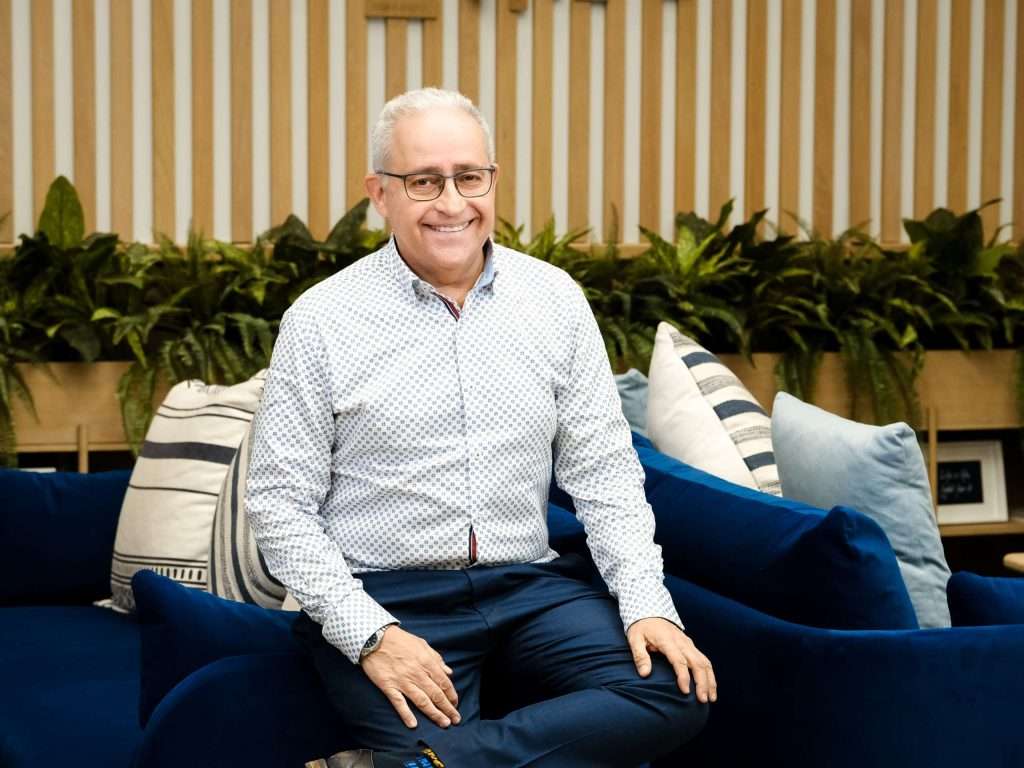
In the rapidly changing world of healthcare, technology is not just an enabler but a cornerstone of sustainable transformation. At Life Healthcare, CIO David Price has emerged as a key architect of this shift, bringing a distinctive engineer’s lens to IT leadership.
David Price’s career journey saw him veer from engineering into operations, projects and eventually large system implementations, which piqued his interest in IT and eventually led to a successful career at Standard Bank, Barclays Africa Group and, more recently, Life Healthcare. His experiences have given him a structured, problem-first approach that is as pragmatic as it is visionary.
For David, IT leadership is not about flashy quick wins. It’s about delivering measurable, sustainable improvement that impacts the entire organisation, from hospital managers to frontline nurses and, ultimately, patients.
David’s early years were shaped by values of ambition, acceptance and integrity. “Everyone was striving to do as much as they could. At the same time, we were taught not to judge people by appearances, but by their actions and contributions,” he recalls.
He also credits his father for instilling respect and fairness. “My father was quite the gentleman and he always insisted that I treat people the way I would want to be treated. I have taken this lesson with me throughout my life.”
David’s engineering training underpins the disciplined mindset that defines his leadership style today. “It taught me to always think in a very structured way, to plan sustainably, and to ask questions until I understand a problem fully and can visualise it. This allows me to clearly explain complex strategies to other exco members and end -users,” he reflects.
Leadership built on the four Ds
Over time, David’s leadership style has evolved to embrace collaboration and diversity. He is a firm believer in building diverse teams, across gender, race, professional background, augmenting ways of thinking. “The truth is, there’s a lot of complexity and I don’t have all the answers. Diversity in the team is critical,” he affirms.
To guide his leadership, he has coined what he calls the four Ds of team building: diversity, delivery, detail and drive. These principles ensure his teams remain both agile and disciplined in execution. He emphasises the importance of an open and respectful culture where his team have psychological safety, and where he himself can also be challenged.
David’s engineering mindset translates into a problem-first approach to IT. “We always start with: what is the problem? From there, we align our initiatives with business needs. We have a rigorous process around demand prioritisation because we have a smaller team, so it’s essential for our initiatives to yield benefits in the short to medium term,” he explains.
David is a strong believer in ownership and encourages his team to treat every initiative as if it were their own business. “Costs can run away with you very quickly, so the mindset around ownership encourages people to find the most cost-effective and sustainable way to achieve their goals. I want to be able to review our work five or 10 years later and see that a system we implemented is still delivering value,” he adds.
This long-term orientation distinguishes his strategy. Rather than chasing quick wins, David insists on stable foundations and continuous measurement. Equally important is staying connected to hospital employees. Although Life Healthcare spans 59 acute facilities, David makes a concerted effort through roadshows, regional visits and feedback forums to stay close to users and ensure solutions are adopted effectively.
Navigating the AI frontier
Under David’s leadership, Life Healthcare has embarked on several transformative initiatives. The hospital information system (HIS) implementation was a cornerstone project that stabilised and automated patient admission, tracking, billing and overall hospital management. According to David, the new HIS has significantly improved efficiency across facilities.
He has driven a successful cloud adoption programme. The migration delivered tangible benefits in stability and scalability, placing Life Healthcare ahead of many peers in realising the promise of hyperscale cloud. Upgraded network infrastructure has enabled richer data integration and direct connectivity with in-hospital devices.
And while data and security sit outside his portfolio, David works closely with the data team to ensure insights are harnessed to drive behavioural change in hospitals. “We fundamentally believe in the value of data,” he affirms.
Artificial intelligence (AI) looms large in every CIO’s mind, but David is taking a pragmatic, structured approach. Life Healthcare has already developed an AI policy and created training materials for staff.
The organisation is piloting selected clinical AI applications, with a sharp focus on ensuring that solutions integrate seamlessly into operations and add value without significant resource contention.
David is realistic about constraints. “It would be overambitious for us to build our own models when there are thousands out there already. Our approach is outside-in: learn from what’s available, adopt what makes sense and govern it carefully,” he explains.
Knowing when to course correct
To this end, he chairs an internal AI committee that evaluates opportunities, keeps hype in check and ensures initiatives deliver measurable benefits.
Thanks to David’s experience in operations, technical challenges, even those involving multi-billion rand projects, are a small feat that can easily be solved with process, discipline and support. But the biggest challenge of his career continues to be stakeholder alignment.
“Working with difficult stakeholders and gaining their buy-in is often the hardest part of any project for me because some stakeholders will not change their minds about a specific issue and there’s nothing you can do or say to convince them otherwise,” he explains. His maturity as a leader has taught him when to persist and when to course correct.
Innovation remains another challenge for David. With high demand on his team and ongoing backlogs, creating space for creative thinking is difficult. In the past, the organisation relied on partnerships with innovation hubs to introduce new ideas, but David is now applying an integrated innovation approach that brings IT, security and data teams into the process from the outset.
This disciplined approach ensures that innovation is not theatre but delivers sustainable business outcomes.
Finding and maintaining balance
Despite the relentless demands of his role, David finds balance in family and personal passions. He is a devoted father to four children and an avid follower of sport, particularly soccer, rugby and cricket.
He is also a dedicated reader, favouring biographies and books on economics. Currently, he is reading a biography on the life of hotel magnate Sol Kerzner, admiring his ability to deliver big visions while also reflecting critically on his leadership style.
David also finds renewal in the Kruger National Park. “You can never be bored in the Kruger, I enjoy the unknown that comes with it and I have found that every visit is different. It is my way of disconnecting from constant emails and reconnecting with what matters.”
Looking ahead, he hopes to establish a graduate IT programme to bring young talent into healthcare technology. His ambition remains to nurture the next generation of IT leaders and create a structured pathway into the sector.