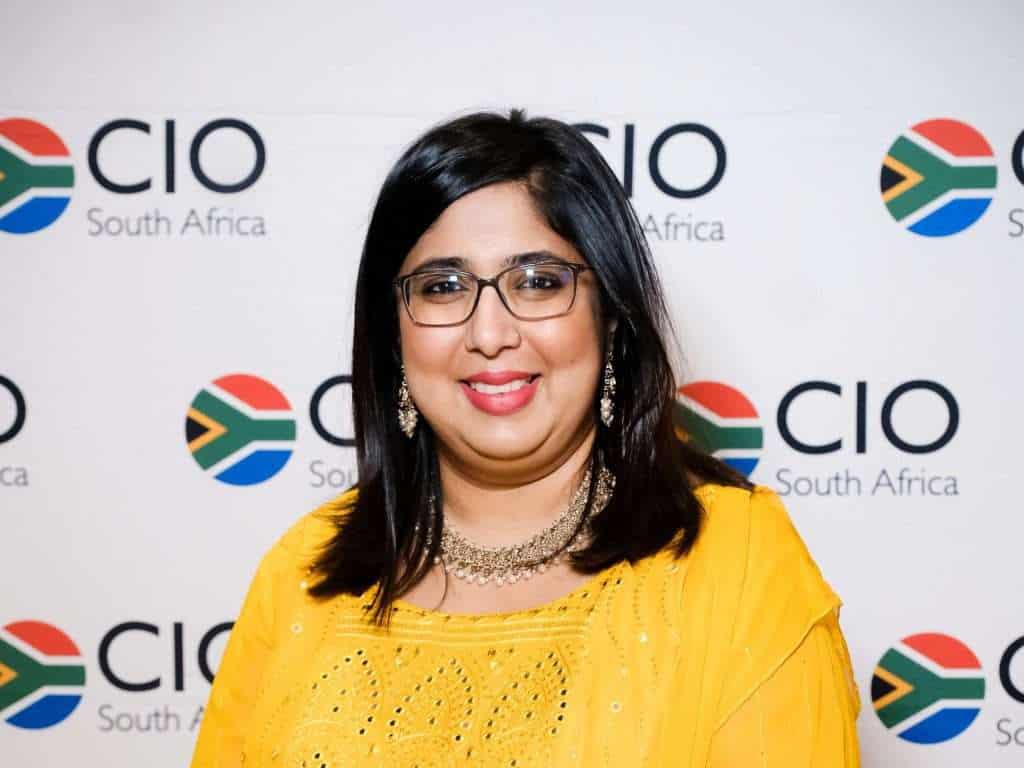
The STEM space is traditionally a research dominated area. However, Dr Denisha Jairam-Owthar believes CIOs can have an impact in this space in a significant way.
Dr Denisha Jairam-Owthar, group CIO of the Council for Medical Schemes, believes that business must recognise the intertwined relationship between all the STEM disciplines – science, technology, engineering and mathematics.
“Technology is rooted in mathematics and logic, and in the applied sciences of engineering and software engineering that we as CIOs work with daily,” she says. “That landscape is changing rapidly right now as GenAI redefines, revolutionises and disrupts the software coding space: GPT versus DeepSeek just a few weeks ago provides evidence of this.”
Denisha believes that CIOs need to start moving into the sphere of influencing career development in the STEM space. “When you get people doing well in STEM, they have a higher propensity to come into our technological environments.”
STEM meshed with social skills
Her view is that STEM skills and competencies need also to be meshed with the social sciences. “Too often we see excellent STEM skills and competencies, but minimal social science/people skills within STEM, that limit and create barriers for success for our brilliant STEM achievers,” she says. “We need to work through avenues to change that.
“Without the people skills, the best systems and AI in the world won’t work. There’s an intertwining that needs to happen which is STEM and the social sciences. CIOs can help STEM achievers obtain those ‘softer’ yet critical skills,” she notes. “As CIOs we are also technological strategists with heightened social skills: convincing, influencing and persuading our boards in the apex of our organisations to take their next steps despite the sometimes exhausting pace of technology. A system or even AI is only as good and successful as its adoption or uptake among our people.”
Solving social ills
Denisha believes that building a pipeline of STEM talent to enter the technology industry would be a great addition to the “conveyor belt” of skills that the tech space needs, while reducing South Africa’s youth unemployment crisis, and reducing the dollars and pounds that South African businesses both in the public and private sectors, currently have to spend on overseas technological skills and products.
“That’s the strong narrative and call to action that our country needs to drive. We can’t rely on paying these exorbitant amounts of money overseas in dollars and pounds that our SA economy can't afford with the backdrop of our own youth unemployment that is growing every year,” she explains.
She adds that there could be greater focus on shorter studies that yield careers via STEM into technological areas that we need due to the urgency of the skills deficit in the country.
It is just this kind of thinking – and action – that saw Denisha winning the Standard Bank Top Woman Leader in the STEM Category for 2024, while being a fulltime group CIO.
She attributes this national recognition to her ability to see the STEM space as one intertwined closely with technology. Denisha is also extremely active in mentoring and supervising postgraduate students, attending and presenting at symposiums, delivering papers, and contributing to the national roadmap of AI and cybersecurity, appointed by the presidential national advisory committee for innovation.
Denisha is passionate about supporting people entering STEM careers, and developing themselves further once they are in those careers.
“They are the future. They are the ones who are going to take over what we leave behind. And I say to other CIOs, let’s leave our youth with a ‘good handbook’ to continue what we are cementing in technology today in our respective organisations and for our country.”
And, she says, the beauty of the technology space is in its fluidity – once in the pipeline, a person can grow into any role, provided there is the will and curiosity.
“Technology comes with unending possibilities. STEM that significantly contributes to technology provides the very foundations of those possibilities,” she concludes.