The CFO-turned-CTO reflects on his unconventional journey into IT and how an unexpected left turn became the right move.
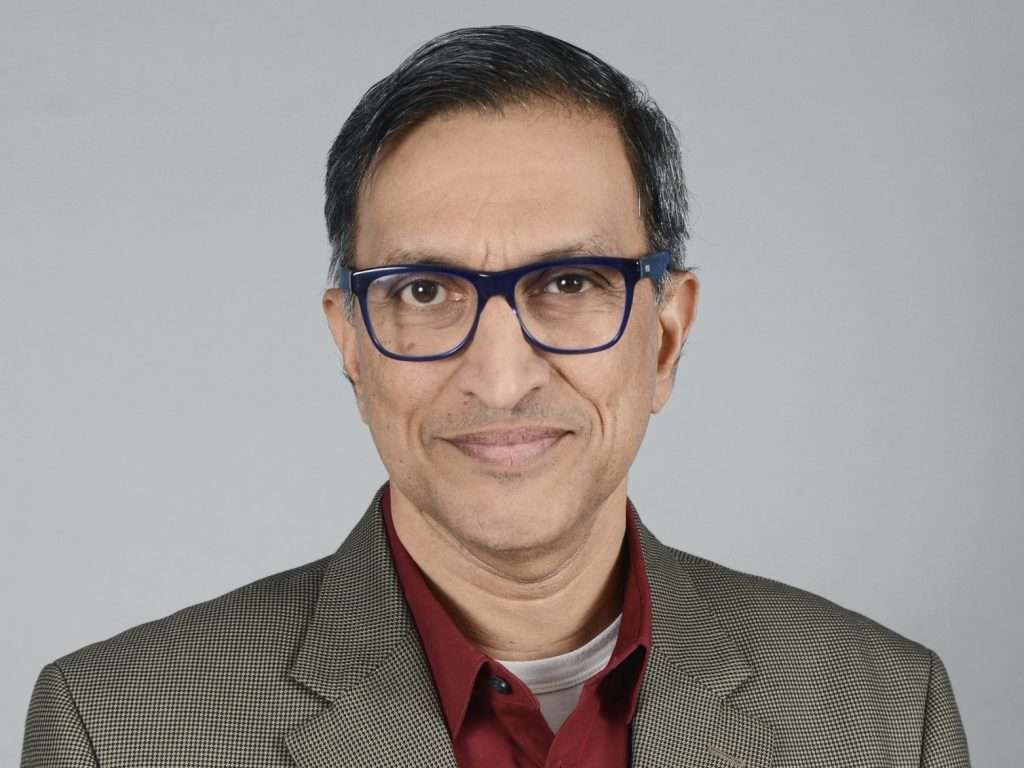
Ravi Bhat, chief technology officer for Microsoft Africa, exemplifies how careers don’t always follow a traditionally planned trajectory based on academics, but often are led by opportunities, and choices you make to follow where your true passion lies.
“I spent many years in finance before I moved into technology,” says Ravi. He’s a CA by training, who began his career in the auditing environment, working for KPMG, Lotus Software (an IBM company), and later moved into sales.
In 2009, Ravi became GM for IBM’s software business. He transitioned from sales into tech when he joined vmware in 2013, and later ‘more tech’ with Microsoft.
Originally from India, Ravi was recruited from a campus interview out of university. South Africa was never part of his plan. “Nothing in my life was initially on my radar,” he admits. “Moving to South Africa also wasn't part of my plans, it was first a work trip, and then just four months later he was approached for a CFO position with Lotus after a brief stint with KPMG in Dubai.
The power of saying “Yes”
Ravi can’t relate when people speak about a five-year career plan, much of his journey boils down to being open to saying ‘Yes’ in life and that’s when things happen,” he says. Rather than saying no and closing any doors for yourself.
His initial career in finance has sharpened Ravi’s ability to understand business. He had exposure to law, contracts, and balance sheets. “This exposure has helped me connect with customers better, I’ve even played the role of commercial translator connecting tech with business to secure funding,” he explains.
Ravi notes that CIOs are mainly technical, and often need to learn about finance, for example. “This skill then puts me in an interesting position of being able to help build real business cases, something I’ve done quite a bit in the past and I recently wrote a blog exploring the topic, which was inspired by a Harvard paper on the principles of negotiation.”
That’s just Ravi's business side, on the personal front, he enjoys listening to music, podcasts and audiobooks. “I love biographies and autobiographies, people talking about experiences rather than fiction,” he says.
Following world financial markets is another part of his bid to switch off from all things work, but an important aspect of maintaining a healthy work-life balance. “In today’s life, people are often super stressed and over the years have cultivated a skill to switch off and move from one thing to another with ease.”
Ravi is also an avid sports enthusiast. Having played badminton, cricket, and basketball at state, provincial, and national levels, he now prefers cycling as a recreational sport a few times a week. His passion for sports extends to his family, with both of his daughters excelling in sports.
“My older daughter is a geographic information systems (GIS) specialist, but she realised she needed a bit of tech and coding skills in her profession, so she is more of a techie now. My younger daughter, on the other hand, is a chef, but both were good at sports and played at a high level.”
A culture of innovation
According to Ravi, Microsoft’s innovation principle stems from its mission to “empower every person and organisation on the planet to achieve more”.
“Our pillars of innovation are boldness, optimism and inclusion, grounded in trust and built for scale,” he says. The company innovates by listening to its customers and maintains that feedback and collaboration with customers is an important part of its innovation. “Customers and Internal teams are constantly engaging to build our future product roadmaps.”
“We have developed Microsoft Cloud for sovereignty which enables customers to achieve strict data residency by configuring services to comply with local regulations,” Ravi explains. “Organisations in Egypt require advanced text-to-speech and speech-to-text AI models, so we’re now busy building models to cater for Egyptian Arabic language within a disconnected container.”
At Microsoft, innovation stems from curiosity, Ravi notes. “We bring people into the organisation who have a learning mindset – a must in Microsoft’s tech team.”
Practice what you preach
It’s one thing for Ravi to stress the importance of a learning and continuous learning mindset, but he also walks the talk. If a team member needs to sharpen their skills, so does Ravi.
As a technical leader you need to be energetic and inspirational, which aligns with his philosophy of “filling your cup”.
“No matter the profession you're in, when you wake up every morning you should feel that your cup is full,” he stresses. “A cup full of energy, positivity, and optimism: that energy then translates into excitement and that level of positivity is infectious. Even a simple ‘good morning’ lands differently when you have that mindset.”
For technology leaders, Ravi’s advice is clear. “Be strategic, be open, be adaptable, be decisive and be bold,” he says. “Don’t get lost in the technical details, be open to new ideas and embrace learning, adaptability, and a positive outlook to drive meaningful innovation and success.”