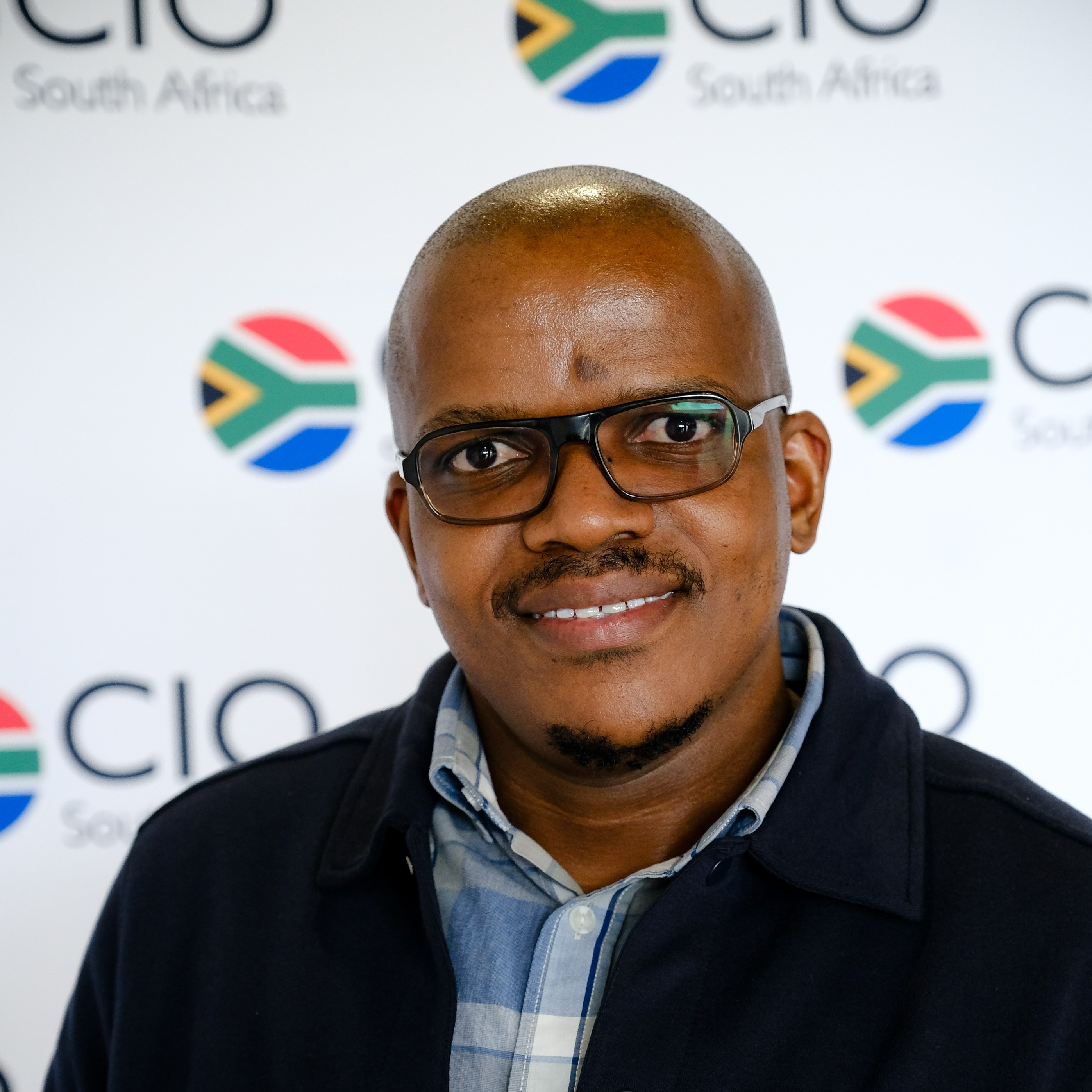

RMB chief digital information officer (CDIO) Christiaan du Preez says leading technology teams is his true calling. He believes that collaboration between industry and the private sector can make a real difference in addressing the skills shortage.
While Christiaan is at the forefront of digital transformation in banking, outside of work, he enjoys the creativity of woodworking and the thrill of overlanding, or ‘car camping’ as it is sometimes referred to, in remote destinations.
Yet, it’s a Lego motorcycle on his desk that hints at the importance of family to the digital head of RMB. He has turned his son’s fascination with Lego into a meaningful father-son bonding experience. “My day-to-day job can become very abstract, and as a human being, sometimes you want to create something tangible,” he explains.
“I spent the first 20 or so years of my life in a three-kilometre radius,” says the 2024 CIO Awards Digital Innovation award winner. From a primary school opposite the University of Pretoria, to high school near SA’s historic rugby home Loftus Versveld, his journey led him back to the university, where he pursued an electrical engineering degree.
After completing his degree, Christiaan started his career developing C++ software for timber-frame homes, focused on engineering calculations for structural stresses. He then transitioned into telecommunications, working in radio planning to optimise mobile network coverage.
Looking for new opportunities, he spotted a job ad for a C++ developer in the UK that required knowledge of financial derivatives. Intrigued, he pursued a post-graduate qualification through Unisa and found the intersection of technology and mathematics compelling. This led to a role in Standard Bank’s Global Markets division, where his expertise caught the attention of a Danish bank. Relocating with his wife and six-month-old son, he worked as a quantitative developer before returning to South Africa to develop exotic trading platforms at Standard Bank, eventually becoming CIO for global markets.
Assessing strengths, purpose
In 2018, Christiaan took a bold step – co-founding a supply chain finance platform using distributed ledger technology. “We were good engineers, but not such good salesmen,” he jokes. “We built a great platform but struggled to market it, so I gave myself 12 months – there should be at least R1 in the company account, or else I’m going right back into banking.” While the venture didn’t take off, it helped him assess his strengths and purpose.
Recognising that leading technology teams was his true calling, he returned to banking, joining RMB to lead IT in the banking division before being appointed CDIO in 2022. “I was later appointed as the chief digital and information officer for RMB in 2022,” he says. “The role has three portfolios: technology, data, and beyond banking.” According to Christiaan, beyond banking’s notable projects include Intengo and the digitisation of guarantees with SARS, a development that has led to other banks getting involved.
“Exciting platforms aside, this has also brought a different way of thinking into the organisation,” he notes. “A way of thinking that can future-proof the business in such a way that we can disrupt ourselves rather than waiting for someone else to do it.”
An important part of this future-proofing, Christiaan explains, is collaboration – especially among banks. “In the past, everyone focused heavily on value propositions and competing with each other, but some of these capabilities require us as an industry to tackle them together to build infrastructure that can help the entire market grow. ‘A rising tide lifts all boats’ – sometimes it’s good to compete, but it's equally good to collaborate to make the tide rise for all of us.”
From a skills development perspective, he believes that if industry and the private sector work together, they can make a real difference in addressing the skills shortage. “The biggest reason why I chose to work for a bank is that I wanted to connect to a higher purpose,” Christiaan points out.
“When I’m old one day and reflect on my journey, I want to look back and say that I’ve made a real difference here. I didn’t just pass by. Banks can play a massive role in building financial infrastructure across the continent that helps economies grow and communities thrive.”
Diversity compliments innovation
At RMB, fostering innovation isn’t just about technology, it’s about changing how teams think.
“There are different models of innovation in the IT industry,” he explains. “On one side, you can have a separate innovations team who get to work on all the cool stuff. This approach rarely works because those innovators end up working on the sidelines of the organisation.”
Instead, RMB follows a more integrated model whereby anyone with an idea can pitch it to the beyond banking team, where it is assessed for bank-wide or industry-wide impact. A team is then assigned to support the idea – conducting competitor analysis, providing architecture and developer support, and building a minimum viable product (MVP). These MVPs are tested with clients before moving into full-scale production. “Whether it works or doesn’t, we don’t view that as a failure, we celebrate it as a learning experience,” he says. “It’s a machine that is growing wiser and wiser in terms of stimulating innovation.” Ideas remain with their originators, and if an idea proves scalable, RMB may even appoint a CEO to lead the spin-off company.
As RMB pushes for innovation, it is also championing diversity. “Our women in technology initiative seeks to address the under-representation of women in the technology industry,” Christiaan adds. “It starts at a grassroots level, where our team already engages with high schools to convince students to seriously consider technology as a career path. The idea is to bring the opportunities in tech to the surface right as these young people start choosing their careers.”
With innovation, collaboration, and diversity at its core, RMB is shaping a future-ready financial ecosystem. Christiaan is leading the charge – driving digital transformation, fostering partnerships, and ensuring innovation serves a greater purpose.