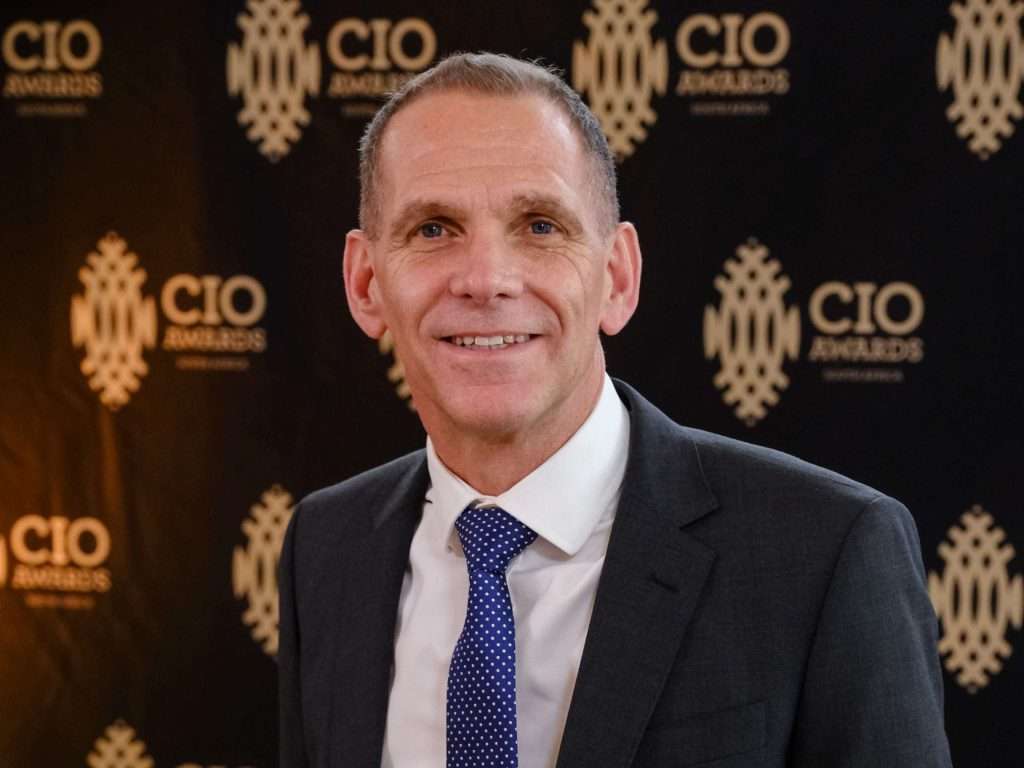
Jörg Fischer, chief information officer of Standard Bank Group, explains how the bank transitioned AI from a series of isolated experiments into a structured business capability.
Standard Bank Group recently reached a milestone in its artificial intelligence journey, shifting the technology from isolated pilots to a core business capability. Chief information officer and chief AI officer Jörg Fischer explains how the bank built this capability and navigated the complexities of enterprise-wide adoption.
When you look at this ranking of South Africa’s most AI-mature bank, what’s the moment or milestone that comes to mind first? The one that made you think, “We’re actually doing this”?
The moment that stands out for me was when AI stopped being discussed as a set of interesting pilots and started showing up as a coordinated enterprise capability, with clear executive sponsorship, structured governance and practical use cases embedded into the business.
That is when you realise you are no longer experimenting on the edges; you are building institutional capability. The ranking is encouraging because it reflects sustained work over time, but for me the real milestone was when the organisation began to understand that AI is not an isolated technology trend. It is part of how a modern bank will operate, serve clients, support employees and strengthen decision-making.
We reached a point where the conversation moved from “What could AI do?” to “How do we scale it responsibly and make it part of the way we work every day?” The survey showed that we are on the right track and can be proud of our delivery to date and the plans we have in place.
You now carry the dual title of chief information officer and chief AI officer. What does holding both roles tell you about where enterprise technology is heading?
It tells us that the distinction between core technology leadership and AI leadership is narrowing very quickly. AI cannot sit in a separate innovation lane. It has to be integrated into enterprise architecture, data platforms, security, governance, operating models and business strategy. That is why the combination of roles matters. It reflects the reality that AI is becoming part of the backbone of the enterprise, not an overlay on top of it. If you treat AI as something adjacent to mainstream technology, you risk fragmentation, duplicated effort and weak controls. If you integrate it properly, you can build it into the fabric of the organisation in a way that is scalable, trusted and commercially meaningful.
More broadly, it signals where enterprise technology is going: towards platform thinking, tighter business alignment and a much stronger convergence between technology execution and strategic transformation.
Technology plays a foundational role in rolling out AI across an enterprise. That said, the chief Information officer and chief AI officer roles remain distinct, with different but highly connected areas of focus.
You’ve said AI needs to be treated as a core business capability, not a technology project. Practically speaking, how do you stop it from sliding back into being a tech project when the pressure is on?
You stop that from happening by being disciplined about ownership, governance and outcomes.
The first principle is that business leaders must own the value agenda. Technology enables, secures and scales, but the use of AI has to be anchored in real business priorities such as client experience, productivity, risk management and growth.
The second principle is platform design. As I have said previously, you do not want to go to security 50 times for 50 use cases; you want security, risk and compliance built into the platform from day one. That changes the conversation from one-off experimentation to repeatable enterprise capability. The third principle is measurement.
Every serious AI initiative should be linked to a practical outcome, whether that is better service, faster turnaround, improved insight, or lower friction for employees and clients. When those disciplines are in place, AI remains tied to business transformation rather than being reduced to a technology side project.
Leading a transformation across 55,000 people in multiple markets is no small thing. What techniques or processes did you use to bring people on board?
The most important lesson is that large-scale adoption does not happen through messaging alone; it happens through enablement, relevance and trust. We focused on building understanding at multiple levels. That included clear executive sponsorship, structured training, role-based learning paths and strong guardrails around risk and responsible use.
We have been very deliberate in making AI literacy part of the broader transformation journey because people need both confidence and clarity. They need to understand not just what the tools can do, but also where the boundaries are and how the tools fit into their specific context. We also worked hard to show practical value early by connecting AI to real employee and client pain points. Once people see that it helps them prepare better, find information faster, serve clients more effectively, or reduce manual effort, adoption becomes much more real.
In a multi-market organisation, consistency of principles matters, but local relevance matters too. So the approach has to combine enterprise direction with practical application in the flow of work.
Who surprised you most during this process? Was it a team, a market, or a function that embraced AI in a way you didn’t expect?
What has been most encouraging is not one isolated surprise, but the breadth of curiosity and willingness to engage across the organisation. Often people assume that the strongest pull will come only from specialist technology teams, but in reality many of the most meaningful signals come from business teams, operations teams and colleagues closest to the client or the process.
When people can see a direct line between AI and a better outcome, they lean in very quickly. AI is there to solve problems. That is especially true where teams are dealing with large volumes of information, repetitive knowledge work, or the need to personalise service at scale.
The positive surprise has been how quickly the conversation evolved once colleagues saw AI as a tool to augment judgement and improve the quality of work, rather than as something abstract or experimental. It reinforced for me that the appetite is there across functions and markets when the use case is practical and the operating model is trusted.
What were some of the hardest challenges during this process and how did you navigate them?
The hardest challenges were not purely technical. Technology is important, but the real complexity sits in operating model change, data readiness, trust and disciplined execution at scale.
In banking, you cannot separate innovation from security, regulation and risk. So one of the biggest challenges is moving at pace while preserving the controls and transparency that a bank requires.
Another challenge is resisting the temptation to chase too many disconnected use cases. Many organisations end up with a long list of experiments that never translate into meaningful value and cannot be scaled.
We have tried to stay focused on the foundations: cloud capability, secure access to models, data discipline, governance and alignment to business priorities. As I have said before, this is not about deploying AI for its own sake. It is about solving real customer and business problems. Keeping that focus helps navigate both the hype and the complexity.
What is something you know now that you wished you knew sooner in this process?
I would say the extent to which success depends on organisational readiness rather than technical enthusiasm. Early on, it is easy to focus on tools, models and use cases.
Over time, you realise that lasting value comes from getting the foundations right: data, platform design, governance, security, skills and leadership alignment. I also think I would have emphasised even earlier that AI is a change journey as much as a technology journey. It affects how people work, how decisions are made, how services are designed and what new expectations clients will have.
Once you see that clearly, you invest differently. You spend more time on enablement, on platform trust and on creating the conditions for scale rather than only celebrating isolated wins.
“Culture of adoption” is a phrase that appears in the announcement. Culture is notoriously the hardest thing to shift. What actually worked?
What worked was making adoption practical, visible and safe. Culture does not shift because people are told to be innovative. It shifts when they see leadership commitment, understand the purpose, trust the guardrails and experience personal relevance in their day-to-day work.
We focused on building those conditions. We invested in capability building, created space for experimentation within clear boundaries and made sure responsible use was part of the conversation from the start. Recognition also matters. When teams can see peers using AI to improve service, insight, or efficiency, it normalises the behaviour.
Culture changes when people move from observing transformation to participating in it. In my view, adoption becomes durable when AI is no longer seen as a specialist tool, but as a natural part of how work gets done across the organisation.
AI anxiety is real among knowledge workers. What do you say to the colleague who is worried their role is being automated away?
I would say the right question is not whether AI will change work. It will. The better question is how we help people evolve with that change. My view is that AI should augment human capability, not diminish human relevance.
In a bank, judgement, trust, empathy, accountability and contextual decision-making remain essential. What AI can do is remove friction, reduce repetitive effort, surface insight faster and free people to focus on higher-value work. That is why skills matter so much. If we equip people properly, AI becomes a tool that expands what they can do rather than a threat to who they are professionally.
We also need to be honest: every major technology shift changes roles over time. But the answer is not fear; it is readiness, learning and leadership. The organisations that do this well will be the ones that invest in people as seriously as they invest in technology.