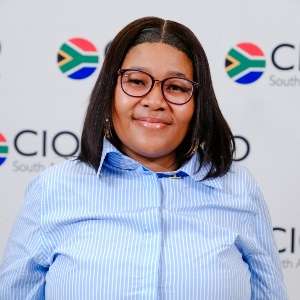

Kim Sim, CIO of Mr Price Group, has built her leadership philosophy around high-performance team culture, psychological safety and accountability while steering major technology transformation initiatives. Her approach earned her both the Strategy and Leadership Award and the High-Performance Team Award at the CIO Awards in 2025.
Kim Sim has an unconventional leadership mentor, who doesn’t even know he’s her mentor. In fact, they’ve never had a one-on-one conversation about management strategy or team building. Yet Springboks coach Rassie Erasmus, who is known for building teams with almost a cultlike bond, has profoundly influenced her leadership style at Mr Price Group.
Kim, who serves as CIO at Mr Price Group, studied his approach to leadership with the dedication of someone preparing for a World Cup final.
“I’ve met him multiple times and had the luxury of seeing him speak at quite a few events. I think his philosophy on leaders and building teams is absolutely spot on. I think what he does in the rugby sphere and how that translates to their performance is something you can relate back to any environment,” Kim explained.
The connection makes sense when you understand how Kim thinks about technology leadership. She does not see herself as managing systems or infrastructure, but rather as someone building teams capable of performing under pressure, much like a sports coach preparing players for critical moments.
That philosophy has been tested against real stakes. In her time with the Group, Kim and her team have delivered key high stake projects like a new cloud ERP, new HR platform and new planning solutions. Their attention will soon turn to new systems for the customer facing elements of the business and exploiting further AI opportunities.
Kim is also central to a broader initiative to reconsider and re-engineer how the business operates, as the Group has expanded significantly since she joined, adding new divisions and recently announcing a deal with a German-based retailer.
At the 2025 CIO Awards, she became the first person to win both the Strategy & Leadership and High-Performance Team awards, an achievement that speaks to her dual focus on direction and culture.
The philosophy of psychological safety
“The most important thing for building a high-performing team is psychological safety. You have to create an environment where people believe in themselves and each other and believe that you will have their back when things go wrong, because things inevitably will go wrong,” Kim said without hesitation.
This principle was tested during the 2021 riots in KwaZulu-Natal. The Ballito-based CIO remembers walking her dogs early on a Monday morning when she heard gunshots. After seeing WhatsApp groups light up with news of violence, she checked in with her senior team members and sensed the high levels of anxiety spreading through the teams.
She reached out directly and was honest with them: she did not know what was going on or when it would end. “I sent my team a voice note on WhatsApp letting them know that I was just as concerned as they were and I didn’t have the answers about when we would be safe to go back to work or when the violence would end. I let them know their main priority should be their families’ safety and ensuring they have food on their tables,” she explained.
She told them that if they were comfortable working and felt safe, they could work, if not, that was okay too. Then she added: “I don’t know what’s going on, but this too shall pass.”
Kim, who considers herself a born and bred retailer, has a simple method for keeping perspective during high-pressure moments. She reminds her team that while their work is important, it is not neurosurgery, a mindset that helps diffuse panic and restore clarity when the pressure mounts.
Learning from bad bosses
When asked about career moments that shaped her leadership philosophy, Kim gave an unexpected answer, crediting not just the great leaders she has worked with, but especially the bad ones.
“I’ve had the opportunity of working with amazing leaders, but I’ve found that you learn far more from bad leaders who lack people skills. These managers have taught me how I don’t want to make the people in my team feel.”
It is a philosophy forged early. At just 19-years-old, Kim was tasked with presenting the pros and cons of SAP for a retailer directly to Makro’s CEO. She walked in prepared and held her ground. The experience shaped how she thinks about backing yourself – and it is visible today in how deliberately she creates the same space for others on her team.
This same instinct now drives her current focus. “I have now overcome a lot of the initial challenges of the role and I’ve built a good team. My focus now will be on building leaders. I’ll be working on identifying potential leaders and ensuring we’re giving them the opportunities to develop themselves,” Kim explained.
To stay fit, Kim does rebounding, a high-intensity trampoline workout that helps her maintain balance and release energy. Away from work, she is an avid reader who goes through two or three business or leadership books at any given time, balancing these with fiction. Her current read is Unlocked, the 2025 memoir by Springbok player Eben Etzebeth.
She also plans many of her travels around major global sporting events. “I don’t consider myself a materialistic person, but experiences are worth everything. I will often plan my holidays around a Rugby World Cup, a tennis tournament or a Formula One event. This allows me to couple my love for sports with exploring a new city or country,” she said.
Building accountability
Kim believes that high-performing teams require more than vision and psychological safety. They need accountability. “If you don’t have accountability among your team, you will not be able to have a high-performing team,” she said.
She is deliberate about addressing issues quickly, whether they involve underperforming team members or difficult stakeholders. “The one thing I have seen in my career is that everyone sees the problems. If the leader does not deal with it, the rest of the team will either assume that the leader does not see it, which is a problem, or they will assume that the leader is not comfortable to deal with it, which is also a problem.”
It reflects the influence of Rassie, who has built one of the most successful rugby teams in history not simply by selecting the best players, but by creating a culture where they can perform at their best.
For Kim, leadership is about authenticity, psychological safety and the courage to make the right call, even when it is uncomfortable. Winning the two CIO awards was not just recognition of a good year. It was validation of a philosophy she has been building, quietly and deliberately, for her entire career.