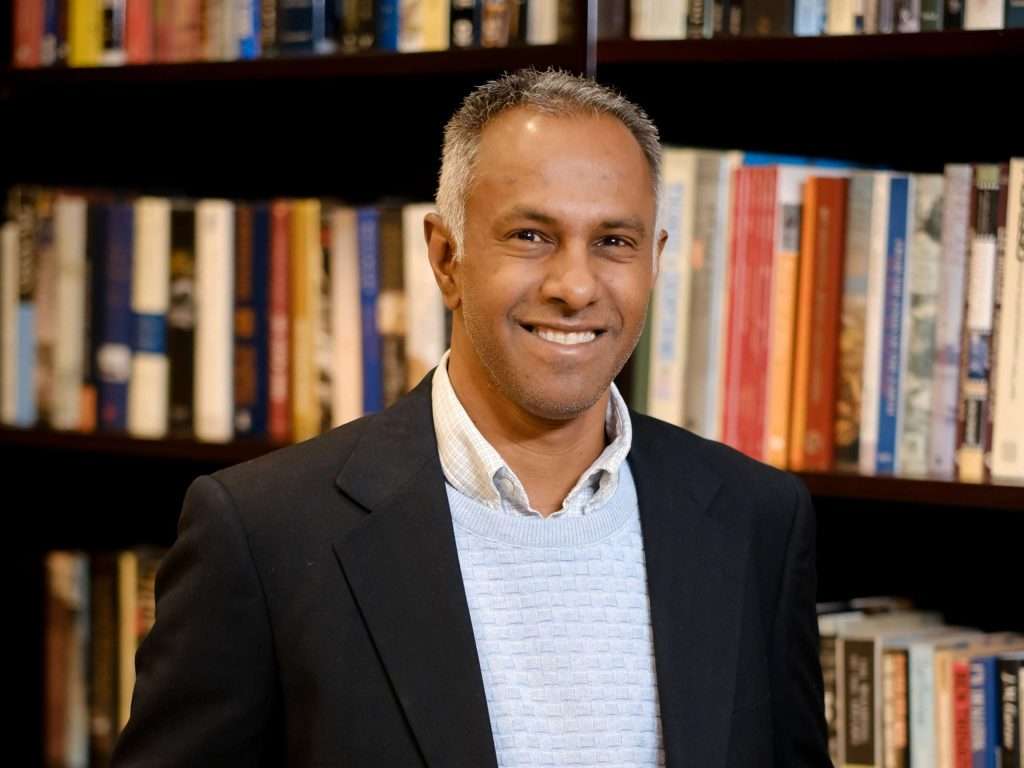
Cassava Technologies’ South Africa and Botswana CEO, Ziaad Suleman, emphasises that digital infrastructure is the foundation of digital transformation. Connectivity, coupled with sovereign data hosting powered by AI GPU computational power, along with practical use cases, is crucial for unlocking opportunities across industries and the continent.
Since assuming the role of CEO for Cassava’s South Africa and Botswana operations in March 2025, Ziaad Suleman’s leadership has been instrumental in driving the company’s next phase of growth. Ziaad is also the South African digital economy chair on BRICS and the acting chair for Collective X (the national digital skills initiative).
Established in 2021, Cassava is a global technology company of African heritage. It comprises several businesses – Cassava AI, Liquid Intelligent Technologies, Liquid C2 (Cloud and Cyber Security), Africa Data Centres and Sasai Fintech – which collectively power an ecosystem of digital services and solutions premised on reliable digital infrastructure.
A truly digitally transformed South Africa requires digital inclusion across the societal spectrum, and this can only be achieved with affordable, reliable and secure digital infrastructure. “If you enable citizens and businesses with connectivity, they become part of the globally integrated digital economy. Citizens can find jobs online, communicate with others, learn, access trade or consumption opportunities and benefit from eHealth, among other benefits, while businesses become part of a global trading platform,” Ziaad explains.
Cassava is well-positioned to support end-to-end digital transformation using its extensive digital infrastructure backbone, which includes five top-tier data centres and 110,000+ km of fibre across South Africa and Africa, as well as satellite, microwave, fixed-wireless access and sub-sea cables. This infrastructure capability is elevated with the value-added services of cloud, cybersecurity and fintech solutions.
Providing optimal solutions key
Ziaad highlights that South Africa’s economic diversity necessitates a range of technology solutions. “South Africa is not a single-lens landscape and one size does not fit all.” For instance, a large financial services institution has different technology needs compared to an SMME. This diversity underscores the importance of providing optimal solutions, fit for context, with complementary services and scaling ability.
“As you cater for multiple levels of need, it is critical that you address the requirements of customers looking at niche solutions, which are data-driven and focused on resource efficiency coupled with differentiation, utilising AI and customer-centric smart digital solutions.”
Ziaad highlights Cassava’s partnerships with the Western and Eastern Cape governments to provide the infrastructure backbone to support underserved communities to enable digital inclusion. Similarly, Cassava has supported private sector enterprises across their footprints.
Cassava also recently delivered the infrastructure backbone to T20 cricket in partnership with Tata to stream live cricket to more than 500 million viewers.
A game-changer
On a much larger scale, Ziaad points out that Cassava AI’s capabilities are a powerful market differentiator. The company is currently building Africa's first ‘AI factory’, which provides A-grade supercomputing capability complemented by AI use cases across all industries. This means that AI workloads can be processed seamlessly and securely, and can extract practical outputs for customers and partners from AI efforts.
The first AI factory will be in South Africa, with expansions planned for Egypt, Kenya, Morocco and Nigeria. With the AI factory, Cassava will enable South African and pan-African private and public enterprises, the partner ecosystem, including SIs (Services Integrators) and GSIs (Global Services Integrators) and researchers to scale their AI workloads and operations.
Importantly, notes Ziaad, the data is kept within the country's borders. This reduces the risk of data loss, data sabotage and data ransom, as well as the regulatory risk associated with different data protection laws and standards.
“This is a game-changer,” says Ziaad. “South African organisations that use our AI supercomputer-powered data centres will have an advantage as we have solutioned for data complexity and converged technology system workloads.” Cassava Technologies’ clients will benefit from the flexible service offerings, including an AI readiness assessment that aims to co-create a strategic customer journey plan, regardless of the level of AI maturity.
The company’s initial foundational offerings begin with GPU Bare Metal as a service, providing dedicated physical hardware for expert users and organisations who require maximum control and performance. To democratise access to this power, GPU as a service (GPUaaS) provides flexible, virtualised slices of GPU compute for any-sized organisation. These initial offerings provide the essential building blocks of AI.
Leveraging digital assets
Liquid Intelligent Technologies, a Cassava business, is actively collaborating with Microsoft to extend internet access to 30 million underserved people in Africa by the end of 2025. This partnership, part of Microsoft’s Airband initiative, is set to bring connectivity to numerous countries across Africa, including the DRC, Tanzania and Zambia, as well as remote areas of Nigeria, Kenya and South Africa.
According to Microsoft, Airband has helped more than 51 million people globally gain access to the internet, including nine million people in Africa to date. The initiative, which works through partnerships with governments, nonprofits, energy, internet and telecommunications providers, emphasises that internet access is a fundamental right.
“With a fibre backbone of over 110,000 km across the continent through our business, Liquid Intelligent Technologies is providing the infrastructure – and connectivity – to make true digital transformation happen,” says Ziaad.
A pragmatic approach
Ziaad believes that when it comes to digital transformation in South Africa, a dose of realism is needed. South Africa has huge levels of inequality and a complete digital transformation won't happen overnight.
Ziaad says it requires a clear strategy, a significant focus on skills building and keeping in mind that not everyone needs to be in front of a computer. However, everyone needs to participate in and receive the benefits from a digitally connected world.
“We need people to plough the fields. Food security is more important than digital transformation – fact. However, we cannot deny people access to information and systems that advance their work,” he continues.
“In this example, farmers need information on the best time to plant and harvest, optimal soil conditions, and predictable weather patterns. They should also learn how to market and sell their yield through e-commerce and track the value chain with technologies such as blockchain. Through social cohesion and a technology-enabled ecosystem, we will achieve greater outcomes,” he continues.
Ziaad adds that as digital transformation evolves South African society, everyone benefits from the digital economy, which then ripples throughout the country.
“Technology is an enabler; if we take advantage of it to enable us to be better, more productive, more efficient, and transform society, why not?” he concludes.