
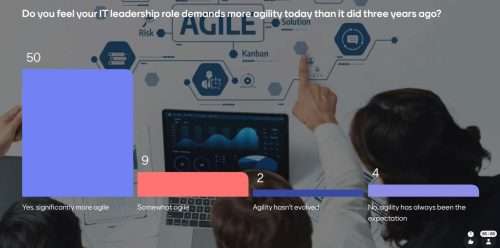
Gauteng’s top IT executives have revealed that their leadership roles in the Fifth Industrial Revolution demand significantly more agility than it did three years ago.
In addition to agility, a survey done at CIO Day in Johannesburg in May 2026 focused on board readiness for the age of AI, team resilience, adaptive leadership and the speed vs stability trade off.
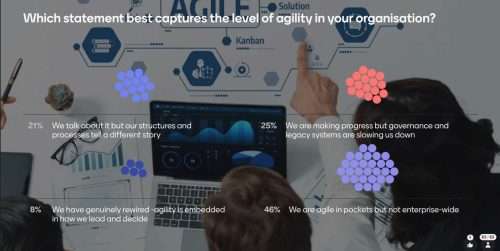
Responses from CIOs revealed that only eight percent of IT executives felt that their organisations are genuinely agile in how they lead, while 46 percent described themselves as “agile in pockets but not enterprise-wide”.
Roughly nine out of 10 IT leaders did not describe their organisation as “genuinely rewired” for agility – responses were split between admitting a gap between talk and structure (21 percent), pointing to governance and legacy systems as the blocker (25 percent), and describing agility as present in pockets but not enterprise-wide (46 percent).
When asked how they drove agility under disruption, building cross-functional collaboration was the dominant response. The open-ended answers on board lessons returned repeatedly to themes of investment appetite, tolerance for failure and change management as culture.
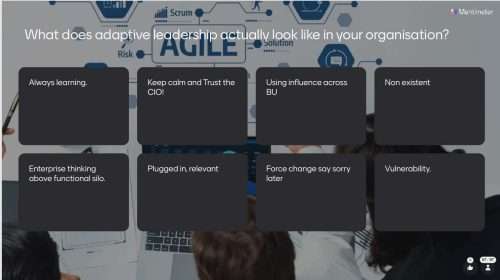
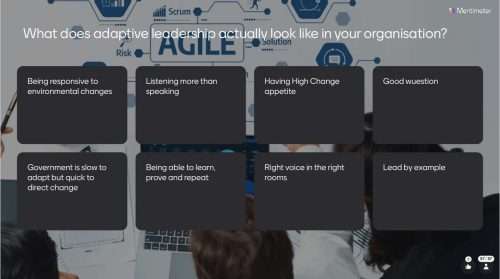
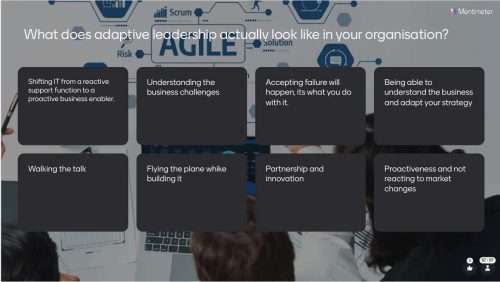
20th century boards vs Fifth Industrial Revolution
The survey also found that board-level thinking remains misaligned with operational reality. Participants repeatedly flagged that directors need to relearn that transformation requires sustained investment, that failure is part of the process, and that technology must be treated as a core business strategy rather than a support function.
At least 55 percent of CIOs identified data and AI strategy as the area requiring the fastest adoption.
When asked how CIOs can influence board culture to be more adaptive and forward-looking, 46 percent responded that building digital fluency in the boardroom was most important, while 24 percent pointed to building trust outside the boardroom, 19 percent said CIOs should speak the board’s language, and 12 percent said making disruption impossible to ignore was the answer.
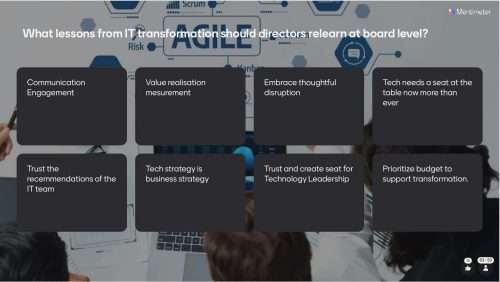
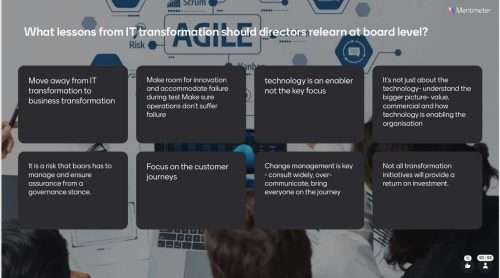
Several CIOs linked this back to digital fluency: when directors don’t understand the technology well enough to engage with it directly, CIOs end up spending more time educating the board than executing strategy.
The speed vs stability tension
CIOs also found that they are increasingly navigating the tension between moving fast and staying sound. Forty-two percent said they prioritise speed over stability only when disruption demands it, while 35 percent said speed is frequently essential.
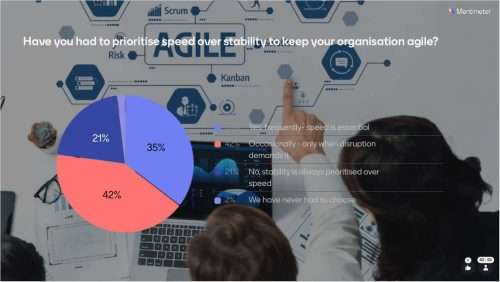
Just 21 percent said stability is always prioritised, and two percent reported that they never had to choose. Taken together, 77 percent of IT leaders regularly made trade-offs that carry organisational risk.
The open-ended responses on board lessons showed that respondents have warned against “big bang” transformations that destroy value, and urged boards to budget not just for success but for failure.
The human element
Across the open-ended responses on team resilience, one pattern emerged: the strategies CIOs rely on are mostly relational, rather than technological.
Continuous learning, transparency, empowerment, communicating the “why” behind change and making people part of the transition rather than subjects of it, were the dominant answers.
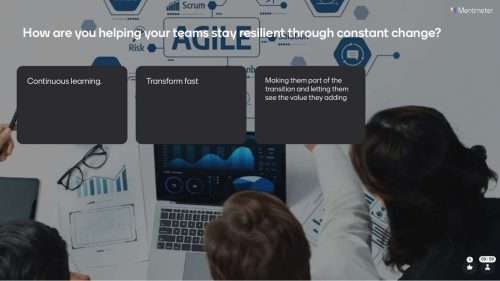
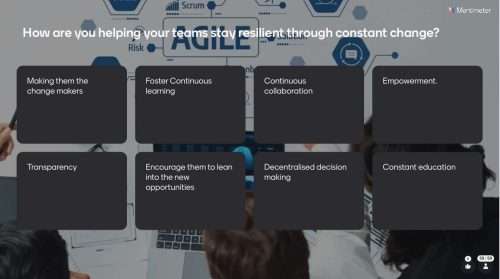
Only six percent of respondents named talent and skills development as their primary driver of agility. CIOs know intuitively that people are the variable that determines whether transformation lands or stalls, yet the formal strategic weight given to that insight remains disproportionately low.
In the race to adopt data and AI strategy at pace, the human infrastructure required to sustain it may be the most underinvested asset of all.