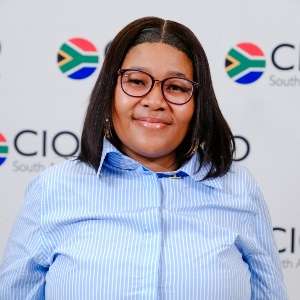

Free State department of health CIO Bandile Ntombela reflects on his career path and the evolving demands of technology leadership in the public sector.
CIO South Africa speaks with Free State department of health CIO Bandile Ntombela about his career journey, how he manages the pressures of public sector technology leadership, and how the CIO role in government is changing. In this exclusive Q&A, the 2025 CIO Awards nominee also shares what he is reading and how he defines a good life.
Q: How did you find your way into IT, and what drew you to public health specifically?
A: I grew up in Mafahlaneng, Tweeling, in the Free State, and my journey into IT started very simply. My mother received an old computer from a colleague who was emigrating, long before Windows became the norm. I was already the kind of child who loved puzzles and taking things apart to understand how they worked, so technology drew me in naturally.
However, over time, I realised I didn’t want to work with technology just for its own sake – I wanted my work to mean something. That’s what led me to public health. In this space, when you improve a system, you are not just fixing IT, you are helping real people, from nurses spending more time with patients to rural clinics functioning better. That sense of purpose is what drives me.
Q: What do you genuinely love about this job? What makes you excited to come in?
A: I love building things that outlast me. There’s something deeply satisfying about seeing a strategy move from a whiteboard to something a frontline worker actually uses to help people in need. In health, the environment is often described as a ‘complex adaptive system’, every aspect of the health system matters, there are no easy wins. So when you do make progress, when an information system actually works the way it’s supposed to and people notice, that’s a special feeling.
Q: What’s the hardest part of your role right now?
A: Honestly? It’s the tension between what we know we could do and what reality allows. Public service broadly, is plagued by budget constraints, a highly risk averse culture and a chronic lack of investment in technology, procurement processes that take time, and teams with varying levels of digital comfort, even though there is a good understanding that we need to move faster on digital transformation. The art is in building solutions that are ambitious enough to matter, but grounded enough to actually survive and thrive in our context. Public health is vastly different from private health, more so in provinces such as the Free State.
Q: What have setbacks taught you?
A: That projects live or die based on people, not products. Early in my career, I thought good technology spoke for itself. I was wrong. I’ve learnt to treat failures as data: valuable feedback about what we missed, where we misjudged. And I’ve learnt that in difficult moments, the instinct to go quiet is the wrong one. People need to hear from you early and honestly, especially when the news isn’t good.
Q: What technology bets are you making that might surprise people?
A: I’m betting big on the unsexy stuff – stable and reliable connectivity. Clean, well-governed data. Systems that actually talk to each other. Real interoperability. Cybersecurity discipline. These fundamentals are more transformative than any flashy tool, but they don’t make headlines. I’m also betting on practical AI – tools that solve real operational headaches, not AI that exists for press releases.
Q: How do you think about developing your team?
A: I start with why. If people understand that their work improves healthcare delivery – not just keeps servers running – they bring different energy to the job. Beyond that, I believe in giving people real responsibility before they think they’re ready. That’s where confidence and leadership capacity are built. My job is to create the conditions for them to grow into roles they didn’t know they could handle.
Q: How do you compete for talent when you can’t always compete on salary?
A: We offer something money can’t buy: purpose. The chance to work on problems that matter to millions of people. But purpose alone isn’t enough – you have to back it up with genuine investment in people. Growth opportunities, real trust and a culture where people feel genuinely seen. When someone knows their manager actually cares about their trajectory, they stay.
Q: How do you stay current when public service demands so much of your time?
A: It requires intentionality. I can’t chase every trend, so I focus on what’s relevant to our specific challenges. I carve out time for learning, and I’m disciplined about protecting it. The goal isn’t to know everything – it’s to know enough about the right things to make smart decisions.
Q: Where do you see AI and automation changing public health?
A: The potential is enormous, especially in removing administrative burden from healthcare workers. Imagine nurses spending significantly less time on paperwork and significantly more time with patients. That’s the promise. But in our sector, we have to get the foundations right first – trust, governance, data quality. The technology is exciting, but the implementation has to be responsible.
Q: How is the role of the public sector CIO changing?
A: The CIO role in the public sector is evolving. It’s no longer just about keeping the lights on in the server room. It’s about helping institutions deliver real value to citizens. We need innovation, yes, but innovation that fits our context, that people trust and can sustain. That’s where transformation actually happens. Not in the announcement, but in the years of quiet, persistent work that follows.
Q: What actually keeps you up at night?
A: The gap between possibility and urgency. We can see what technology could do for our health system, but we also see the constraints slowing us down. And honestly? Cybersecurity and resilience weigh heavily. In healthcare, when systems go down, it’s never just a technical problem – it’s appointments missed, treatments delayed, trust eroded.
Q: What would surprise people about you?
A: Most people know the professional side, the CIO who shows up in meetings and makes decisions. Fewer people see the part of me that’s deeply rooted in family, absolutely loves cycling and enjoys travel, however in the past three years, cycling has become unexpectedly central to my life. It’s taught me more about discipline, resilience, and showing up consistently than almost anything else.
Q: Who shaped your approach to leadership?
A: I’ve been fortunate to learn from leaders who combine real competence with genuine humility, people who can think strategically but never lose sight of service. But some of my most important teachers have been my own parents, who spend their entire adult lives doing frontline public service. Health workers also have a very simple way of keeping you honest. They remind you that your fancy technology means nothing if it doesn’t work for someone under pressure, with limited time, trying to help a patient.
Q: Do you give back through mentoring or community work?
A: Absolutely. Mentoring young professionals, emerging entrepreneurs, particularly those finding their way in technology and leadership, is something I’m passionate about. I’m also involved in community initiatives that focus on opening doors and sharing knowledge. For me, giving back isn't charity, it's about remembering who helped me and paying that forward.
Q: What are you reading?
A: I read books across leadership, technology, public policy and implementation science. I’m drawn to anything that helps me think in systems, how to move from vision to actual execution. The material that stays with me is practical, the kind that helps me bridge the gap between what we want to achieve and how we actually get there.
Specifically, I am currently reading Atomic Habits by James Clear. It is valuable because it shows that lasting success rarely comes from one dramatic breakthrough; it comes from small, consistent actions repeated over time.
Its core lesson is that tiny improvements, done daily, compound into meaningful results, while poor habits do the same in the opposite direction. For a CIO, that mindset is especially powerful because digital transformation is not only about big strategies or major system launches, it is about building disciplined routines around governance, cybersecurity, service delivery, team development, data quality, and continuous improvement. In that sense, the book reminds a CIO that strong institutions are built the same way strong habits are built: deliberately, consistently and one improvement at a time.
Q: How do you define a good life, and where does work fit in?
A: A good life, for me, is about purpose, service, continuous growth and deep relationships. Work gives me a platform to serve at scale, which matters enormously to me. But I also believe work should support life, not consume it. Family, health, balance, these aren’t nice-to-haves. They’re essential. You can’t pour from an empty cup and you can’t lead well if you’re not taking care of yourself.