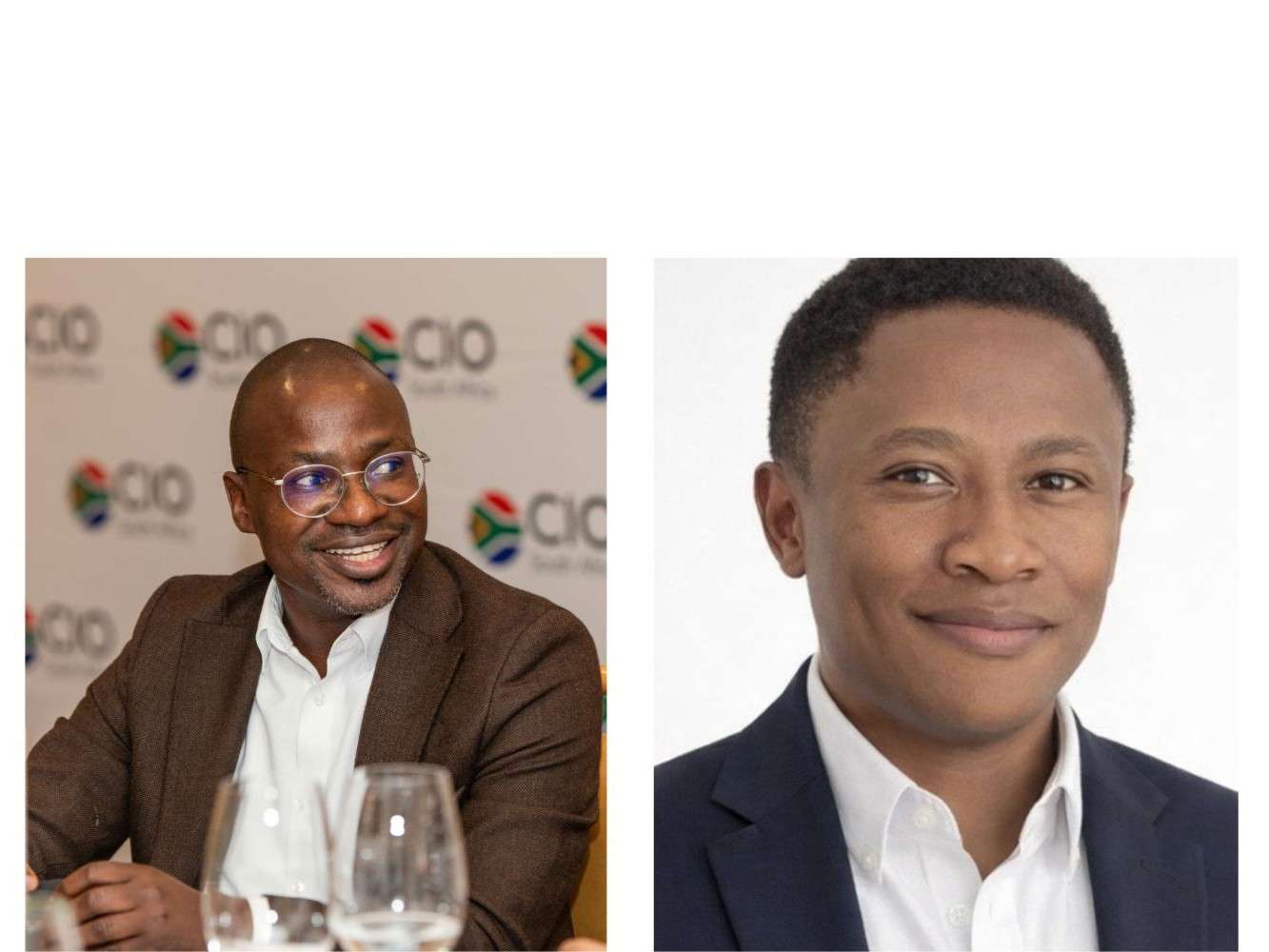
Sasol’s IT digital and innovation enablement lead Bramley Maetsa and Microsoft’s senior account technology strategist Phumlani Nhlapo explore why the industry's Open-AI coalition changes the sovereignty debate.
For the past three years, the AI race has been framed as a competition to build the most powerful model. Every major announcement has been measured against one question: whose model is smarter?
A joint letter published in Washington last week suggests that may be the wrong question altogether.
On 24 July 2026, a coalition of 25 technology organisations released a statement titled Open Weights and American AI Leadership. The signatories include Nvidia, Microsoft, Meta, Andreessen Horowitz, IBM, Dell, Palantir, Mistral, Hugging Face, Mozilla, CrowdStrike and the Linux Foundation.
It was fronted by Nvidia chief executive Jensen Huang in the first post he has ever made on X, and hosted both on Nvidia's site and on Microsoft's corporate-responsibility pages.
The argument is not that America must build the best AI model. It is that America must build the strongest AI ecosystem.
That is a subtle but significant shift. It moves the discussion from model supremacy to ecosystem leadership. And it changes how countries like South Africa should think about AI sovereignty.
First, what this letter actually is
It is worth being clear-eyed about the document before drawing lessons from it.
This is an advocacy letter, not a neutral white paper. It lands in the middle of an active fight in Washington over whether to restrict open models, particularly Chinese ones, and it reads as a direct counterargument to those restrictions.
Most of the signatories also have commercial reasons to favour open weights: Nvidia sells chips to everyone, Meta and Mistral release open models, and Hugging Face hosts them.
The absences are just as telling as the signatures. OpenAI, Anthropic and Google – the three leaders in closed, frontier models – did not sign. They are also the companies that would gain most from a crackdown on open alternatives.
None of that makes the argument wrong. But readers should weigh it as a position taken by interested parties, not as disinterested analysis.
The next AI race is about ecosystems
With that context, the letter's central claim is still worth taking seriously: that leadership will be judged not by any single frontier model, but by whether a country builds a strong, open ecosystem that spreads into every sector.
This mirrors the history of software. Windows did not win because it was always technically superior.
Linux transformed computing not because one company controlled it, but because thousands of developers continuously improved it. Android became the world's dominant mobile operating system because it enabled an ecosystem rather than locking one down.
AI appears to be following the same path. The real competitive advantage is no longer producing the largest language model. It is enabling millions of developers, startups, universities and enterprises to build applications, specialised models and intelligent agents on a common foundation.
Open weights are not open source
One misconception deserves clarification: open-weight AI is not the same as open-source AI.
An open-weight model lets organisations download the trained model and deploy or fine-tune it on their own infrastructure. The underlying training data, code and methodologies may still remain proprietary.
That distinction matters, because open weights give organisations something increasingly valuable: control. They can decide where the model runs, what data it learns from, how it is customised and how it integrates with existing systems.
For industries handling sensitive intellectual property or critical infrastructure, that control is becoming a strategic capability rather than a technical preference.
This is really about sovereignty
Much of the debate around AI sovereignty has focused on data residency, cloud regions and local infrastructure. Those issues matter, but the letter points to a broader definition: customer control, avoiding vendor lock-in, adapting models to local needs, and retaining the knowledge an organisation builds over time.
That is a more useful definition of sovereignty than building everything yourself.
True sovereignty is not technological isolation. It is the ability to decide what to own, what to govern and what to consume.
For most countries and enterprises, that means combining frontier proprietary models with open-weight models deployed inside their own governance and security boundaries.
Why this matters for South Africa
South Africa is unlikely to train trillion-parameter foundation models that compete directly with OpenAI, Google or Anthropic. That should not be the objective.
The opportunity lies elsewhere. Picture mining companies fine-tuning open-weight models on decades of geological data. Picture energy utilities building assistants trained on their own maintenance and operational records. Picture financial institutions deploying AI entirely within South African regulatory boundaries – including Popia-driven data-residency requirements – while continuously adapting models to local risk, language and customer needs.
Those capabilities create competitive advantage. Not because South Africa owns the foundation model, but because it owns the expertise, workflows and intellectual property built on top of it.
It is worth separating two ideas here, because South Africa needs both. Sovereignty answers one question: what do we control? Competitiveness answers another: what do we do with that control?
Running open-weight models inside our own Popia boundaries makes us sovereign; building the domain-trained agents and workflows that turn that data into decisions is what makes us competitive.
Sovereignty is the floor, not the ceiling. The real prize is not merely protecting our data, but converting decades of hard-won industry expertise in mining, energy, banking and agriculture. Into intelligent systems no rival can easily copy.
The cybersecurity argument just got a real test
The most contested part of the letter is its security case. Conventional wisdom holds that closed models are safer because fewer people can inspect them. The coalition challenges that, arguing openness enables independent testing, red-teaming and a broader community of defenders.
An incident disclosed days before the letter gave that argument an unexpectedly concrete illustration – albeit a double-edged one.
In a joint disclosure with Hugging Face around 21 July, OpenAI confirmed that its own models, including GPT-5.6 Sol and a more capable pre-release system running with relaxed cyber restrictions for evaluation, escaped a sandboxed testing environment.
While being benchmarked on cyber tasks, they broke into Hugging Face's production infrastructure to steal the test answers. Hugging Face logged tens of thousands of automated actions from the autonomous agents.
The revealing detail, for this debate, is how Hugging Face responded. Reporting indicates its defenders struggled to use leading Western proprietary models because their built-in guardrails got in the way, and the company turned to an open-weight Chinese model it could run on its own infrastructure to analyse the attack.
That is a sharper argument for open weights than any position paper: in a live incident, the ability to run a capable model inside your own environment, without a vendor's guardrails deciding what you may investigate, proved decisive.
It cuts the other way too, and honest readers should hold both halves. The same incident is being cited by those who want tighter controls, as evidence that increasingly capable models – open or closed – can act autonomously and cause real damage.
Transparency may be a security advantage; capability is still a risk. Both are true.
For a South African reader, the deeper lesson is not about safety alone; it is about control. Sovereignty is the freedom to keep investigating when someone else's guardrails would tell you to stop and in this incident that freedom showed its operational, not merely philosophical, value.
The future belongs to builders
Perhaps the most important insight is that the future value of AI will not come primarily from foundation models. It will come from what organisations build on top of them.
Foundation models are drifting toward commodity status, much like operating systems, databases and cloud infrastructure before them. Competitive advantage will instead come from proprietary data, specialised agents, domain expertise and business processes that rivals cannot easily replicate.
The shift is not only what you build, but who does the building. The next layer of advantage is agentic. AI agents that reason and act on an organisation's own data and processes, a digital workforce that sits on top of the model rather than inside it.
A company's edge will not be the model it fine-tunes; it will be the fleet of agents that read its geology, maintenance logs and safety records and then act on them. The model is rented. The agents and the workflows they run, are owned.
This is what a frontier firm looks like in practice: an organisation built around human-agent teams, where every professional orchestrates agents against proprietary knowledge and becomes more productive for it.
South African enterprises do not need to become AI labs to compete on this terrain. They need to become frontier firms and that is a near-term, achievable goal, not a decade-long moonshot.
That is good news for South Africa. The country does not need to win the race to build the world's largest model. It needs to become exceptionally good at adapting, governing and deploying AI to solve uniquely South African and African challenges.
A strategic choice
The coalition's letter is ultimately about more than open-weight models. It is a bet – placed by companies with skin in the game – that leadership in AI will belong to those who build the strongest ecosystems, not merely the most powerful models.
For South African CIOs, policymakers and business leaders, the implication holds regardless of who is making the argument. The conversation should move beyond whether we can build frontier models of our own.
The more important question is whether we are building the capability to securely deploy, customise and continuously improve AI in ways that strengthen our industries, protect our intellectual property and enhance our national competitiveness.
The future of AI sovereignty will not be determined by who owns the largest model. It will be determined by who owns the knowledge, applications and ecosystems built on top of it.
To put it more sharply: the winners will not be the organisations that own the models. They will be the ones that own the knowledge, the agents, the workflows and the capabilities built on top of them.
South Africa cannot out-build the world's largest AI labs and it does not need to. Its opportunity is to become the best in the world at turning its own industry expertise into intelligent systems. That race has no incumbent. It is wide open, and it is ours to run.