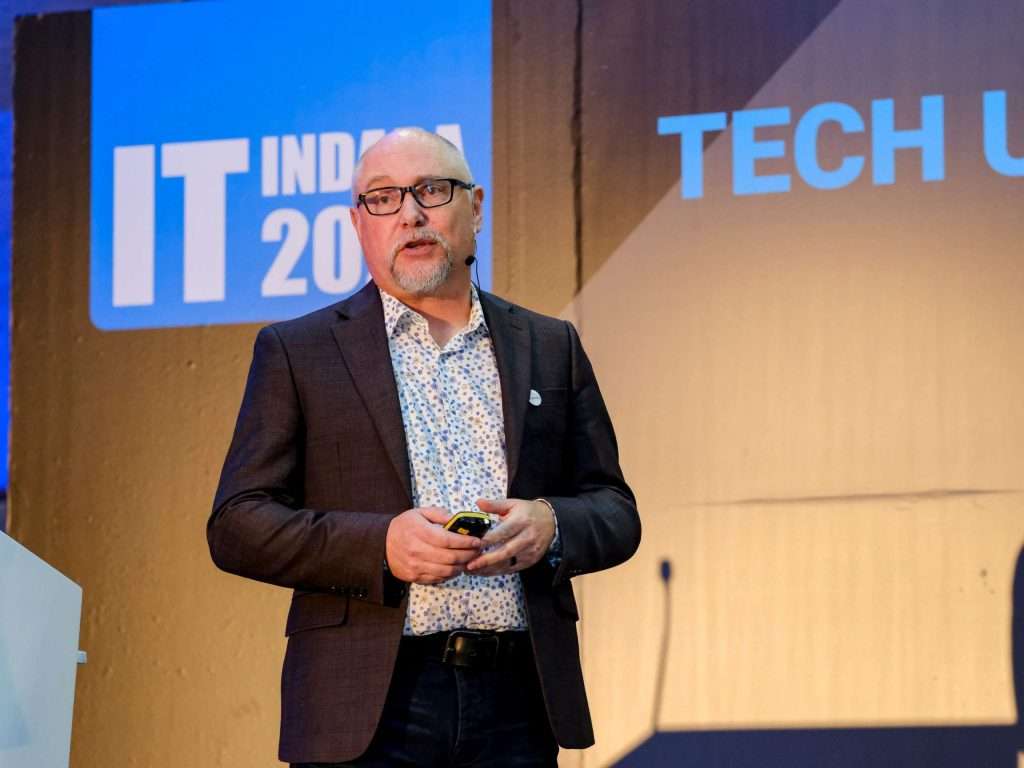
At the inaugural IT Indaba, Jannie Malan, Workday South Africa’s solution consulting manager, showcased how Workday is evolving into a dynamic platform, positioning the ERP as a powerful tool that helps CIOs leverage AI agents and processes.
Jannie began the session by saying that although Workday is 20 years old, the global software vendor was never on-prem; it has always been cloud-native and continues to play a fundamental role in IT stacks.
According to Jannie, Workday is known among many IT professionals as best-of-breed in managing two critical business aspects: people and money. However, today’s ERP mandate is shifting to a more dynamic approach that also manages internal operations, applications, and data.
Bringing order to chaos through data
CIOs know that building composable, intelligent systems that enable business efficiency and autonomy is increasingly critical. But Jannie pointed out it’s not easy to manage all these systems, especially when factoring in security and governance – and AI added to the mix.
“Bringing order to this potential chaos is part of Workday’s vision,” said Jannie. “We’re doing this through an evolution of architecture that’s open yet governed, extensible yet inherently secure. Our advantage is we’re the system of record for work – and the system of action. In turn, we can leverage trillions of data that passes through our platform.”
Jannie highlighted several priorities (aka ‘headaches’) that CIOs currently face, including moving data to a single source of truth (which often comes with a limited level of data readiness), businesses clamouring for AI implementation (but the perceived value of AI isn’t being adequately realised, and it’s not being case-built), and creating agile systems that rapidly adapt to change (but there’s a lack of trust when it comes to these systems).
The Workday advantage? It’s the platform’s rich insights into data and context, said Jannie. “That allows us to focus on three key areas: to be the best platform for building agents that manage any processes that touch a business’s people and money; opening our platform so you can build your own agents (called Workday Build that uses a lowcode, visual toolset called Flowise) or use partner agents, and, an ecosystem that supports the platform to drive innovation (through Workday’s Marketplace).
An ERP for an AI era
According to Jannie, Workday is moving beyond being an application and a walled-garden; it’s now a workforce-multiplier.
He noted that for any AI project to work one needs quality data, but that’s often a CIO’s digital Achilles heel. However, Jannie said Workday has this covered and it’s the platform’s “secret weapon”, as the clean data set is already there, from financial to employee data. He added that through Workday, real-time updates are also available, giving CIOs data visibility at any time. He added that the solutions structure is woven in, not bolted on, which is not the case in many distributed ERP systems.
In a next-gen ERP system, CIOs need to manage, monitor and scale the AI agent workforce. This is possible in Workday, said Jannie, as building an agent within the platform means it has access to far more contextualised data. “You can ask ChatGTP questions around your leave policies, but it lacks that rich business data that’ll give you the exact answer you’re looking for. That’s where the ring-fenced data set becomes so valuable,” he explained.
Jannie noted that Workday enables the management of a digital workforce (i.e. AI agents) in conjunction with a business’s human workforce. Workday will be making this a reality through several tools, such as greater access to new agents (through Workday’s own development and acquisitions). This includes a powerful business process agent that turns the AI inwards to look at its own system to proactively flag issues and improvements.
Keeping the human in the loop
According to Jannie, CIOs should be able to manage the lifecycle of an AI agent just as they manage a human member of their workforce. “You want to be able to manage an AI agent’s onboarding, give it certain security rights, see where it is active, who has access to it and view its performance metrics – and if it’s not doing what it should, you can terminate it and hopefully it won’t go to the CCMA,” he joked.
He added that orchestrations allow CIOs to harness the power of the Workday platform to automate processes across Workday and third-party systems, as well as zero-copy access through trusted partner systems to mitigate risk and the ability to bring in external data through Prism Data Management.
To close, Jannie emphasised these next-gen systems are not looking to replace humans, but rather to augment what they can do to perform more strategic tasks and maximise ROI. “Workday achieves this by always keeping ‘the human in the loop’. I also believe that our platform will continue to be the cornerstone of many an IT stack in an AI-led transformation, offering CIOs the tools to become true change agents in their organisations.”