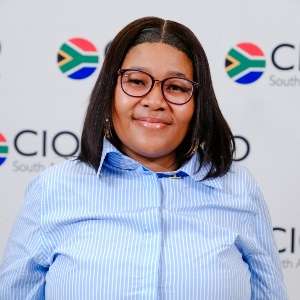

Hans Zachar, 2025 CIO Awards Cybersecurity award-winner, built Nutun’s international technology platform with the same quiet discipline that shaped his life growing up in Edenvale. For the group chief technology and information officer, global scale, trust and innovation have always been about people first – and systems second.
Hans Zachar is at his most relaxed when talking about long bike rides or weekends spent with his family. Yet as group CTIO at Nutun, he is at the heart of one of South Africa’s most successful technology stories on the international stage.
When he joined Nutun four years ago, the business was largely known as a local customer services and collections operation. Since then, thousands of Nutun employees have supported clients across the US and UK using technology and AI platforms built in South Africa. For Hans, the shift went beyond technology and scale and was more about people, confidence and proving that South African teams could compete in global markets without losing who they were in the process.
Hans grew up in Edenvale and lived in the same house from the day he left hospital until the day he moved out. He started working early, which was common back then, and by the age of 10 he was delivering newspapers and by 13 he had never been without a job.
“I worked in hardware and retail stores and did odd jobs whenever I could. You learn very quickly how to adapt, talk to people and solve problems when you start working early in life,” he explains.
That grounding shows up today in how he leads. According to him, colleagues would likely describe him as intensely practical, allergic to unnecessary complexity and deeply invested in the people around him, but Hans puts it more simply: “I like solving problems. And I like doing it with people.”
Sharks, scuba diving and systems thinking
Before technology leadership, his life looked very different. He studied engineering and completed a master’s in electrical engineering, researching how underwater equipment affects the behaviour of sharks and rays.
For years, his world revolved around scuba equipment and fieldwork. “Natural ecosystems are a lot like organisations. There is the logical and scientific part, but it’s the behavioural part which requires a much deeper understanding.” That curiosity followed him through engineering, research, consulting and eventually into senior technology leadership. But rather than pulling him in different directions, it sharpened his appetite for complexity and constant movement.
At Nutun, Hans’s work has been demanding in ways that go far beyond systems architecture. The company’s international push forced it to confront a reality many South African businesses underestimate. Offshore providers are often scrutinised more harshly than local ones.
“If you’re onshore with a gap in your cybersecurity posture, you might still get through to the next round. If you’re offshore with the same gap, you’re disqualified.”
That reality reshaped Nutun’s go-to-market. Before the company could sell internationally, it had to build trust at a structural level. That meant gaining certifications, conducting rigorous audits and building robust governance frameworks. But it also meant changing how people inside the business thought about cybersecurity.
Explaining cybersecurity like an electric fence
“Cybersecurity is usually seen as the handbrake that slows innovation down and is very much a grudge purchase. We had to flip that and explain that it’s actually the ticket to the game. Without this critical component to your strategy, you don’t get to play,” he adds.
He kept it simple and avoided technical terms when talking about why security matters during the company’s shift. “Why do we have electric fences and gates at home?” he asked. “So people don’t climb over the wall or walk through the door. Cybersecurity is the same thing.” When he explained it this way, security stopped being something abstract and became something practical.
The payoff was significant as Nutun has developed AI-powered voice platforms and collections systems that are now being deployed in international markets. These solutions were designed and tested in South Africa, which is a source of great pride for Hans.
“South Africans don’t realise how sophisticated we are. Our market forces us to be more creative, resilient and lateral and when you take our products and services into global markets, you realise we can compete with anyone.”
He sees the CIO role as less of a technical position and more as a translation role. “You’ve got customers on one side, the business in the middle and IT on the other side,” he says. “There’s always something lost in translation. A big part of my job is bridging the gap and getting everyone on the same page.”
He uses a football analogy to aptly explain the CIO’s role as a translator. “IT is the midfielder that does the most running and connects the defending and attacking players. You don’t always score the goals, but you can’t win the game without it.”
Growing teams, not just platforms
He is motivated not by the technology itself but what it enables. The company has been able to rapidly grow the technology team because of its international expansion and the investment into AI. “That’s creating dozens of high-end, innovative focused roles that wouldn’t exist if we were only focused on South Africa. That matters.”
It also matters that Nutun has remained small enough to feel entrepreneurial. “We’re not too big nor too small,” he says. “This means we have autonomy to try new things and move fast. In big corporations, a lot of your time is spent managing stakeholders but here I can spend much more time in the trenches and in the details.”
Equally important to Hans is for people to understand the bigger picture. “Everyone needs to know where we’re going, not just what their task is, but why it matters.”
He tells the story of a NASA cleaner who, when asked what he was doing, said he was helping put a man on the moon. “That’s what you want, for people to feel part of something bigger than themselves.” At the same time, he is wary of over-engineering. “You need the right balance between innovation and structure, sometimes you have to go slow to go fast.”
Despite running complex technology ecosystems, Hans has little patience for unnecessary sophistication, as he is drawn to simple, low cost solutions that are effective.
He cites examples of banks using Raspberry Pi devices instead of expensive proprietary kiosk hardware. “Low cost doesn’t mean low quality. I think expensive often means the safe choice, but not the best choice,” he says contemplatively.
Looking ahead, Hans is excited about what Nutun is building, but he stays focused on getting things done. He points to the early progress Nutun is seeing in international markets, the work to grow AI platforms responsibly, and the effort to keep security and trust while moving quickly as the things that keep him excited to keep doing his job.
Still, people are something he always returns to. “At the end of the day, it’s about creating opportunities that enable growth and ensuring we can confidently keep building capability.”
In a world obsessed with disruption, scale and speed, Hans operates with steadiness. He builds slowly when needed and remains laser-focused on the fundamentals. And in doing so, he is helping build something rare. A global technology business that feels human, practical and unmistakably South African.