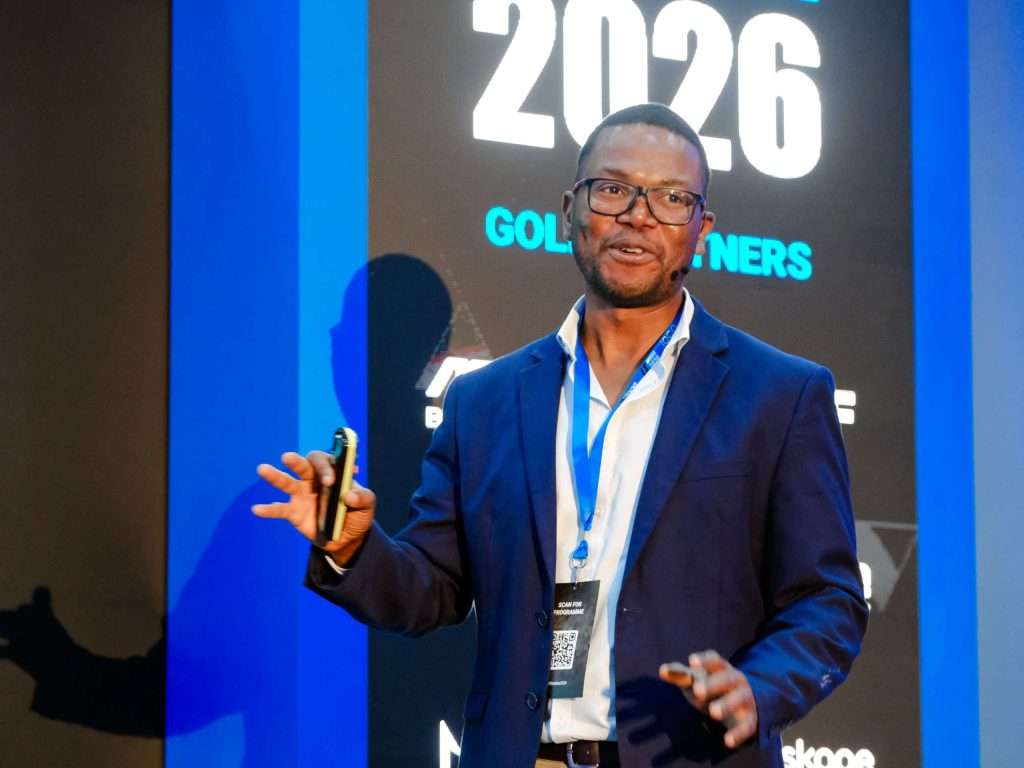
At the 2026 IT Indaba, tech leaders were challenged to uncover AI’s untapped potential – by looking at their business’s unexplored ‘wild sides’.
An enlightening session presented by Altron group CTO, Dr Bongani Andy Mabaso, titled Agents in the wild: What no one tells you about enterprise AI, focused on how businesses hold untapped AI-value potential, often hiding in plain sight. It’s just a matter of knowing where to look.
“Every business has a wild side,” said Bongani. “It’s that place no one ever explores or speaks about. Business value is likely sitting in these places, where you’re not looking.”
According to Bongani, the reason many AI projects fail is because IT leaders have been focusing on the frontend like apps and customer touch points, instead of veering off the beaten track.
“At Altron we’re seeing the frontend isn’t driving value. Exploring a business’s wild side sounds romantic but there’s a level of uncertainty. As a kid I used to take apart remote-control cars; that level of curiosity is needed [to explore these unlikely places].”
A step-by-step approach
But where to begin? Bongani suggested a step-by-step approach. First, choose a reasonable horizon, because you can’t explore every aspect of the business, all at once. Then, send a scout, because you can’t explore blindly without a map – you need to know the lay of the land. Next, pack for the terrain, because you need the right tools to succeed. You’ll discover new things, so you have to update your map and knowledge so that others can follow your lead. Last, choose your party – the right people to join you on this journey.
To break this down, Bongani advised that you start by identifying your wild place – the environment for the disruption opportunity. For example, what part of the business are you hiring people just to keep up with volumes. A good clue is an area with a high turnover and exhausting work. Or maybe there’s someone reading one doc and typing it into another screen, or a rule written down, and still applied manually by hand. What if someone leaves tomorrow, who knows how their processes work? Look at areas like these and you’ll find nuggets, suggested Bongani.
No need to prove a business case if you can show the value
“Many AI projects stay in purgatory, sitting in the backend – so you need to make sure that what you’re doing makes sense. This is where you send a scout to show the value,” noted Bongani.
“For example, a financial services client of ours was doing manual valuations that took an hour; we automated this process, so it took a minute. They had been operating like that for 30 years, and we didn’t need to prove a business case for automation – we just needed to show them what it could do. People don’t really understand AI, so you need to use real data to show real value, even if it’s on a sample basis. They’ll write the business case themselves.”
Don’t forget to update your map, reiterated Bongani. “Many things can happen as you explore your business’s wild side; take detailed field notes where AI can be safely deployed. Once you see results, often other projects come along that are adjacent.”
How AI can re-humanise and reframe work
Tapping into the wild side can come with pitfalls, however. Like forgetting to change KPIs once AI has been introduced. “When work is automated, people won’t necessarily volunteer their freed-up time to do more work. So, you need to change the measure – you did X amount per day, now you do Y. Or now you have a higher responsibility. The human element is important; we’ve also seen automations go well with changed KPIs, but they’re unrealistic and people burn out. Remember, always run a factory at 80 percent; it’s better for sustainability.”
According to Bongani, properly leveraging AI-driven value has two beneficiaries: the business and its people. But there is a caveat. “For our financial services client, the initial [knee-jerk] expectation was that AI automation would replace people, but we’ve never seen this happen. Sometimes you need more people to do the more impactful work. The wild side has an inefficiency tax that’s hidden, once it’s unlocked you realise how fast the business can be. Ironically, AI can re-humanise work, enabling a broader scope of thinking.”
For Bongani, AI adoption should be deployed in a way that empowers people, so they have more meaningful roles. Decisions for job cuts must be based on business reasons, not using AI as an excuse. “AI is a way to reframe work and embrace an abundance mindset. All you need to do is look on the wild side.”